

One month on, Iran has the upper hand as war risks rise for Trump and the world
If the US escalates its military pressure, the Iranian regime is willing to take the pain
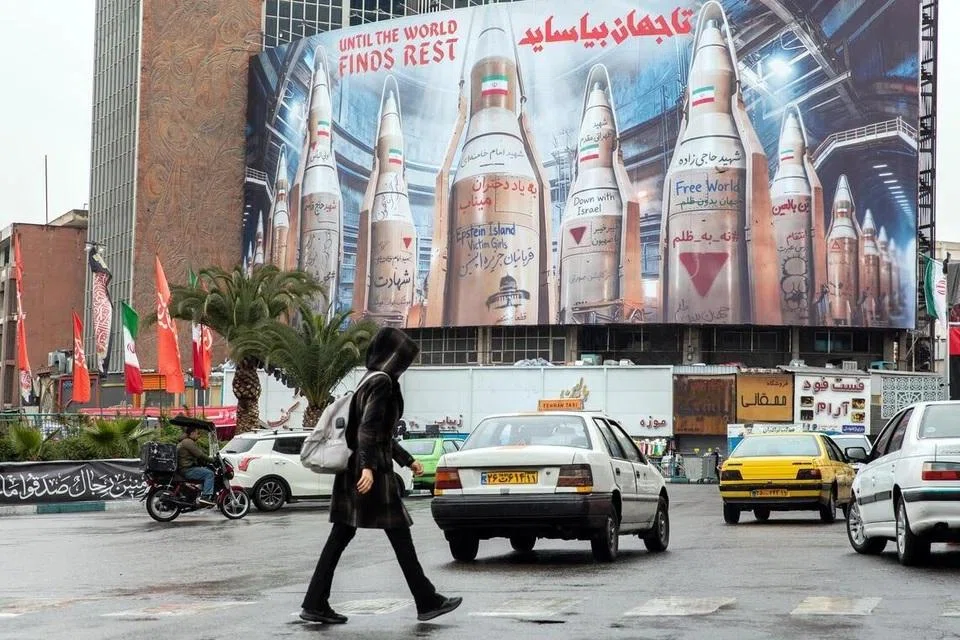
[LONDON] A month since he launched his military offensive against Iran, US President Donald Trump is now looking to “wind down”, as he puts it, the war he unleashed.
The US leader has suggested to Iran a 30-day ceasefire agreement during which both sides can discuss a plan to end a conflict that has engulfed the entire Middle East and roiled the global economy.
But the Iranians have rejected the offer, and Trump is now caught in the classic dilemma facing anyone who starts a war in haste, without considering all its implications. The US can either pull the plug on the entire operation and admit that its initial objectives won’t be met, or it could escalate its involvement and risk a much longer quagmire.
Either way, the war has shifted from Iran trying to absorb the initial US-Israeli onslaught to a grinding, highly destructive and expanding military campaign for regional superiority. And regardless of when the fighting stops, the struggle between the US and Iran over supremacy in the Middle East is likely to be with us for a long time.
As critics of Trump’s actions – and these include most world governments as well as a majority of ordinary US voters – point out, Iran posed no immediate security threat to the US. But while correct, it is only part of the story.
Iran was not about to attack the US, so, in this strict sense, the current war lacks any legal justification. Yet, it is also true that Iran has been a menace to all its neighbours for decades and that, while many governments around the world criticised Iran’s destabilising actions, none offered workable solutions.
This war is entirely of America’s choosing. But it is also a continuation of almost half a century of leaders of the Islamic republic not only ritually chanting “Death to America” but also killing, either directly or through their proxies, hundreds, if not thousands, of US soldiers and civilians.
Long-term consequences
What remains astonishing in the current conflict is less that it erupted, and more that the US embarked on it with little thought for the consequences and almost no apparent understanding of the conflict’s long-term ramifications.
Every contingency or war plan prepared by US defence experts over the past four decades highlighted the danger that, if attacked, the Iranians would lash out against their Arab neighbours in the Gulf and attempt to close the Strait of Hormuz, the international waterway through which a fifth of the world’s oil trade passes.


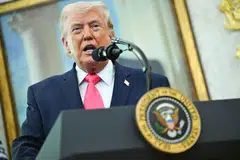
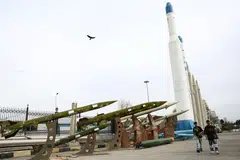
Yet on Mar 15, two weeks after Iran did precisely that, Trump claimed that these Iranian actions were a complete surprise. “They (Iran) weren’t supposed to go after all these other countries in the Middle East,” he said. “Nobody expected that. We were shocked,” he added.
It is inconceivable that he was not briefed about Iran’s potential actions. A much more plausible interpretation is that Trump simply chose to ignore his security briefings.
He allowed himself to be persuaded by Israeli Prime Minister Benjamin Netanyahu that Iran was weak and that a few air strikes would be enough to topple the Islamic republic. And, in a state of euphoria after what proved to be a quick “regime decapitation” strike against Venezuela in early January, Trump concluded that the US military can perform any miracle, at the mere snap of his fingers.
As a result, Trump is guilty of committing the most basic of all military errors: that of planning a military campaign based on the best, rather than the worst, scenarios.
This operation was ill-thought-out in military and diplomatic terms. Even the most basic of security precautions – such as evacuating most US diplomats from the region – were not taken, because Trump believed that the entire war would be over in days and that the outcome of the conflict was preordained.
In fact, much of what has happened in this war was utterly predictable. The US military performed as expected: It destroyed most of Iran’s military infrastructure, and much more besides, establishing air superiority within hours of the initial attack.
The Iranians may appear to stand tall, but they will need many years to recover from the blows they suffered, and probably a decade to repair the damage done to their economy.
Meanwhile, Israeli intelligence also performed as expected: Its campaign of targeted assassinations and bombings killed most of Iran’s top political and military leaders and destroyed the country’s significant military research capacity.
Weakness into strength
But what neither the US nor Israeli leaders seemed to have anticipated was Iran’s ability to transform weakness into strength. The Iranian regime rightly perceives itself to be facing an existential challenge; it is fighting for its survival.
So, for the clerics in Teheran, it never mattered how many Iranians are killed or how much of the country’s infrastructure is transformed into rubble; what matters is that, when the fighting eventually stops, the mullahs remain standing, in control of Iran. This asymmetry of interests and expectations should have been obvious to Trump right from the start of this adventure – unless the government in Iran was toppled, the Iranians were always going to claim victory against the US in this war, regardless of how much damage was inflicted on the country.
As Karim Sadjadpour, a noted US-based Iranian specialist, neatly put it: “Teheran wins by not losing, and Trump loses by not winning.”
It is difficult to persuade ordinary Iranians to go on the streets of their cities and topple their government if they have to brave not only the bullets of the regime’s internal security services, but also bombs and missiles raining down on them from the air. And it’s well-nigh impossible to topple political regimes by simply spraying them with bombs from the air.
The problem the US now faces is one not only of perceptions, but also of practical military options, for it is Iran – and not the mighty US military – that now holds the escalation initiative.
If Trump orders his troops home, Iran would not only emerge as the winner in his confrontation but also enhance its ability to threaten its neighbours and close the Strait of Hormuz whenever it wants; Iranians are already vowing to charge oil tankers fees for the passage through the international waters, and to pick and choose who they allow to sail through.
So, abandoning the fight now would leave the Middle East in a much worse situation than it was a month ago.
Economic pain
But if the US escalates its military pressure, the Iranian regime is willing to take the pain. It is difficult to see what Trump can achieve by ordering the US Marines he is now rushing to the region to seize Kharg Island, the main gateway for Iranian oil exports, as one of the military plans on the US President’s desk now seems to suggest.
Yes, this will throttle Iran’s oil revenues, but that would only exacerbate the global shortage of oil and send energy prices through the roof.
Trump could order the destruction of Iran’s power stations. But Iran will surely retaliate by destroying the desalination plants of its Arab neighbours, leaving the US with a massive logistical problem.
In short, Iran has manoeuvred the US into a position in which any escalation that Trump may order can only increase the economic price the US needs to pay, well before the Iranians feel the corresponding pain.
It is still just possible that Trump will be saved from his current predicament, should cracks start appearing inside the Iranian government. But at least for the moment, chances are higher that we might witness regime change in Washington before we see it in Teheran. THE STRAITS TIMES
Decoding Asia newsletter: your guide to navigating Asia in a new global order. Sign up here to get Decoding Asia newsletter. Delivered to your inbox. Free.
Share with us your feedback on BT's products and services
TRENDING NOW

LTA proposes combining car COE categories, adding rebate-surcharge system

StarHub to acquire MyRepublic’s mobile business amid ongoing telco consolidation

DBS, OCBC, UOB rout lops billions off STI as inflation, rate concerns spook investors

Grab CEO’s wife Chloe Tong on life with Anthony Tan and finding her purpose

