Osaka, Fukuoka, Hokkaido: Why Japan is searching for a second capital outside Tokyo
A magnitude-7 class quake could disrupt the PM’s office, parliament, central ministries and financial institutions in the capital
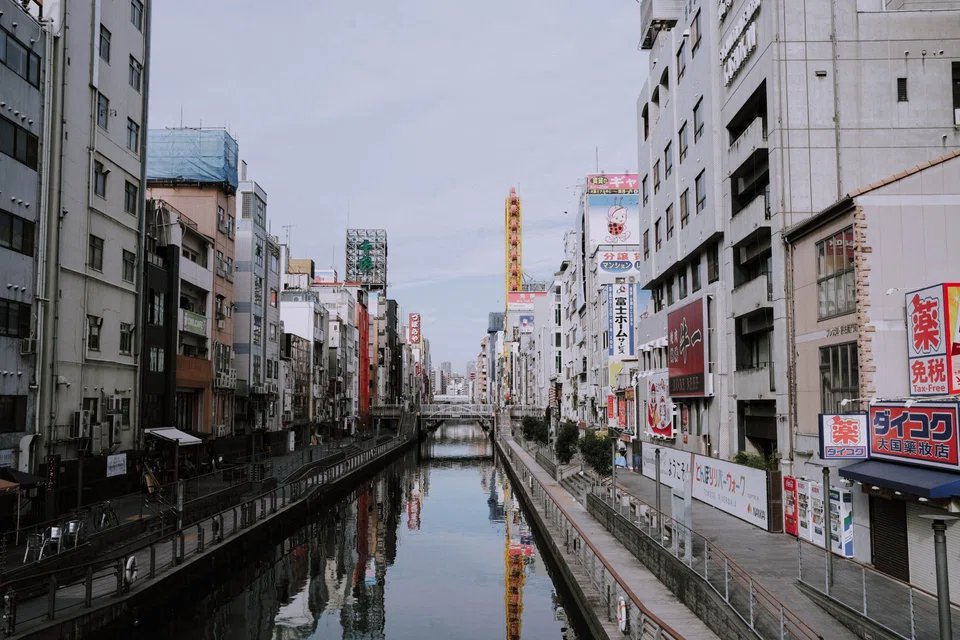
JAPAN is officially on the hunt for a second capital.
A Bill approved by lawmakers in July created a legal framework to designate one or more regions in the earthquake-prone nation as a backup if Tokyo is incapacitated by a disaster.
The plan is controversial, not least because opponents argue it could end up favouring Osaka, the home of the Japan Innovation Party, the junior coalition partner in Prime Minister Sanae Takaichi’s government.
Parliament delayed its summer recess as the debate over an alternative capital dragged on. While the Bill sailed through the Lower House of the National Diet, where the ruling coalition holds a supermajority, it only narrowly passed the Upper House, which is controlled by the opposition. This could signal a more difficult path ahead for Takaichi to enact her policy agenda.
What’s behind the push for a second capital?
The new law states that its basic philosophy is to ensure that the government can keep operating if a natural disaster or other emergency strikes Tokyo.
The government estimates that there’s a roughly 70 per cent chance that a magnitude-7 class quake – what is considered a major earthquake that can cause serious damage over large areas – will occur in the Tokyo metropolitan area within the next 30 years. Such an event could disrupt the prime minister’s office, parliament, central ministries and financial institutions in the capital.
Should this type of disaster come to pass, designated regions would temporarily take over key political, administrative and economic functions, if required.
Aside from these regions serving as an emergency backup, the aim is also for them to become more prominent engines of economic growth, correcting what the law calls an “overconcentration” of Tokyo in Japan’s economy and population. Tokyo generates around a fifth of the country’s economic output, hosts more than half of listed Japanese companies and is home to around 30 per cent of the national population.
The new law calls for investment in government facilities, transport links and other urban infrastructure in secondary capital areas, as well as tax incentives, regulatory reforms and other measures aimed at attracting private investment and strengthening industrial competitiveness.
SEE ALSO
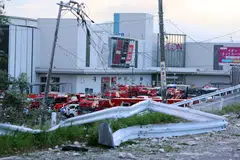



Why is the plan for a second capital controversial?
Establishing a second capital has long been a signature policy of the Osaka-based Japan Innovation Party, which is more commonly known as Ishin. The party’s founder, former Osaka Governor Toru Hashimoto, first proposed that Osaka should be Japan’s second capital around 2010.
Passage of a secondary capital Bill was one of the key promises Takaichi made to persuade Ishin to join her coalition government after a decades-long partnership between her Liberal Democratic Party and Komeito broke down in 2025.
Critics argue that substantial funding, tax breaks and infrastructure investment could be directed toward Osaka – or a handful of designated regions – at the expense of the rest of the country.
The government has yet to estimate the cost of a second capital or quantify the expected economic benefits, raising fresh questions over its fiscal discipline. Takaichi has already faced market scrutiny over a series of expensive policy initiatives.
The debate over a second capital has also become entangled in local Osaka politics. Some see the legislation as giving fresh momentum to the Osaka Metropolis Plan, Ishin’s longstanding proposal to reorganise Osaka City along the lines of Tokyo’s wards rather than having the city and prefectural governments doubling up on administrative functions. Residents have rejected the proposal twice in referendums, although the governor is aiming to hold a third vote in the spring.
Which cities could be chosen as an alternative capital?
The law does not designate Osaka – or any other city – as a second capital; it only establishes a framework under which prefectures can apply. The text leaves the door open to multiple secondary capitals, a provision that seeks to counter criticism that the legislation was designed with Osaka in mind. The final decision of which cities are selected lies with the prime minister.
To qualify to host a secondary capital, a region must have a lower probability of significant damage from a disaster that strikes the Tokyo metropolitan area at the same time. It must also have sufficient government infrastructure, economic scale, population size and administrative capacity to function as a backup for the current capital.
Several cities and prefectures have expressed an interest in serving as a secondary capital, including Fukuoka, Hokkaido and Miyagi.
Governor Hideaki Omura of Aichi, home to automaking giant Toyota Motor, declared immediately after the Bill’s passage that he wanted his prefecture to be “the first in the nation” to seek the secondary capital designation.
What does passage of the secondary capital Bill mean for Takaichi?
Passing the secondary capital Bill placated Ishin after the government shelved Takaichi’s other key pledge to her coalition partner – a Bill to reduce the number of seats in the Diet – until the extraordinary parliamentary session in the fall.
But the second capital plan only cleared the opposition-controlled Upper House by two votes. That razor-thin margin and the week-long parliamentary standoff to secure it underscores how difficult it could be to advance the rest of Takaichi’s agenda – even though her coalition has a commanding majority in the more powerful Lower House.
The new secondary capital law adds to a growing list of divisive government initiatives, including criminalisation of desecration of the national flag, that some opponents see as restricting free speech, and revisions to the Imperial House Law that ignored public support for the possibility of female emperors.
Takaichi’s approval rating among voters has been declining amid a perception that her government is focusing on non-urgent Bills rather than addressing immediate cost-of-living concerns. She has fallen behind on an election promise to relieve inflationary pressure by cutting the sales tax on food – a policy that some have criticised as fiscally unwise and pandering to voters.
What would a second capital mean for Tokyo?
The near-term impact would likely be limited. The main capital is not being shifted and the legislation does not immediately require ministries or companies to relocate. Many operational details – such as which government agencies would move and how the transition would work – have been left to be decided later.
Over time, a second capital could gradually erode Tokyo’s dominance by redirecting investment, infrastructure and eventually some government functions to other regions.
Tokyo’s Governor Yuriko Koike has backed stronger disaster backup functions while rejecting the notion that Tokyo’s concentration of people and resources is the problem. She has highlighted Tokyo’s efforts to strengthen its own emergency capabilities, such as the metropolitan government’s disaster preparedness centre in the western city of Tachikawa.
What are the next steps?
A second capital must be named within approximately one year of the new law coming into effect.
The law stipulates that the government must establish headquarters to oversee the process of designating a secondary capital. These headquarters will be chaired by Takaichi. A cabinet minister will be appointed to supervise the second capital initiative. Ishin hopes this will pave the way for the party to enter the cabinet for the first time in the next reshuffle, giving it greater influence over policymaking. BLOOMBERG
Decoding Asia newsletter: your guide to navigating Asia in a new global order. Sign up here to get Decoding Asia newsletter. Delivered to your inbox. Free.
Share with us your feedback on BT's products and services