

RBI governor says it is premature to discuss rate hikes
The US-Iran truce is fragile and it will ‘take some time for supplies to restore fully’, he adds
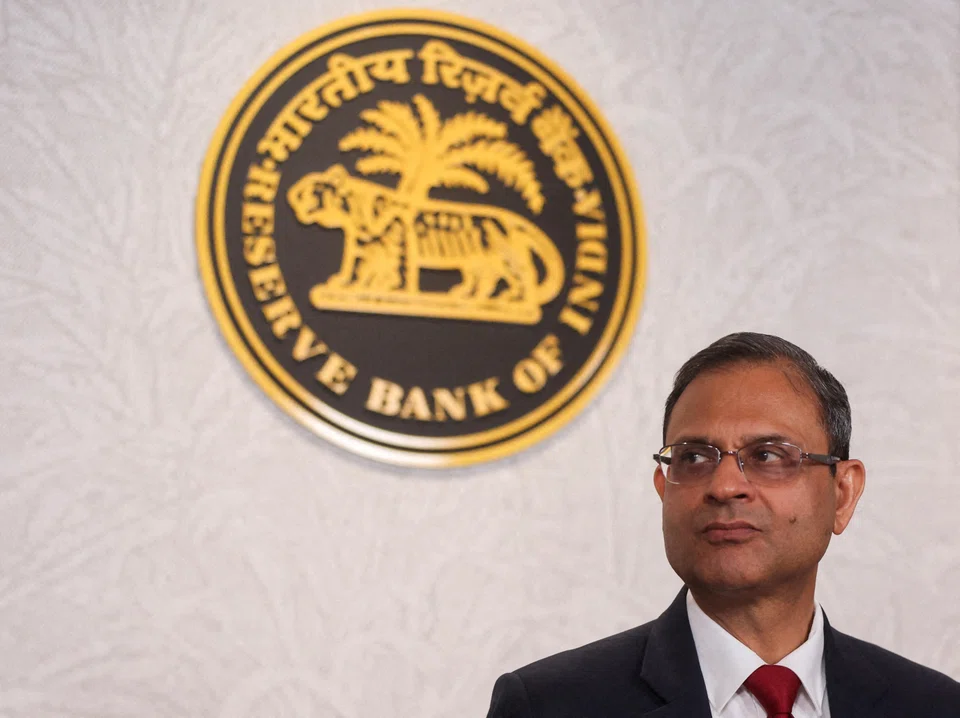
[MUMBAI] India’s central bank governor, Sanjay Malhotra, pushed back against expectations for future interest rate increases and said it was “premature” to discuss the policy outlook, given ongoing geopolitical uncertainties.
On Wednesday (Jun 24), speaking to Indian TV channel ET Now, he said: “If it was so certain that we are going to hike in the coming months, then we would have changed the stance from neutral to restrictive, right? We did not do that...
“We did not do that precisely because there is elevated uncertainty.”
This is the first time the Reserve Bank of India (RBI) chief has provided a public assessment of India’s economy and policy outlook following truce talks between the US and Iran, which have led to a significant drop in global crude prices.
That has been a big relief for India, which imports 90 per cent of its oil needs.
The yields on India’s 10-year benchmark government bonds slipped two basis points to 6.85 per cent after his comments. The rupee maintained losses and was down 0.1 per cent to 94.85 per US dollar.
“The truce itself is fragile. It will take some time for the supplies to restore fully,” he said, reiterating that the RBI remains data-dependent.
“Upside risks have certainly reduced, but we’ll have to still wait and watch as to where crude prices ultimately end up.”
Minutes of the RBI’s Jun 3 to 5 monetary policy meeting showed rate-setters discussed that India’s economic outlook would improve rapidly once the war ends, when they decided to leave the key rate unchanged at 5.25 per cent.

Following the Iran war truce announcement, economists at Citigroup scrapped their call for rate hikes this financial year.
Close eye on monsoon and crude prices
The governor said the monetary policy committee was keeping a close eye on both monsoon and crude prices.
India’s cumulative monsoon rainfall remains 43 per cent below normal as at Jun 22.
Deficient rainfall could emerge as the next major risk to the economy, with implications for agricultural production and rural demand.
Malhotra pointed out that India has “sufficient” food buffers, though policymakers will remain watchful of any impact on the broader economy and inflation.
Currently, India’s consumer price index remains below the RBI’s 4 per cent target.
“As of now, as I see it, (it) is the global uncertainty which is challenge No 1,” he said. “We are very well prepared to meet all challenges.”
Rupee measures
Malhotra reiterated that the rupee – which hit a record low of near 97 per US dollar last month – remains market-determined, while stressing that the RBI stands ready to act against excessive volatility.
The central bank does not target any specific level for the currency, but instead uses its policy tools to ensure movements remain orderly and are not driven by speculative pressures, he said.
During its June policy meeting, the RBI announced a slew of measures to support the rupee, including allowing banks to raise foreign-currency deposits.
Authorities also eased investment rules and offered tax incentives to boost foreign inflows. The steps have helped shore up the rupee.
Malhotra said India remains hopeful of securing inclusion in the Bloomberg Aggregate Bond Index, which would support capital inflows. Indian bonds entered the JPMorgan Chase’s emerging-market debt index in 2024.
Bloomberg is the parent company of Bloomberg Index Services, which administers indexes that compete with other providers. BLOOMBERG
Decoding Asia newsletter: your guide to navigating Asia in a new global order. Sign up here to get Decoding Asia newsletter. Delivered to your inbox. Free.
Share with us your feedback on BT's products and services
TRENDING NOW

LTA proposes combining car COE categories, adding rebate-surcharge system

StarHub to acquire MyRepublic’s mobile business amid ongoing telco consolidation

DBS, OCBC, UOB rout lops billions off STI as inflation, rate concerns spook investors

Grab CEO’s wife Chloe Tong on life with Anthony Tan and finding her purpose

