

South Korea economic growth tops all estimates on AI-fuelled export boom
Risks to the outlook remain for the economy, which has seen choppy momentum over recent quarters
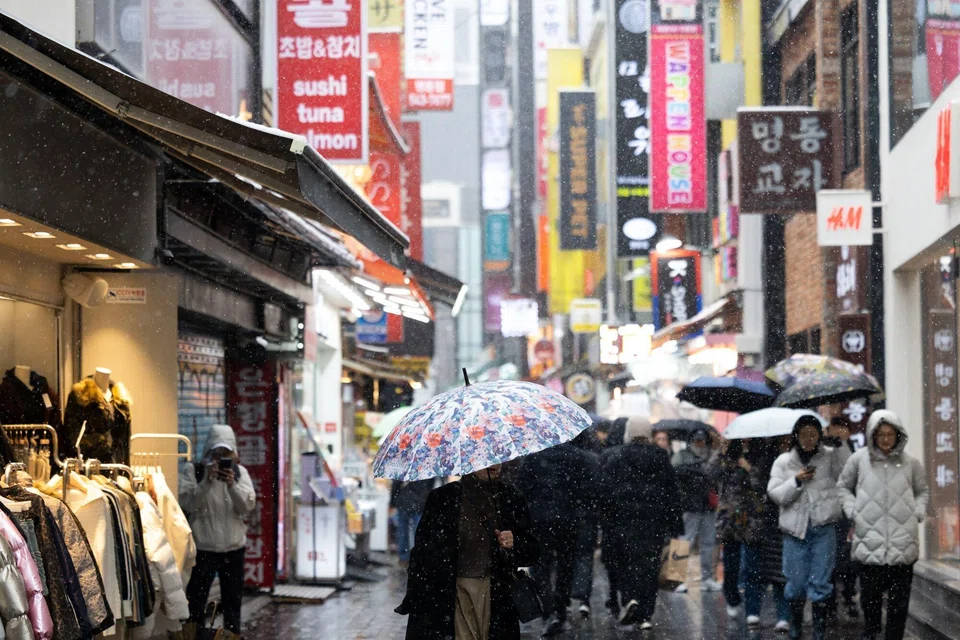
[SEOUL] South Korea’s economy rebounded strongly at the start of the year on the back of export growth fuelled by global demand for artificial intelligence technology.
Gross domestic product grew 1.7 per cent in the three months to March from the previous quarter, the Bank of Korea (BOK) said on Thursday (Apr 23). That marked a reversal from a contraction in the final quarter of 2025 and the fastest expansion since the third quarter of 2020.
The reading beat the 0.9 per cent consensus estimate in a Bloomberg survey, topping even the most bullish forecasts.
“There were upside risks, but this came out much stronger than expected,” said Cho Yong-gu, a fixed-income strategist at Shinyoung Securities. “Net exports were strong, supported by the semiconductor cycle, similar to what we are seeing in Taiwan.”
Less than half an hour before the BOK released the bumper GDP reading, SK Hynix reported a five-fold jump in quarterly profit thanks to surging prices of the memory chips that underpin the boom in global AI development.
Taiwan’s economy has been running even hotter, with data this week showing there’s still plenty of demand in the pipeline, as export orders surge at the fastest pace in 16 years.
Still, risks to the outlook remain for South Korea’s economy, which has seen choppy momentum over recent quarters. Consumer confidence fell in March to the lowest in 10 months as the war in Iran darkened the outlook for growth and prices.
The effective closure of the Strait of Hormuz has spurred a sharp increase in global energy prices, pushing up import costs in an economy heavily reliant on overseas fuel. A weaker won has amplified those pressures, raising concerns that inflation could accelerate in the coming months.
The won was Asia’s worst-performing currency in the first quarter, falling more than 5 per cent against the dollar.
SEE ALSO

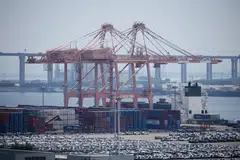



During the first quarter, exports rose 5.1 per cent, driven by stronger semiconductor shipments, while imports increased 3 per cent on gains in machinery, equipment and motor vehicles, the BOK said.
Chip shipments in the period surged 139.1 per cent from a year earlier, with the pace more than tripling from the previous period, according to Bloomberg Economics, as overall shipments rose each month at paces not seen since 2021.
Growth in private consumption rose 0.5 per cent from the previous three months after a 0.3 per cent gain in the prior quarter, while government spending slowed to 0.1 per cent. Construction and facilities investment climbed 2.8 per cent and 4.8 per cent, respectively.
Uncertainty ahead
The BOK has taken a data-dependent approach to policymaking as authorities assess the potential impact of geopolitical turbulence. The central bank’s new governor Shin Hyun-song said in his inaugural address on Tuesday that uncertainty over the paths for inflation and growth has increased significantly. Shin added that structural challenges should no longer be considered external constraints, as they are a key part of “the environment in which it operates”.
His comments came after import prices surged last month by the most in nearly three decades, helping to push overall consumer inflation back above the central bank’s 2 per cent target. Raw material costs surged more than 40 per cent, led by crude oil and energy-related products.
South Korean President Lee Jae-myung has implemented a fuel price cap, alongside fuel tax cuts, to curb surging petrol, diesel and kerosene prices and ease pressure on businesses and households.
The measure was aimed at easing inflationary pressure on households and businesses as they grapple with soaring energy costs.
In terms of production, manufacturing increased 3.9 per cent from the previous three months, led by computers, electronics and optical products. Electricity, gas and water supply expanded 4.5 per cent. Construction rose 3.9 per cent and agriculture, forestry and fishing climbed 4.1 per cent.
The stronger-than-expected first-quarter print is likely to lift full-year growth, as a higher starting point makes the annual outcome more favourable even if momentum softens later in the year, according to Shinyoung’s Cho.
“Concerns about growth have eased significantly,” he said. BLOOMBERG
Decoding Asia newsletter: your guide to navigating Asia in a new global order. Sign up here to get Decoding Asia newsletter. Delivered to your inbox. Free.
Share with us your feedback on BT's products and services
TRENDING NOW

LTA proposes combining car COE categories, adding rebate-surcharge system
StarHub to acquire MyRepublic’s mobile business amid ongoing telco consolidation

DBS, OCBC, UOB rout lops billions off STI as inflation, rate concerns spook investors

Grab CEO’s wife Chloe Tong on life with Anthony Tan and finding her purpose

