

Tech sell-off relents, oil at five-month high
Markets are also starting to pare back bets on global interest-rate hikes
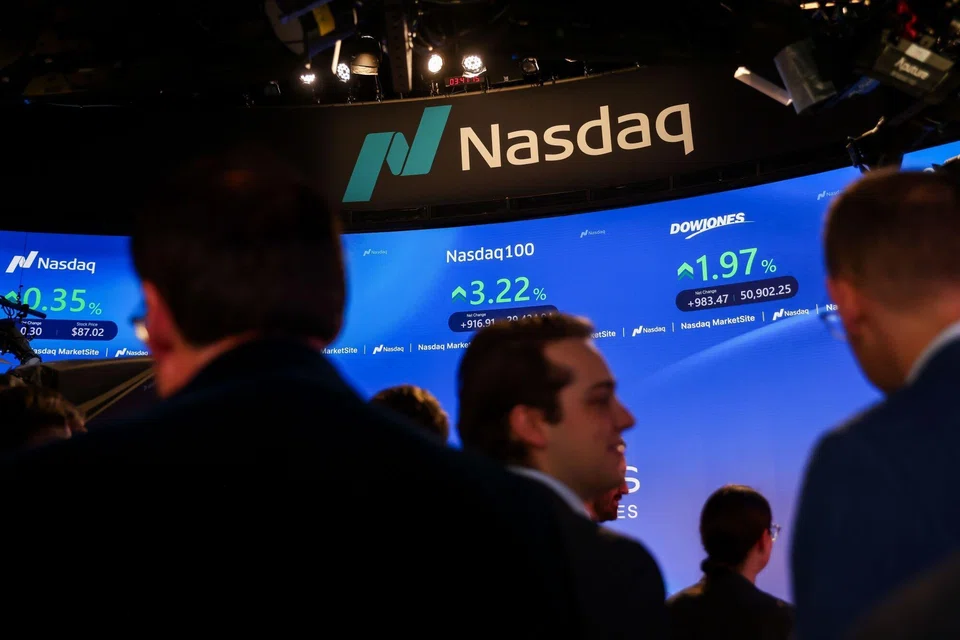
[LONDON] The rout in global tech shares eased on Friday after fears over the vast funding needs of artificial intelligence hammered Wall Street and triggered the biggest rally in US Treasuries in more than three years.
Asia’s bourses steadied overnight and, though Europe was 0.5 per cent lower ahead of Wall Street’s open, there was some respite from the pressure on French government bonds , where widening spreads had drawn comparisons with the eurozone debt crisis.
Oil, however, showed no signs of easing, with Brent at a new five-month peak of US$115 a barrel after Houthi attacks on Saudi Arabia and reports that the US and Israel had drawn up plans for renewed strikes on Iran following the US midterm elections.
European natural gas prices jumped another 4 per cent too, leaving them almost 30 per cent higher so far in October.
“It’s certainly a nervy market,” said Societe Generale’s global head of currency strategy, Kit Juckes.
“The oil price is just grinding higher... and we’ve got an inevitable correction in tech after its huge run-up, so it’s actually hard to see why the US dollar isn’t higher.”
The US currency was 0.2 per cent stronger on the day against its main basket of other top currencies, but it remains flat for the week.
The euro, meanwhile, was headed for a moderate weekly loss, which was not a big move, Juckes added, given all the bond market risk. The yen was on track for its biggest weekly rise in over a month after attracting safe-haven demand.
Focus on the futures
For the jittery Wall Street bulls, Nasdaq futures were off 0.5 per cent, while S&P 500 futures slipped 0.25 per cent after the Nasdaq’s 2.6 per cent tumble on Thursday, its biggest slump since June.


Telecommunications stocks were the latest casualties after a report that Elon Musk’s SpaceX was in talks to launch a nationwide cellphone carrier, sending AT&T, Verizon and T-Mobile down more than 4 per cent in premarket trading.
Thursday’s rout had the Philadelphia Semiconductor Index, the companies of which are at the centre of the AI boom, plunging almost 7 per cent. The likes of Meta dropped nearly 8 per cent, whilst CoreWeave’s share price slumped 10 per cent amid concerns about its debt burden.
Back in the bond markets, US Treasury yields were ticking up again, but were still just about under the key 5 per cent level after Thursday’s run for safety had fuelled their biggest one-day drop since March 2023.
Markets have also started paring back bets on global interest rate hikes. Almost a full quarter-point US Fed rate hike for next year has been stripped out this week amid the concerns over AI.
A December US Federal Reserve hike is no longer fully priced either, with the implied probability falling to 85 per cent.
In Europe, too, the chance of a European Central Bank December hike is down from 90 to 69 per cent earlier in the week, Deutsche Bank’s Jim Reid pointed out.
French yields, which were down four basis points (bps) at 5.05 per cent, have risen nearly 27 bps this week, the most of any major eurozone country and the most in a week since late May.
The premium investors demand to hold French government debt over safe-haven German Bunds, dubbed “le spread”, remained above 170 after reaching its widest since the eurozone debt crisis, amid concerns over France’s finances and political uncertainty.
AI rally runs aground
In Asia, Japan’s Nikkei dipped 0.3 per cent to end its week down over 4 per cent, while South Korea’s Kospi ended its session higher but after shedding as much as 4 per cent early on.
Mainland China’s blue chips found support after hitting their lowest since July 2025, with the CSI300 closing the day up 11.7 per cent. Hong Kong’s Hang Seng also rose 0.7 per cent after dropping 3 per cent on Thursday.
“It is hard to get too bearish on equities overall just yet, with earnings growth still positive and the hard economic data holding up well,” said Diana Mousina, deputy chief economist at AMP.
“All of this means that the AI trade isn’t necessarily over, but it is changing. It is no longer a case of ‘buy everything’.”
Gold failed to catch any safe-haven demand and was flat at $US$4,027 an ounce in London after a near 3 per cent drop on Thursday that leaves it down just over 3 per cent for the week. REUTERS
Decoding Asia newsletter: your guide to navigating Asia in a new global order. Sign up here to get Decoding Asia newsletter. Delivered to your inbox. Free.
Share with us your feedback on BT's products and services
TRENDING NOW

Singapore’s central gas buyer affirms Indonesia’s role as ‘important partner’ amid export review warning

Why the biggest business decision about AI isn’t which model to choose

Is Manila Asia’s new dining hot spot?

KKR founders among investors buying 42% of Peter Lim’s Valencia; club valued at US$1.4 billion

