

Trump dismisses Iran’s reply to peace plan
Oil prices rise nearly 3% on news of the continued deadlock that leaves the Strait of Hormuz largely closed
 Add BT as a preferred source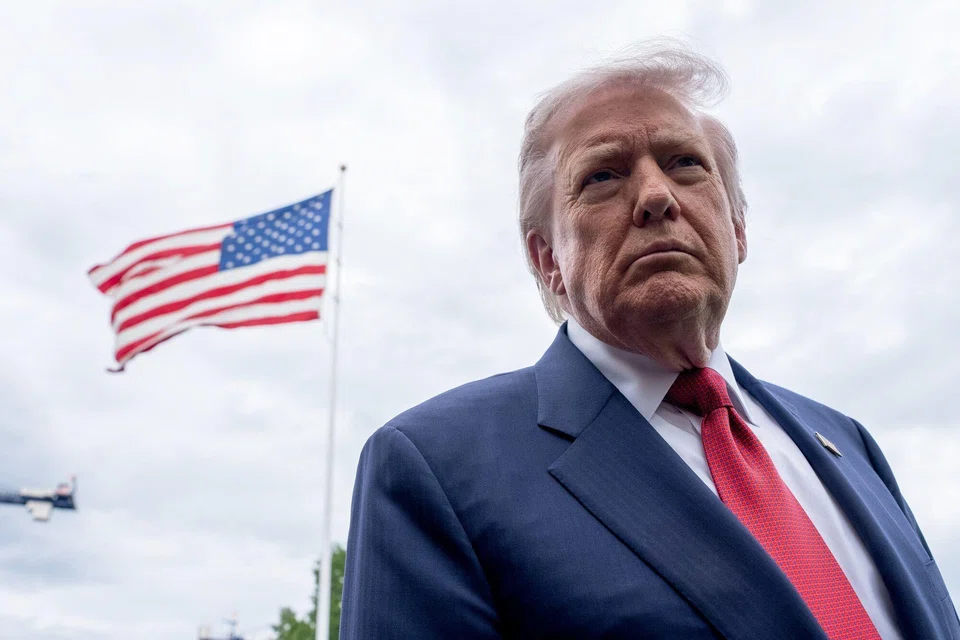
[WASHINGTON] US President Donald Trump’s swift rejection of Iran’s response to a US peace proposal sent oil prices higher on Monday (May 11) amid concerns the 10-week-old conflict will drag on, keeping shipping through the Strait of Hormuz paralysed.
Days after the United States floated an offer in the hopes of re-opening negotiations, Iran on Sunday released a response focused on ending the war on all fronts, especially Lebanon, where US ally Israel is fighting Iran-backed Hizbollah militants.
Teheran also included a demand for compensation for war damage and emphasised Iranian sovereignty over the Strait of Hormuz, Iranian state TV said.
It also called on the US to end its naval blockade, guarantee no further attacks, lift sanctions and end a US ban on Iranian oil sales, the semi-official Tasnim news agency said.
Within hours, Trump dismissed Iran’s proposal with a post on social media.
“I don’t like it – totally unacceptable,” Trump wrote on Truth Social.
Navigate Asia in
a new global order
Get the insights delivered to your inbox.
The US had proposed an end to fighting before starting talks on more contentious issues, including Iran’s nuclear programme.
Following Trump’s rejection of its demands, Teheran said on Monday that it believed its proposal to end the war was “generous and responsible”.
“Our demand is legitimate: demanding an end to the war, lifting the (US) blockade and piracy, and releasing Iranian assets that have been unjustly frozen in banks due to US pressure,” Foreign Ministry spokesperson Esmaeil Baghaei said.

“Safe passage through the Strait of Hormuz and establishing security in the region and Lebanon were other demands of Iran, which are considered a generous and responsible offer for regional security.”
Oil prices rose nearly 3 per cent on Monday on news of the continued deadlock that leaves the Strait of Hormuz largely closed. Before the war began on Feb 28, the narrow waterway carried one-fifth of the world’s oil and liquefied natural gas flows, and has emerged as one of the central pressure points in the war.
Trickle of shipping
While traffic through the Strait of Hormuz is at a trickle compared to before the war, shipping data on Kpler and LSEG showed three tankers laden with crude exited the waterway last week, with trackers switched off to avoid Iranian attack.
Sporadic flare-ups in fighting around the strait in recent days have tested a ceasefire that has paused all-out warfare since it took effect in early April.
Surveys show that the war is unpopular with US voters facing sharply higher petrol prices less than six months before nationwide elections that will determine whether Trump’s Republican Party retains control of Congress.
The US has also found little international support, with Nato allies refusing calls to send ships to open the Strait of Hormuz without a full peace deal and an internationally mandated mission.
It is not clear what fresh diplomatic or military steps may be ahead.
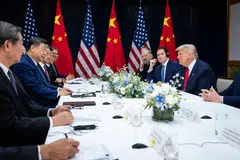
Trump is expected to arrive in Beijing on Wednesday. With mounting pressure to draw a line under the war and the global energy crisis it has ignited, Iran is among the topics Trump and Chinese President Xi Jinping are set to discuss.
Trump has been leaning on China to use its influence to push Teheran to make a deal with Washington.
Baghaei of Iran’s foreign ministry suggested China could instead use the visit to push back against US goals in the Gulf.
Asked about Trump’s travel to China, Baghaei said: “Our Chinese friends know very well how to use these opportunities to warn about the consequences of the US’ illegal and bullying actions on regional peace and security as well as on economic stability and international security.”
Addressing whether combat operations against Iran were over, Trump said in remarks aired on Sunday: “They are defeated, but that doesn’t mean they’re done.”
Diplomacy vs use of force
Israeli Prime Minister Benjamin Netanyahu said that the war was not over because there was “more work to be done” to remove enriched uranium from Iran, dismantle enrichment sites and address Iran’s proxies and ballistic missile capabilities.
The best way to remove the enriched uranium would be through diplomacy, Netanyahu said in an interview aired on Sunday on CBS News’ 60 Minutes. But he did not rule out removing it by force.
Iran’s President Masoud Pezeshkian said in a social media post that Iran would “never bow down to the enemy” and would “defend national interests with strength.”
Despite diplomatic efforts to break the deadlock, the threat to shipping lanes and the economies of the region remained high.
On Sunday, the United Arab Emirates said that it intercepted two drones coming from Iran, while Qatar condemned a drone attack that hit a cargo ship coming from Abu Dhabi in its waters. Kuwait noted that its air defences had dealt with hostile drones that entered its airspace.
Clashes have also continued in southern Lebanon between Israel and Hizbollah, despite a US-brokered ceasefire there announced on April 16. REUTERS
Decoding Asia newsletter: your guide to navigating Asia in a new global order. Sign up here to get Decoding Asia newsletter. Delivered to your inbox. Free.
Share with us your feedback on BT's products and services
TRENDING NOW
On the board but frozen out: The Taib family feud tearing Sarawak construction giant apart

Not retirement, but a rewiring and fresh perspectives post-DBS, says Piyush Gupta
Thai and Vietnamese farmers may stop planting rice because of the Iran war. Here’s why

Should developers build more one-bedroom condo units?

