

Trump signals he may resume war on Iran in 2027 if talks fail, blames Teheran for midterm defeat
The Islamic Republic says it will use all its tools to confront US’ naval blockade on its exports
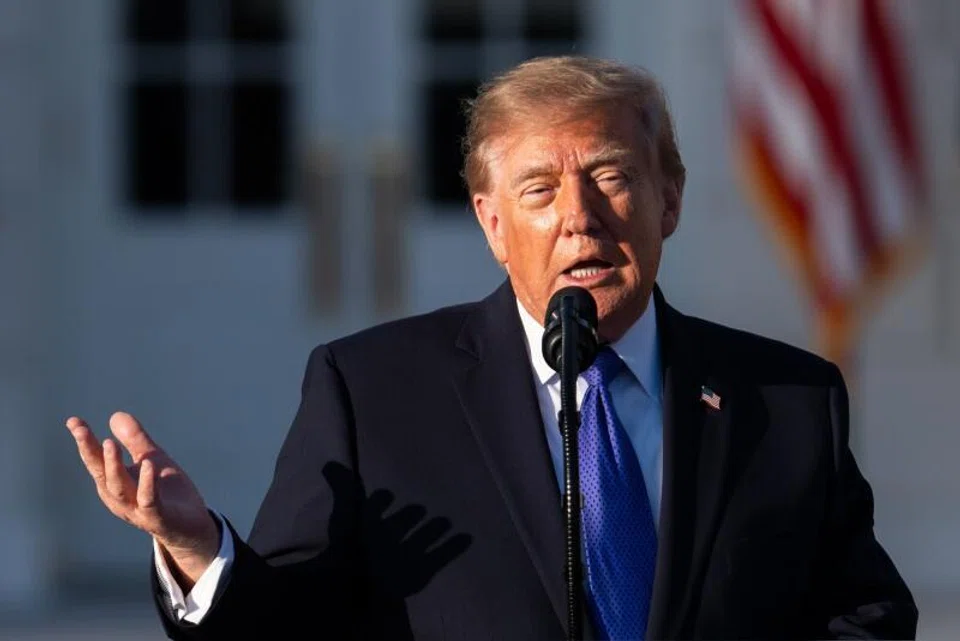
US PRESIDENT Donald Trump indicated to Fox News that he might resume the war on Iran in 2027 if talks fail to yield a diplomatic resolution, blaming his party’s election loss for what he says are Teheran’s increasingly aggressive policies.
Iranian officials are like “professional tap dancers”, Trump told Fox in an interview on Sunday (Nov 22), accusing the Islamic Republic of dragging out the indirect talks underway.
The comments amount to an extension of a timeline Trump had stuck to in the run-up to the US midterm elections earlier in November, when the war and surging energy prices contributed to the rout of his Republican Party.
He has changed his position on the war many times since it began in February and predicted a quick end to it after the vote.
He is now giving diplomacy more time, while warning Iran that the Democrats’ electoral success will not derail his conduct of the war.
“I predicted two things concerning the November 3rd Midterm Elections”, including a more assertive Teheran in the event of a strong showing by the Democrats, Trump later wrote in a Truth Social post.

He said Iran has in the past week fired more drones and missiles than at any time since the war began, adding that “they’ve all been knocked down”.
Iran has in recent weeks stepped up shipping attacks around the Strait of Hormuz, and targeted US military installations in Bahrain and Kuwait.
On Saturday, it struck an industrial facility in Bahrain, injuring two people, including one critically.

Both sides remain far apart on key issues
Arab states in the Persian Gulf are urging Trump to end the conflict without resorting to another round of all-out hostilities after Teheran targeted them with thousands of missiles and drones during the opening weeks of the war.
Iran’s Deputy Foreign Minister Kazem Gharibabad said they are in talks with mediator Qatar to explore a diplomatic way to end the war, following a visit of a delegation from the Gulf state, Iran’s Tasnim news agency reported on Saturday.
Iran’s enriched nuclear material, which lies at the heart of the conflict with the US, cannot be transferred out of the country as part of a possible deal, he was cited as saying.
That underscores how far apart the two sides remain on key issues.
Iran wants the US to end a naval blockade and commit to easing sanctions and unfreezing assets before there can be more formal talks.
Washington wants Teheran to agree to more restrictions on its nuclear programme.
Iran says it will use all its tools to confront US naval blockade
The US blockade is worsening an economic crisis in Iran, preventing it from exporting oil and importing some essential goods, while inflation has accelerated to around 90 per cent.
Imposed on Apr 13, the blockade on Iran-related oil exports was lifted in June after Washington reached a draft understanding with Teheran, then restored on Jul 14 after the agreement collapsed.
Iran’s Foreign Ministry spokesperson Esmaeil Baghaei said on Monday that the country will use all its tools to confront the US naval blockade.
“The naval blockade... is considered a military aggression,” Baghaei said in a weekly news conference. “Iran has the right to use any available tool to defend itself in this regard.”
The country’s state-backed media outlets have also suggested the government will try to get more ships through the blockade.
“That Iran will not tolerate a long-term naval blockade and will certainly break it is a foregone conclusion, and has been stated repeatedly by official military and civilian authorities,” said the state-run Tasnim media outlet, reporting on Sunday.
TankerTrackers.com said last week that a tanker was loading Iranian crude oil in the Gulf via ship-to-ship transfer and could become the first vessel to successfully export the country’s crude since the US reimposed the blockade in July.
Baghaei said on Monday that reports about Iranian ships loading oil are “speculations”.
Visible Iranian crude exports decreased to near zero in recent months due to the blockade. Iran says it controls passage through the strategic Strait of Hormuz and will only reopen it when Washington meets its conditions including halting hostilities, lifting the blockade and waiving sanctions.
“If the other side (the US) fulfils the related conditions we will be able to execute our commitments in the shortest time possible”, Baghaei said, referring to the reopening of the strait.
In his interview with Fox, Trump warned of consequences if Iranian vessels try to challenge the blockade.
“I hope they do, they’ll all be at the bottom of the sea like the rest of the navy,” he said. BLOOMBERG, REUTERS
Decoding Asia newsletter: your guide to navigating Asia in a new global order. Sign up here to get Decoding Asia newsletter. Delivered to your inbox. Free.
Share with us your feedback on BT's products and services






