Is Trump’s indefinite ceasefire with Iran the prelude to peace?
For Washington, the naval blockade remains its strongest card
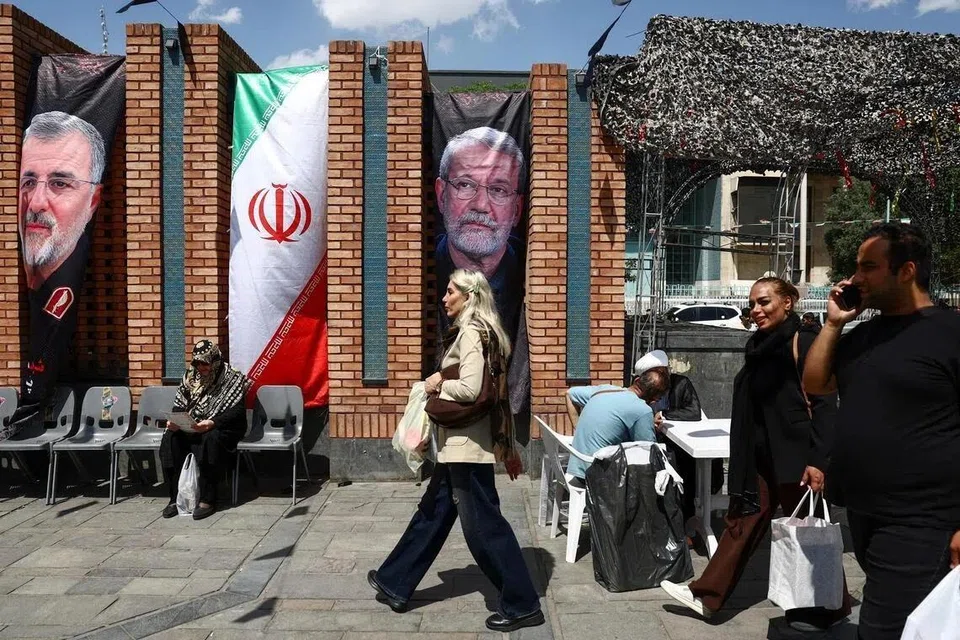
[PHILADELPHIA] A pause before a perilous turn, or a countdown to a peace deal?
US President Donald Trump’s abrupt move to offer an open-ended ceasefire may present a way out of the war with Iran that he launched a little less than two months ago, without admitting retreat.
On paper, the move can secure exactly what Trump desires: A potential exit from a deeply unpopular war, avoiding escalation while claiming his military objectives have already been met.
Iran, facing both existential stakes and internal divisions, remains unlikely to capitulate.
But it may see an opportunity.
It could opt for a calibrated de-escalation through reopening the Strait of Hormuz and trading its stockpile of highly enriched uranium for sanctions relief or the ability to access billions in frozen assets.
Washington wants more: constraints on Iran’s missile programme and an end to support for proxy militias, including Lebanon’s Hizbollah. Iran, in turn, is likely to demand an end to Israel’s campaign in Lebanon and firm guarantees against renewed US or Israeli strikes.
None of these are easy concessions. But in a frozen conflict, both sides can package compromise as victory.
They could also use the ceasefire to reconstitute depleted capabilities. Both continue to say they have their fingers on the trigger during the pause.
SEE ALSO



Trump chose to put the ball in Teheran’s court on April 21 after Iran refused to confirm it would participate in a new round of peace talks in Islamabad, prompting US Vice-President JD Vance to shelve his plans to fly to Pakistan.
Trump said the Iranian government was “seriously fractured” and that he was prolonging the two-week-long ceasefire “until such time as their leaders and representatives can come up with a unified proposal”.
In the meantime, he said he had directed the US military to continue the naval blockade of Iran’s ports and “remain ready and able” to resume the war if needed.
Iran, which appeared to be taken off guard, reacted with open distrust.
Mahdi Mohammadi, a national security adviser to Iran’s parliamentary Speaker and chief negotiator Mohammad Bagher Ghalibaf, brushed off Trump’s action as holding little value.
“Trump’s ceasefire extension means nothing. The losing side cannot dictate terms,” Mohammadi wrote on social media platform X. He called the blockade “no different from bombardment” and warned that it should be met with force.
Iranian military officials echoed the threat, vowing a swift and “powerful” response to any renewed attack.
Hours later, Iran fired on three ships in the Strait of Hormuz.
“An eye for an eye, a tanker for a tanker,” said Ebrahim Rezaei, a lawmaker and spokesman for the Iranian Parliament’s national security and foreign policy committee. He appeared to be referencing earlier actions by the US Navy, including the seizure of an Iranian-flagged ship in the Arabian Sea and the boarding of a tanker in the Indian Ocean carrying oil from Iran.
A formal position from Supreme Leader Mojtaba Khamenei has yet to emerge.
A strategic win?
Still, signs point to a regime preparing to spin the moment as a strategic win.
Trump’s move will be read in Teheran as evidence of its own strength, said Dr Mehrzad Boroujerdi, an expert on Iranian politics and dean of the College of Arts, Sciences and Education at the Missouri University of Science and Technology.
“If Trump continues to threaten, articulate maximalist demands and board Iranian ships, then Teheran thinks it is embarrassing to negotiate. Trump has now shown his hand, and that is, he is not interested in resuming the war.
“Iran takes that as a win,” Dr Boroujerdi told The Straits Times (ST).
But Teheran is also signalling that unless there is a clear change in US behaviour or promises of concessions, it is not in a rush to negotiate.
Dr Boroujerdi said he agreed with assessments that show an intra-regime power struggle between Ghalibaf and the Islamic Revolutionary Guard Corps commander, Major-General Ahmad Vahidi.
“However, the extent of this fracture is not clear,” Dr Boroujerdi said, adding that the regime will use the pause to further trade messages through the Pakistanis until they think they are on the verge of a real long-term deal.
“I think it is fair to say that active fighting is now less probable than before,” he added. “Resumption of war does not make much sense for either side.”
Strongest card
Other analysts were more cautious. Dr Raphael Cohen, director of the National Security Program at the Rand School of Public Policy, said the situation remains delicately perched.
“I’m not going to call the war over just yet,” he said, adding that the question remains as to who blinked first.
“While I don’t think either side is particularly eager to go back to a live conflict, it’s easy (to see) how a misstep can spiral into a return to hostilities,” he told ST.
For Washington, the naval blockade remains its strongest card. It imposes direct economic pressure while creating a de facto quid pro quo: If Iran disrupts maritime traffic, the US can choke off Iranian trade, Dr Cohen said.
That leverage could shape a deal. Earlier talks already exposed a narrow but real negotiating space: Iran floated a five-year pause on its nuclear programme; the US pushed for 20.
“That’s a gap,” Dr Cohen said. “But there is at least a starting point.”
“We’ll see what the Iranians come back with and we’ll go from there,” he added.
For now, the war stands suspended, with both sides still holding the trigger. But has Trump already blinked by extending the ceasefire?
Dr Joseph Ledford, a Hoover Institution fellow with expertise in American foreign policy, said the US leader was gambling on the blockade creating enough pain to induce the hardliners to accept a deal.
“But the problem for Trump is that finding a negotiated exit using this tactic will require more time than may be politically or economically desirable,” he said.
The Iranian regime, fighting for its life, has not been ready to make a deal, Dr Ledford noted.
“Trump is eager to resolve the conflict, but he must exert more force to yield a diplomatic breakthrough. He has the choice between patience and Patriot missiles,” he said.
It would be a mistake to believe that the US will blink, he added.
“America has the advantage so long as Trump stands willing to bear the political and economic costs.” THE STRAITS TIMES
Decoding Asia newsletter: your guide to navigating Asia in a new global order. Sign up here to get Decoding Asia newsletter. Delivered to your inbox. Free.
Share with us your feedback on BT's products and services