

UAE’s Opec exit: Shockwaves will be felt beyond oil prices
Cartel crack-up reflects growing friction and regional rivalry between the Saudis and the Emiratis
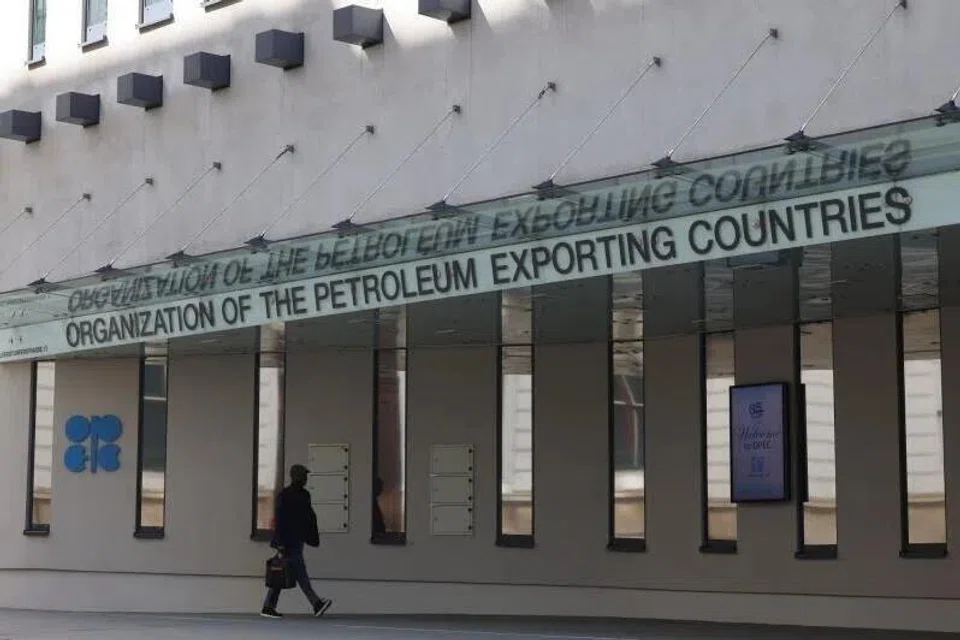
THE Iran war has already generated plenty of upheavals. On Apr 28 came yet another: the United Arab Emirates’ surprise announcement that it is quitting the Organisation of the Petroleum Exporting Countries.
At first sight, the move seems curious for one of the Gulf’s wealthiest Arab monarchies. Opec exists to maximise its producers’ oil revenues, which in the case of the UAE amount to over half of the country’s exports and around 80 per cent of government receipts. Leaving the cartel at a time of mayhem for the world’s oil supplies does not appear to make much sense.
Besides, the problem facing all Gulf oil producers at the moment is neither price nor the availability of customers, but their inability to export the stuff, given the blockades of the Strait of Hormuz operated by both Iran and the US. Leaving Opec, an organisation to which most other neighbouring states – including Saudi Arabia and Iran – belong, and one in which the UAE has been members for 60 years, does nothing to lift the blockage of the Hormuz waterway and only increases political uncertainty.
Yet when all is said and done, the Emirates’ decision has its own logic, for it underlines the country’s frustration with the current impasse in the Iran war. And it offers a clear indication of just how much the Middle East will change when the confrontation between the US, Israel and Iran is finally over. Few of the certainties which used to govern oil flows and prices will ever be the same again.
An old giant
Opec was founded in 1960, just as the world was being reshaped by the emergence of independent nations from the ruins of the British and French empires. So, unsurprisingly, the organisation’s initial mission was not merely to restructure the oil market from one which traditionally favoured Western extraction companies to one that helped the producers of the commodity. Opec also sought to restore some justice by putting the economies of the newly independent states on a fairer, more equitable basis, as the deciders and movers of the oil market, rather than just its suppliers.
The stranglehold of the major US and British oil companies – the so-called Seven Sisters of the energy trade – was broken. The financial coffers of the oil-producing nations swelled. And in 1973, Opec successfully flexed its political muscles when it restricted oil supplies to Western supporters of Israel.
But Opec’s legendary political and economic influence, particularly during the 1970s and 1980s, masked key structural weaknesses. Neither Russia, nor the United States, nor any European oil producer were ever a member of the organisation.
Within Opec, there was also a huge imbalance between Gulf producers with relatively small populations and low extraction costs and the oil-producing states of South America and Africa, where extraction costs are high, production is low, and hundreds of millions clamour to benefit from the revenues. Since the late 1970s, the Gulf has also been divided by the political confrontation between Saudi Arabia and the other Arab monarchies of the region, and Iran.
A fading organisation?
As long as the US and its European allies were the main energy consumers, the US military could be relied upon to protect Opec’s oil supplies from the Middle East. But the US shale oil revolution, which reduced this dependence, has clipped Opec’s importance in Washington’s calculations. It has freed US President Donald Trump to put pressure on Iran with his blockade of the Strait of Hormuz. Although a fifth of all the world’s oil transits through the strait, the customers are now almost exclusively in Asia.
Opec’s clout in shaping the global economy has diminished in other ways. The rise of renewable energy sources is one factor.
Opec itself is also shrinking. It once controlled over 50 per cent of the world’s oil production. Today, its 12 member states control barely a third of all production. Unless the UAE is talked out of it, its departure from Opec from May 1 will reduce this production by a further 11 per cent.
Saudi power
Still, it is worth noting that Opec member states still control around 75 per cent of all the world’s proven oil reserves. And while consumers tend to see oil prices and market fluctuations as just economic challenges, for most governments in oil-producing states, these are questions of sheer political survival. So, Opec evolved methods to prop up its influence.
One such method is Saudi Arabia’s decision to invest heavily in its production capacity, something that gives the country the ability to pressure all other Opec member states into following Saudi export preferences.
And there was another key innovation: the emergence of the so-called Opec+, an informal association between existing members and other oil producers outside the organisation, including countries such as Brunei, Brazil, Malaysia and, above all, Russia, which accounts for around 11 per cent of global output.
In recent years, it was not Opec itself that decided production quotas, but the informal Opec+ arrangement between Russia and Saudi Arabia.
The arrangement suited both sides. It allowed Russia to influence global oil prices, despite the fact that the Russians were subject to Western economic sanctions and largely kicked out of European markets. And it strengthened Saudi Arabia’s hold over the market.
Exit the Emiratis
Opec has lost members before. They included Indonesia, Qatar and, most recently, Angola, one of Africa’s key oil producers, in 2023. But this week’s Emirati decision is altogether in a different league.
To start with, the Emirates’ annual oil production is higher than that of all previous Opec defectors put together. And, if one excludes Canada, whose reserves are largely confined to oil sands, the UAE has the fifth-largest proven reserves of oil in the world, and about double the US oil deposits. In short, the UAE’s departure from Opec is a massive setback, if not yet a mortal blow.
Why has the country taken this decision? Partly for sheer economic reasons. While oil exports from the region are now largely blocked by the closure of the Strait of Hormuz, as soon as the waterway reopens to tanker traffic, a surge in oil exports from the Gulf region is expected.
This surge will not only serve to meet current demand but also to replenish storage facilities and strategic stocks that are currently being depleted. When the time comes, the UAE is not interested in having to bow to production quotas decided by Saudi Arabia, the cartel’s de facto leader.
The UAE is also interested in generating more revenue in a shorter period to promote investments; the country leads the region in economic diversification efforts.
Before the outbreak of the Iran war, the UAE was already producing around 3.7 million barrels a day of crude. It wants to bump that up to five million by the end of 2027. But its ambition to raise output is opposed by Saudi Arabia, which wants to keep a lid on production and maintain control over prices. Friction between the two over output and the UAE quota led to an open clash in 2021 at an Opec+ meeting.
However, political calculations stemming from the current regional war played a bigger part in the Emirates’ decision to quit the cartel.
Iran, a fellow Opec member, fired most of its missiles and drones not at Israel – the Islamic Republic’s sworn enemy – but at the oil-producing Arab Gulf states, and particularly at the UAE.
Yet the monarchies of the Gulf did nothing to help each other. As leaders in the UAE see it, there is little point in making economic concessions to their Gulf neighbours if these are not reciprocated with the creation of a regional security structure. And there is no point in being in the same organisation with Iran, whose military is now menacing the entire region.
The move is also consistent with longstanding personal tensions between Sheikh Mohamed bin Zayed Al Nahyan, also known as MBZ, who rules the Emirates, and Crown Prince Mohammed bin Salman (MBS), the effective ruler of Saudi Arabia. As the elder of the two, MBZ demands respect. But as the leader of the region’s biggest country, MBS is increasingly striding on his own.
Increasingly, both countries see each other as rival business hubs in the region.
The two countries are also adopting different security strategies. Saudi Arabia has had a conciliatory approach to Iran, hoping to avoid a direct showdown. Meanwhile, MBZ believes that the Iranian Islamic Republic, as well as all other radical Islamic regional movements such as the Muslim Brotherhood, should be combatted at all times.
Relations between the Saudis and the Emirates have also soured over their alignments with warring factions in Yemen.
Who stands to gain
The split in the oil cartel is good news for both Russia and the US. The Russians may continue to cherish their ability to maximise revenues by coordinating production levels with Saudi Arabia; Russian President Vladimir Putin, now in the fifth year of a war he unleashed against Ukraine, needs every cent he can squeeze out of his oil revenues. But instead of talking only to Saudi officials, Putin can now also balance off Saudi Arabia against the UAE, a game he will enjoy.
We still do not know whether US officials were privy to the Emirati plans to quit Opec or even encouraged the move. Is it just a coincidence that US Treasury Secretary Scott Bessent decided to provide the UAE with a multibillion-dollar “swap line” of credit just as the Emiratis decided to leave Opec? Was US Secretary of State Marco Rubio engaged in just routine contacts with his Emirati counterpart a day before the UAE slammed the door on Opec?
What is clear, however, is that the weakening of the global oil cartel is a gain for Trump, who often accused Opec of “ripping off the rest of the world” by artificially inflating prices. The Opec split reinforces Trump’s dream of a world in which the US dictates the price and supplies of fossil fuels by being the central point in a network of bilateral and informal links with key producers.
The UAE’s exit is damaging not just to Opec’s ability to influence global energy prices but also to Saudi Arabia’s. If it wishes to curtail production to maintain prices, it may have to consider shouldering more of the output cuts from the now even smaller club. Its sway could be further diminished if some of the remaining members of Opec such as Venezuela and Iraq demand a greater say or go the way of the UAE.
In theory, global oil consumers, and particularly those in Asia, should benefit from this fracture in Opec. After the Iran war either ends or freezes, there will be plenty of oil sloshing around, and prices will nosedive, at least initially.
But the Middle East will be even more unstable and unpredictable, as the battle for supremacy in the oil-rich Gulf only intensifies. THE STRAITS TIMES
Decoding Asia newsletter: your guide to navigating Asia in a new global order. Sign up here to get Decoding Asia newsletter. Delivered to your inbox. Free.
Share with us your feedback on BT's products and services
TRENDING NOW
LTA proposes combining car COE categories, adding rebate-surcharge system

StarHub to acquire MyRepublic’s mobile business amid ongoing telco consolidation

DBS, OCBC, UOB rout lops billions off STI as inflation, rate concerns spook investors

Grab CEO’s wife Chloe Tong on life with Anthony Tan and finding her purpose

