

UK wages grow faster than expected in three months ended April
Holding at 3.4%, it beats economists’ expectations of a decline to 3.2%
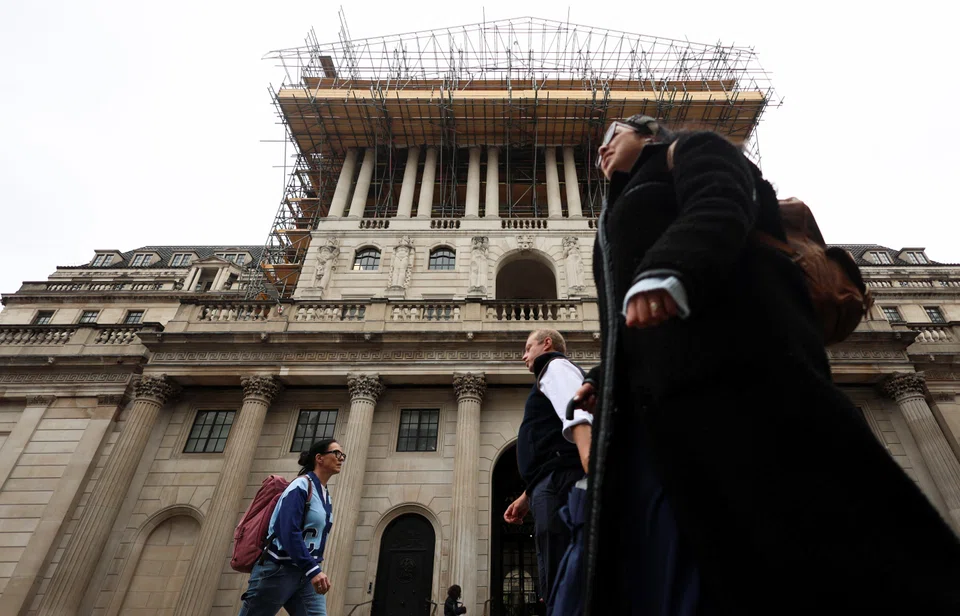
[LONDON] British wages grew faster than expected in the three months ended April while the jobless rate fell, official figures showed.
The numbers also revealed that the labour market is in a stronger shape, hours before the Bank of England (BOE) announces its next interest rate decision.
Average weekly earnings growth excluding bonuses held at an annual rate of 3.4 per cent in the three months ended April rather than falling to 3.2 per cent as economists had expected in a Reuters poll, while the jobless rate unexpectedly fell from 5 per cent to 4.9 per cent.
The BOE is closely watching Britain’s job market to see if higher oil prices caused by the Iran war will trigger bigger wage rises, or if demand for workers is too weak to enable people to bargain for higher pay.
The central bank is widely expected to keep interest rates on hold at 3.75 per cent later on Thursday (Jun 18), and most policymakers think the job market now is weaker than in recent years, making outsized wage rises less likely.
After Russia’s full-scale invasion of Ukraine in 2022, inflation peaked at 11.1 per cent and wage growth spent nearly three years above 5 per cent, contributing to the BOE’s difficulty in getting inflation back to its 2 per cent target.
The central bank judges that wage growth at a pace significantly above 3 per cent will make it hard to achieve 2 per cent inflation on a lasting basis, due to persistently weak productivity growth.
The unemployment data is based on an Office of National Statistics (ONS) survey, which has suffered from low response rates in recent years, making trends harder to read.
However, the ONS says the latest surveys now have response rates close to their levels before the pandemic.



Alternative ONS data, based on tax office figures, showed the number of workers on company payrolls rose by 2,000 in May.
This data is often heavily revised and the initial drop of 100,000 reported for April – the biggest since May 2020 – was revised down to 53,000.
Job vacancies in the three months ended May fell by 19,000 to 707,000, the lowest since early 2021 and down from a peak of around 1.3 million in 2022 when the labour market was tightest. REUTERS
Decoding Asia newsletter: your guide to navigating Asia in a new global order. Sign up here to get Decoding Asia newsletter. Delivered to your inbox. Free.
Share with us your feedback on BT's products and services






