

US Fed set to lead G7 trio in hawkish rate pause
While US inflation data has come in hot since then, officials seem in no rush to deliver another hike
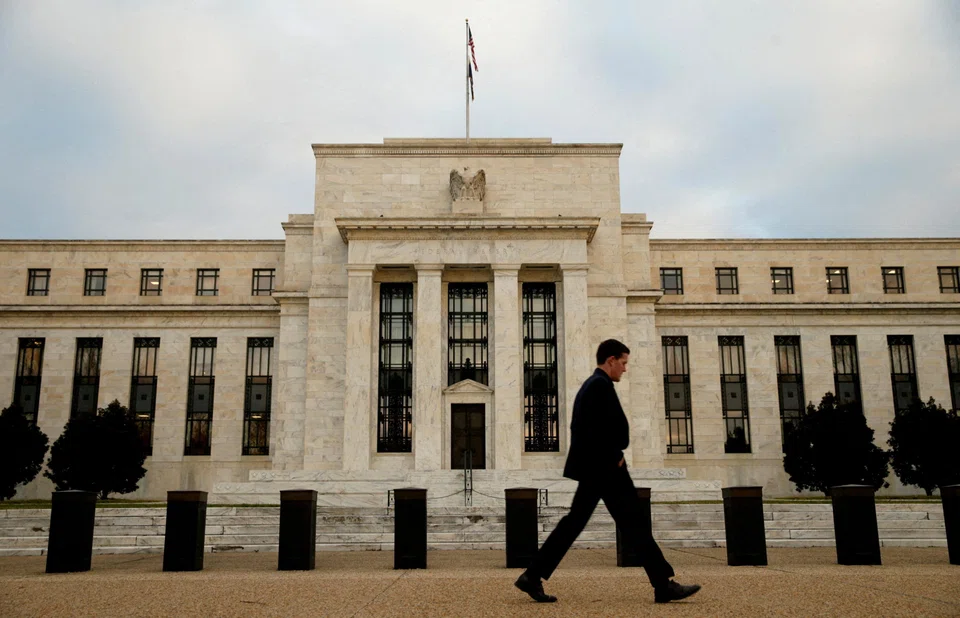
THE US Federal Reserve and its peers in the eurozone and Japan will probably keep interest rates steady in the coming week, opting to bide their time before potential further hikes.
Three days of decisions starting on Wednesday (Oct 28) in Washington are likely to affirm a hawkish stance balanced by a measured pace as policymakers confront inflation risks ranging from surging energy prices to the artificial intelligence boom.
The Fed raised rates in September for the first time since 2023 and signalled another increase was likely in 2026. While US inflation data has come in hot since then, officials seem in no rush to deliver another hike. Instead, economists and investors expect a move at the final meeting of 2026, in December.
Chairman Kevin Warsh, who has eschewed guidance on future moves, will face a tricky test at his post-meeting press conference. He probably will not offer much insight about December, but may also not want to sway market bets away from the current expectation for a hike.
Fed watchers may need to wait until after the meeting to hear what other US central bankers say about the prospects for policy.
The European Central Bank on Thursday could offer its own signals on a hike in December, in a decision overshadowed by France’s bond-market troubles. The following day, the Bank of Japan will probably keep its rate steady while holding the door open to a move at the end of the year.
In contrast to the no-change expectations from those big-three Group of Seven decisions, other central banks may well deliver action.
Most forecasters anticipate a hike from New Zealand on Wednesday, while several economists see the first such move in three years materialising at the Bank of Canada on the same day.
Elsewhere, US and eurozone growth data, the UK Budget, and rate decisions from Colombia to Thailand will be among the highlights.



US and Canada
A day after the central bank decision, the US government offers its initial estimate of third-quarter gross domestic product as well as the Fed’s preferred inflation gauge.
Economic growth likely accelerated during the July-September period, thanks to robust business investment and resilient consumer spending.
The Atlanta Fed’s GDPNow model forecasts a 3.5 per cent annualised growth rate for the quarter, which would be the strongest in a year. The government’s GDP report on Thursday may also show a narrower gauge of underlying demand – final sales to private domestic purchasers – registered the strongest back-to-back quarters of growth in five years.
That measure excludes often-volatile data on net exports and inventories, as well as government spending. While the GDP report also includes a quarterly read on the personal consumption expenditures price index, the Fed’s inflation figure of choice, monthly figures released at the same time are projected to show price growth quickened in September.
Looking north, Canadian GDP likely remained flat in August with a 0.2 per cent expansion, and on Friday, Statistics Canada will offer a flash estimate for September.
Asia
Asia’s central banks face another test of their inflation-fighting resolve as the global bond sell-off, prospects for higher developed-market interest rates, elevated oil prices and a record-strength El Nino threaten to keep financial conditions tight.
Aside from the decisions by the Reserve Bank of New Zealand and BOJ, the Bank of Thailand’s outcome on Wednesday, forecast by economists at no change, is another highlight.
Bets on another Fed hike and the recent Treasury rout have pushed yield gaps between US and emerging Asian debt toward extremes, increasing the risk of capital outflows and currency pressure.
Inflation data will therefore command particular attention. Australia reports quarterly and monthly CPI on Wednesday, including the RBA’s closely watched trimmed-mean measure.
Tokyo inflation follows on Friday, hours before the BOJ decision. Price risks remain tilted upward: oil stayed at about US$100 a barrel in the past week amid Middle East supply concerns, while El Nino has intensified further and is already disrupting weather across Asia.
Growth signals will round out the week. South Korea reports third-quarter GDP on Tuesday, while China’s official manufacturing, non-manufacturing and composite PMIs arrive on Saturday.
Those readings will indicate how well Asia’s factories and consumers are absorbing the combination of expensive energy, higher borrowing costs, and tightening global financial conditions.
Europe, Middle East, Africa
The first UK Budget under Prime Minister Andy Burnham will arrive on Wednesday, at a time when scrutiny of the country’s public finances is intensifying.
Chancellor John Healey’s balancing act will be to reconcile the need to support consumers through the energy crisis while reassuring investors on fiscal discipline.
In the eurozone, multiple data points will illustrate the economic backdrop to the ECB decision.
Germany’s Ifo index of business confidence on Monday may offer insight on sentiment at a time of political tensions in Berlin. French consumer confidence is due the following day, again with the possibility of an impact from political gridlock.
The first look at third-quarter GDP in the eurozone is scheduled for Friday, with slowing expansion of 0.2 per cent anticipated by economists. Inflation data from the region’s four biggest economists come the same day.
Further afield, South Africa’s statistics agency will release rebased and benchmarked GDP estimates on Thursday, with the reference year changed to 2022 from 2015.
Zambian Finance Minister Situmbeko Musokotwane will deliver his 2027 Budget on Friday. Investors will look for details on how the copper-rich nation will mitigate the impact of a potentially severe drought as it awaits final approval for an International Monetary Fund programme. BLOOMBERG
Decoding Asia newsletter: your guide to navigating Asia in a new global order. Sign up here to get Decoding Asia newsletter. Delivered to your inbox. Free.
Share with us your feedback on BT's products and services
TRENDING NOW

Singapore expects all parties to honour commitments, says PM Wong after Indonesia cuts gas exports

China’s US$3.5 trillion stock rout deepens as profits sink, major stimulus stays elusive
Gas supply cut from Indonesia accounts for less than 2% of Singapore’s daily gas demand: EMA

Singapore’s central gas buyer affirms Indonesia’s role as ‘important partner’ amid export review warning

