

US manufacturing activity jumps to more than four-year high in July
New orders and employment climb, while supplier deliveries slow
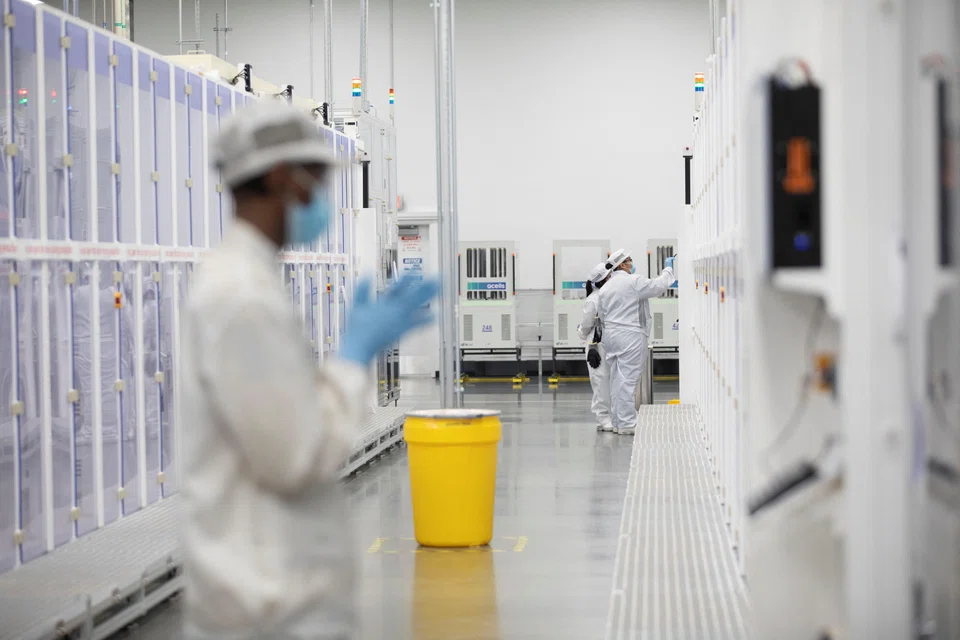
[WASHINGTON] US manufacturing activity increased to the highest level in more than four years in July amid strong order growth, boosting factory employment, though the Middle East conflict is straining supply chains and keeping input costs elevated.
The Institute for Supply Management (ISM) said on Monday (Aug 3) that its manufacturing purchasing managers’ index increased to 55.6 last month, the highest reading since May 2022, from 53.3 in June.
Economists polled by Reuters had forecast that the PMI would edge up to 54.0.
The PMI has this year held above the 50 threshold, which indicates growth in the manufacturing sector.
Manufacturing, which accounts for about 9.4 per cent of the economy, has been supported by businesses front-loading orders to avoid higher prices and shortages stemming from the US-Israeli war with Iran.
An artificial intelligence build-out is also driving activity in the technology sector, blunting the hit on manufacturing from import tariffs.
With business inventories at very low levels, there is ample room for manufacturing to expand. The US Federal Reserve reported last month that factory production grew at its fastest pace in four years in the second quarter. Business inventories have declined for five straight quarters, the government reported last week.
Factory employment rebounds
The ISM survey’s new orders measure rose to 56.7 last month from 56.0 in June.
Export orders surged and unfinished work piled up, prompting factories to boost employment. A measure of manufacturing employment rebounded to 52.8, the highest level since August 2022, from 49.7 in June.



Strong demand is, however, running into supply constraints. The survey’s supplier deliveries index increased to 58.9 from 57.4 in June. A reading above 50 indicates slower deliveries.
The lengthening in suppliers’ delivery times likely contributed to the jump in the PMI last month, as it is normally associated with a strong economy and high demand.
Supply constraints meant inflation at the factory gate remained elevated last month, though the pace of increase slowed. The survey’s gauge of prices paid for inputs slipped to a still-high 71.1 from 73.0 in June.
That reading could reflect a retreat in oil prices in June amid a shaky ceasefire between the US and Iran.
Oil prices have since risen following the collapse of the truce in July. The Fed last week left its benchmark overnight interest rate in the range of 3.5 to 3.75 per cent.
Three members of the US central bank’s policy-setting committee dissented, preferring a quarter-percentage-point hike.
Inflation risks are tilted to the upside because of the war, which is now in its sixth month. REUTERS
Decoding Asia newsletter: your guide to navigating Asia in a new global order. Sign up here to get Decoding Asia newsletter. Delivered to your inbox. Free.
Share with us your feedback on BT's products and services
TRENDING NOW

Government to bring forward raising of retirement age, give employers more financial support to create flexi-load jobs

If Europe goes to war, the fallout will be felt in East Asia

Indonesia stocks suffer worst plunge in nearly 30 years as MSCI proposes standalone status

Vietnam’s northern provinces, not Hanoi or Ho Chi Minh City, are powering near 10% GDP growth

