

Venezuela’s billions in distressed debt: Who is in line to collect?
[NEW YORK/LONDON] The toppling of President Nicolas Maduro has thrust Venezuela’s debt crisis – one of the world’s largest unresolved sovereign defaults – into the limelight.
Following years of economic crisis and US sanctions that severed the country from international capital markets, Venezuela defaulted in late 2017 after missing payments on international bonds issued by the government and state oil company, Petroleos de Venezuela, known as PDVSA.
Since then, accumulated interest and legal claims tied to past expropriations have added to unpaid principal, swelling total external liabilities far beyond the face value of the original bonds.
Venezuela’s distressed debt has rallied since US President Donald Trump came to power in January 2025 as speculators bet on the possibility of political change.
Below is a look at which entities owe money, what could be included in a restructuring and who might be knocking on Caracas’ door to collect.
How much does Venezuela owe?
Analysts estimate that Venezuela has about US$60 billion of defaulted bonds outstanding. However, total external debt – including PDVSA obligations, bilateral loans and arbitration awards – stands at roughly US$150 billion to US$170 billion, depending on how accrued interest and court judgments are counted, according to analysts.
The International Monetary Fund (IMF) estimates Venezuela’s nominal gross domestic product at about US$82.8 billion for 2025, implying a debt-to-GDP ratio of between 180 and 200 per cent.
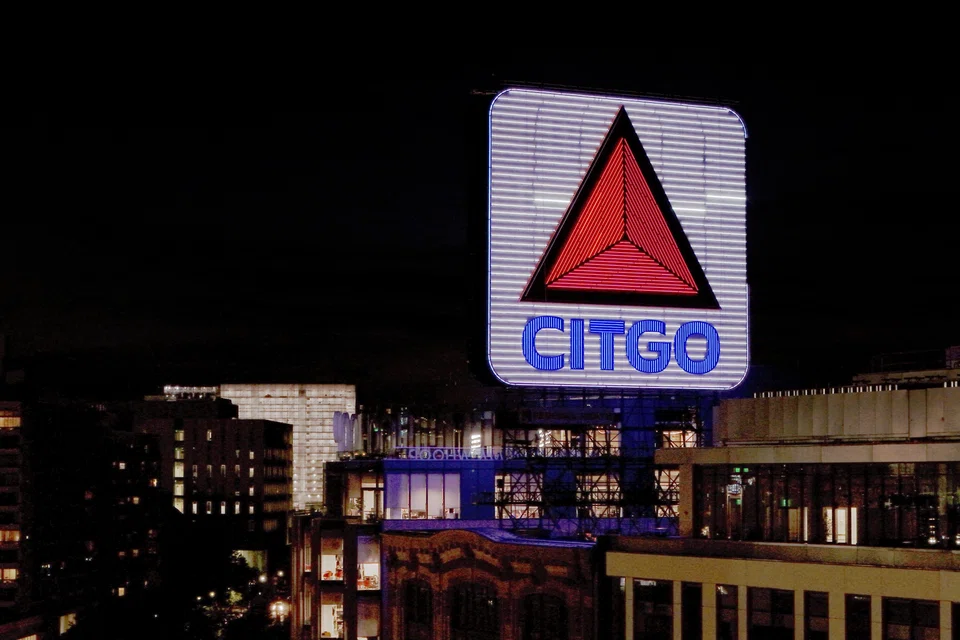
A PDVSA bond originally maturing in 2020 was secured by a majority stake in US-based refiner Citgo, which is ultimately owned by Caracas-headquartered PDVSA. Citgo is an asset now at the center of court-supervised efforts by creditors to recover value.
Who holds what?
Years of sanctions, including a prohibition on trading Venezuela’s debt, have made it hard to keep tabs on ownership. The largest share of commercial creditors likely consists of international bondholders, including specialist distressed-debt investors, sometimes called vulture funds.
SEE ALSO

Among the creditors is a group of companies awarded compensation through international arbitration after assets were expropriated by Caracas. US courts have upheld multi-billion-dollar awards to ConocoPhillips and Crystallex, among others, turning those claims into debt obligations and allowing creditors to pursue Venezuelan assets to make themselves whole.
A growing pool of court-recognised claimants is competing for recovery from Citgo’s parent company through US legal proceedings. A Delaware court registered about US$19 billion in claims for the auction of PDV Holding, Citgo’s parent, which far exceeds the estimated value of Citgo’s total assets. PDV Holding is PDVSA’s wholly owned subsidiary.
Caracas also has bilateral creditors, primarily China and Russia, which extended loans to both Maduro and his mentor, former president Hugo Chavez.
Precise numbers are hard to verify since Venezuela has not published comprehensive debt statistics in years.
A distant restructuring?
Given the plethora of claims, legal proceedings and political uncertainty, a formal restructuring is expected to be complex and lengthy.
A sovereign debt workout could be anchored by an IMF programme setting fiscal targets and debt-sustainability assumptions. However, Venezuela has not had an IMF annual consultation in nearly two decades and remains locked out of the lender’s financing.
US sanctions are another obstacle. Since 2017, restrictions imposed under both Republican and Democratic administrations have sharply limited Venezuela’s ability to issue or restructure debt without explicit licences from the US Treasury.
It is unclear what will happen with US sanctions. For now, President Donald Trump has said the US will “run” the oil-producing nation.
What are recovery values?
Bonds have returned some 95 per cent at the index level in 2025.
Many of them currently trade between US$0.27 and US$0.32 on the dollar, MarketAxess data shows.
Citigroup analysts in November estimated that a principal haircut of at least 50 per cent would be needed to restore debt sustainability and satisfy potential conditions from the IMF.
Under Citi’s base case, Venezuela could offer creditors a 20-year bond with a coupon of around 4.4 per cent, alongside a 10-year zero-coupon note to compensate for past-due interest.
Using an exit yield of 11 per cent, Citi estimates the net present value of the package in the mid-40s cents on the dollar, with recoveries potentially rising into the high-40s if Venezuela were to hand out additional contingent instruments such as oil-linked warrants.
Other investors sketch a wider range. Aberdeen Investments said in September it had initially assumed recoveries of around U$0.25 on the dollar for Venezuelan bonds, but that improved political and sanctions scenarios could lift recoveries into the low-to-mid-30s, depending on the structure of any deal and the use of oil-linked or GDP-style instruments.
What is Venezuela’s economic situation?
Recovery assumptions sit against a grim backdrop.
Venezuela’s economy shrank dramatically after 2013 when oil production fell off a cliff, inflation spiralled and poverty surged. Although output has stabilised somewhat, lower global oil prices and discounts to Venezuela’s crude prices limit revenue gains, leaving little room to service debt without deep restructuring. The recent US blockade of sanctioned oil tankers has exacerbated the situation.
Trump said American oil companies were prepared to tackle the difficult task of entering Venezuela and investing to restore production but details and timelines remain unclear. Chevron is the only American major currently operating in Venezuela’s oil fields. REUTERS
Decoding Asia newsletter: your guide to navigating Asia in a new global order. Sign up here to get Decoding Asia newsletter. Delivered to your inbox. Free.
Share with us your feedback on BT's products and services
TRENDING NOW

Once staunchly pro-China, Malaysian Chinese businesses are now distancing themselves from Beijing

Looking beyond looming CEO succession, should UOB potentially pursue a transformative merger?

Could stablecoins be the future of money?

Grab CEO’s wife Chloe Tong on life with Anthony Tan and finding her purpose

