2026 Nissan Serena review: A unique feature worth spending S$2,000 on
Clever seating and plug-free electric propulsion make this Nissan a smart family bus
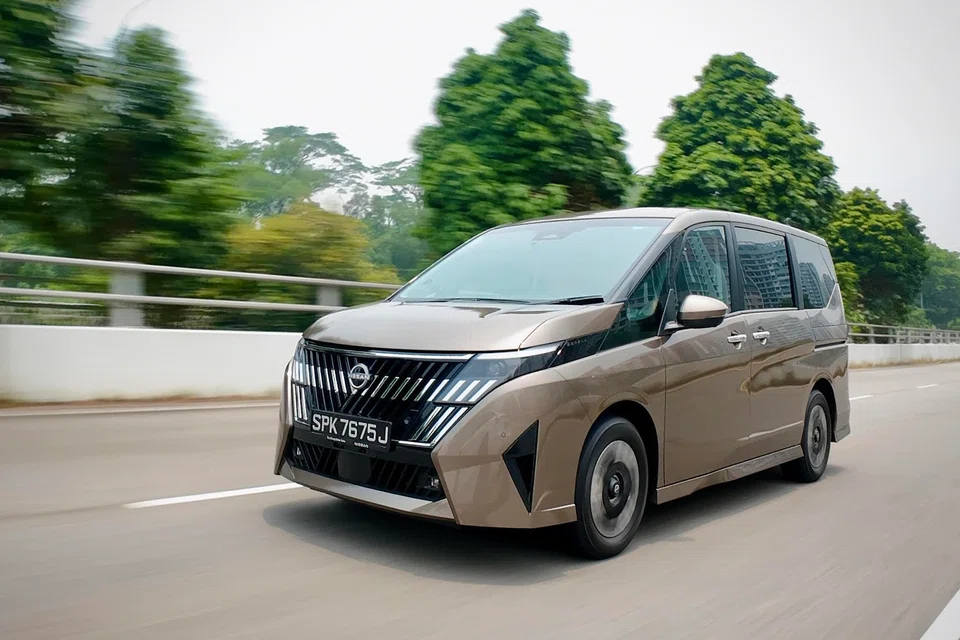
[SINGAPORE] The Nissan Serena might be the last thing a 50-year-old man-child like me would want to drive, but even I can respect that it’s built to ferry a small army of children around.
The key to appreciating this multipurpose vehicle is to understand that it’s a bus trapped in a car’s body (or a van’s, to be less flattering about it). Doing so lets you twig that it’s aimed at people who arrange their lives around their offspring.
At 1.87 m tall and only 1.72 m wide, it’s proportioned like a cupboard, so it’s lofty inside, though you might want to keep an eye on signposted height limits before you drive into an older multi-storey car park.
Still, despite having room to spare in every direction inside, the Nissan is just 4.77 m long, which gives it roughly the footprint of a BMW X3. That makes it manageable on the move and easy to whip around when it’s U-turn time.
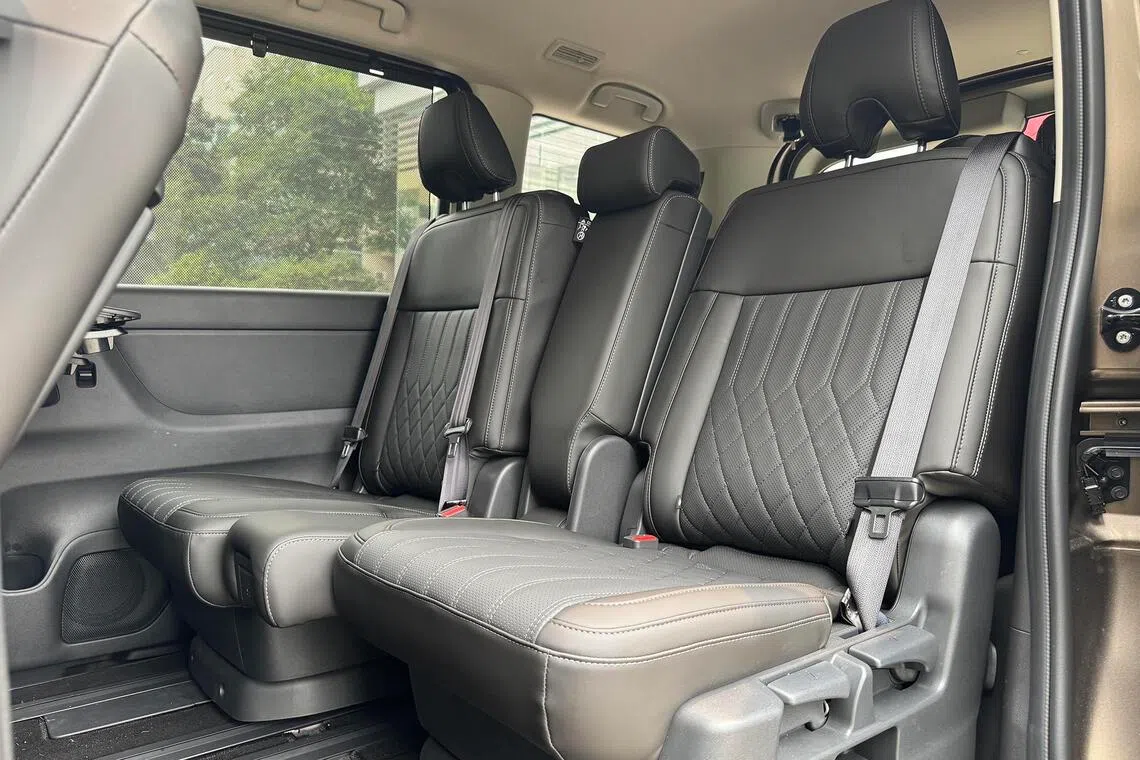
Aside from a new grille with an interestingly asymmetrical design, a facelift for the Serena has brought an eight-seat option that adds S$2,000 to the price. The aptly named Smart 8 variant has a front armrest that slides and unfolds into a middle seat for the second row, and even though the extra perch is best used by a child, it’s terrific value if you do the maths.
As for the main second-row seats, I’d call them comfy rather than plush, meaning they don’t massage your back or come with ventilation or flip-up leg rests. But there are fold-up trays, hooks for bags, cupholders and pull-up sunshades, so your kids should feel reasonably pampered in them, without being spoilt.

The seats slide effortlessly on well-greased rails, too, so clambering into the third-row seats (or escaping from them) doesn’t require youthful suppleness. The sliding doors open electrically, and I closed one against my arm to see if it would chop it off at the shoulder. It wouldn’t.
The Serena’s other trump card is its e-Power drivetrain. Its 1.4-litre, three-cylinder engine never drives the wheels but generates electricity instead. That’s used to top up a small battery that feeds a 163-horsepower electric motor, which is ultimately what animates the Nissan.
The set-up means that the Serena drives like an electric vehicle, all smooth and responsive, except it never needs a plug. And while it does want fuel, it’s thrifty for such a large thing, since the engine can hum along at its most efficient revs instead of chasing the car’s speed, and because regenerative braking puts energy back into the battery.
Nissan claims 5.1 litres per 100 km, though I admittedly did worse, averaging 6 litres per 100 km over 114 km. Still, that’s hatchback consumption from a car that looks like it could eat a Volkswagen Golf whole.
Except it couldn’t really, because the boot holds just 280 litres if you use all eight seats. The Serena is better at hauling things than that sounds, though.
There’s a deep underfloor well that can stop your groceries from wandering the cabin, or let you stand a big suitcase upright in the boot. A nifty window lets you reach in without opening the whole tailgate, which is handy if you’ve reversed up to a wall.
Folding the third-row seats up is fiddly, however, and the Honda StepWGN – the Serena’s closest foe – converts seating space to cargo room much more cleverly.
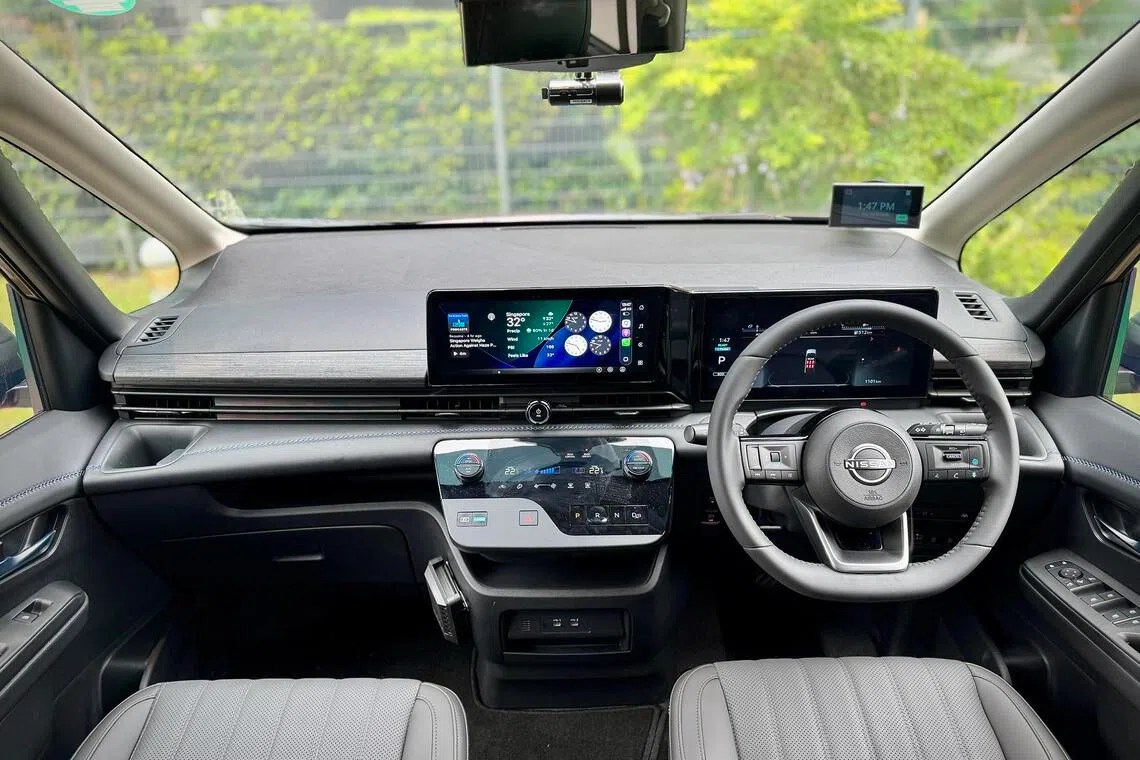
The Serena feels basic in some ways, too. It has no power seats, no rain-sensing wipers and no electric tailgate, though the black Nappa leather is a nice concession to every buttock on board.
It can be noisy at highway speeds, and the suspension really lets you know what state the road under you is in. The 12.3-inch driver’s display hides behind the steering wheel, and the lane-keeping assist camera struggles to read road markings.
It is precisely as fun to drive as you would expect a family bus to be, but at least the controls are light, you can see out easily and the air-conditioning is ferocious. I loved the panel of physical controls for the climate system for the user-friendliness, too.
As a matter of fact, after spending hours behind the wheel in Singapore traffic, I stepped out without feeling the urge to murder someone. If I know anything about how it feels to drive a full load of children around, that is something worth putting on the front page of the brochure.
Nissan Serena e-Power Highway Star Smart 8
Engine 1,433 cc, in-line three Power 98 hp at 5,600 rpm Torque 123 Nm at 5,600 rpm Electric motor 163 hp/315 Nm Battery Lithium-ion, 1.77 kWh System power 163 hp System torque 315 Nm Fuel efficiency 5.1 litres/100 km Agent Tan Chong Motor Sales Price S$241,800 with COE Available Now
Decoding Asia newsletter: your guide to navigating Asia in a new global order. Sign up here to get Decoding Asia newsletter. Delivered to your inbox. Free.
Share with us your feedback on BT's products and services