2026 Toyota bZ4X review: A facelift transforms Toyota’s first EV, but kept one thing the same
Toyota has been busy with its bZ, but it’s still an electric vehicle aimed at drivers tentative about switching to battery power
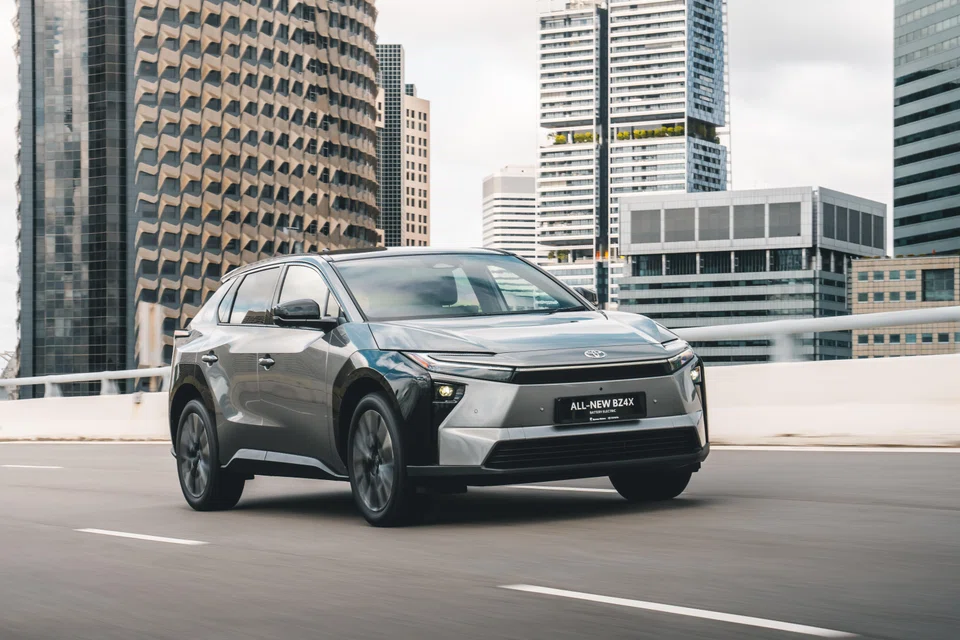
[SINGAPORE] Whoever came up with the Toyota bZ4X must have decided that the brave new world of electric vehicles (EVs) doesn’t have to be all that brave or new. It may have batteries and a motor, but fundamentally, the bZ4X still feels more like a car than a gadget on wheels.
The Japanese giant – still the world’s biggest car company – spent the last decade making its case for hybrids while newcomers bet on pure EVs, and the first bZ4X made its 2022 debut with all the reticence of someone dipping one toe into bubbling water. It never went on sale here officially, nor even in Japan.
But a revamp later, you can finally buy a bZ4X for S$220,888. The biggest improvements have to do with the powertrain; the AC charging rate has trebled to 22 kilowatts, which means a full top-up for the 69-kilowatt-hour battery pack takes three and a half hours.
DC charging, at 150 kW, pushes the batteries from 10 to 80 per cent in 28 minutes. The range is a claimed 478 km, and because it’s Toyota making the claim, you know it’s doable. It can park itself at the press of a button, too, though not quite as rapidly as some Chinese EVs do.
Toyota also reworked the suspension to improve the ride, changed the dashboard layout slightly and added some sound insulation.
For now, it comes with a single front motor that produces 227 horsepower, enough to send it to 100 kmh in 7.4 seconds. That’s brisk rather than breathtaking, and is similar to what a beefy 2.0-litre turbo engine would deliver, only the acceleration response is pretty much instant.
For buyers who want sports car acceleration and more plushness, the Subaru Solterra XT – essentially the same car in different clothes and two motors – is available now, and for slightly less money.
Yet even though it’s no ball of fire, the bZ4X is more satisfying to drive than the majority of Chinese EVs whose steering wheels I’ve twirled. For one thing, the Toyota’s helm gives you some actual feedback, and keeps up a steady patter of how much bite the front tyres have when you sling through corners.
The suspension handles the worst tarmac with pliancy and composure, too. It’s so much better than the numb, floaty norm that I’ve become used to after driving a string of Chinese EVs.
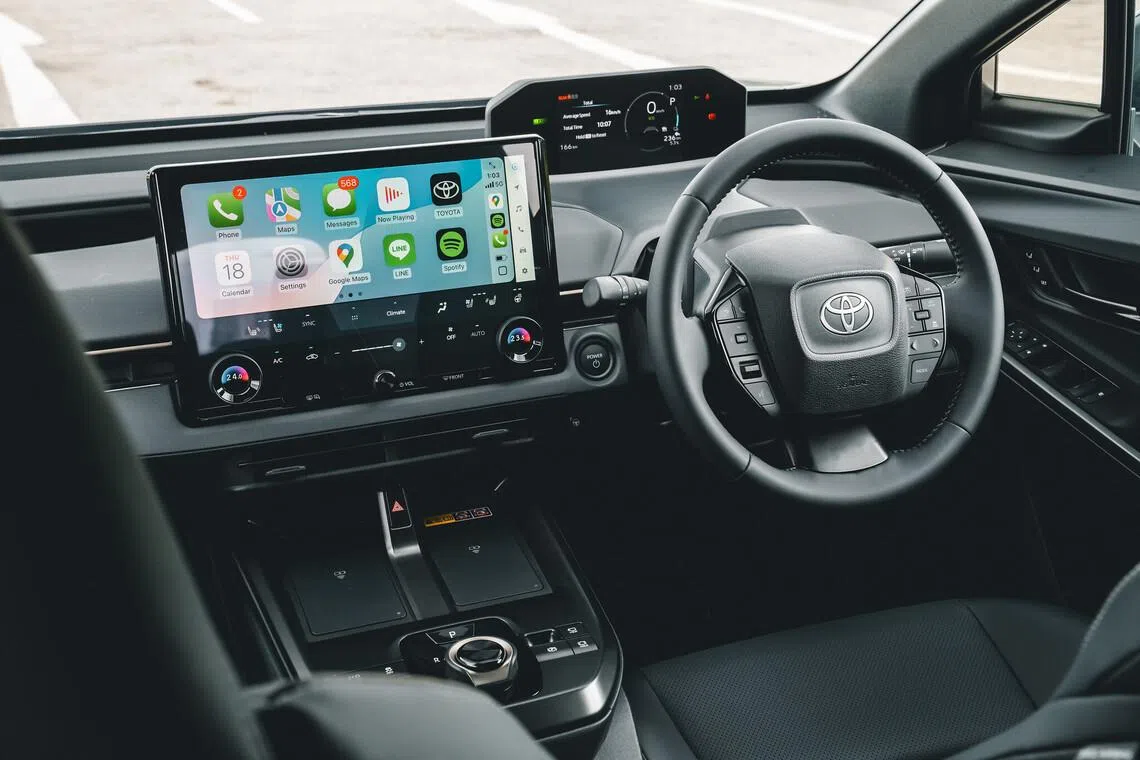
I have plenty of love for the Toyota’s controls, too. The dashboard has physical buttons and knobs for the things you adjust most often: volume, temperature, wing mirror position, even the brightness of the driver display. At a time when rivals have buried all of this several menus deep inside a touchscreen, the bZ4X simply works.
All of this would make the Toyota an easy recommendation to people who look at the buttonless dashboard of a Tesla or XPeng with deep suspicion, but there are a few gripes.
Even the staunchest EV-sceptic would appreciate a companion app to link the bZ4X to your phone. That way, you could cool the cabin remotely, check the battery’s state of charge and so on. As things stand, the bZ4X’s relationship with smartphones doesn’t extend beyond Apple CarPlay or (wired) Android Auto.
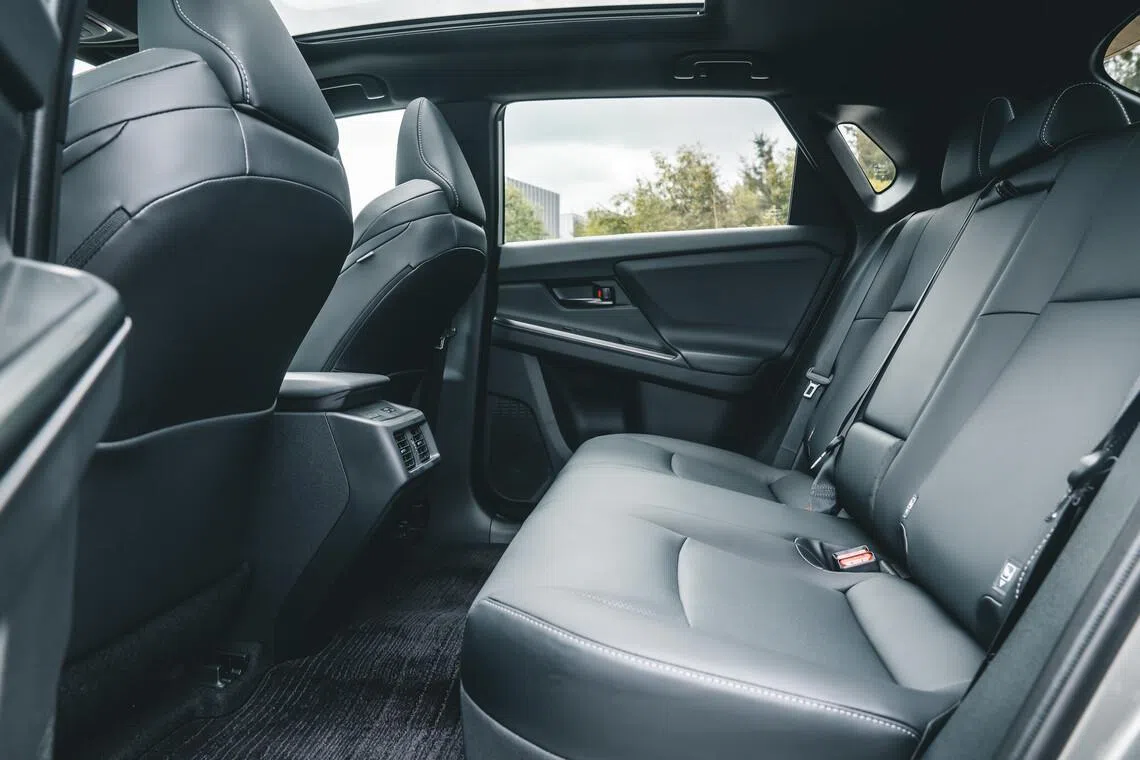
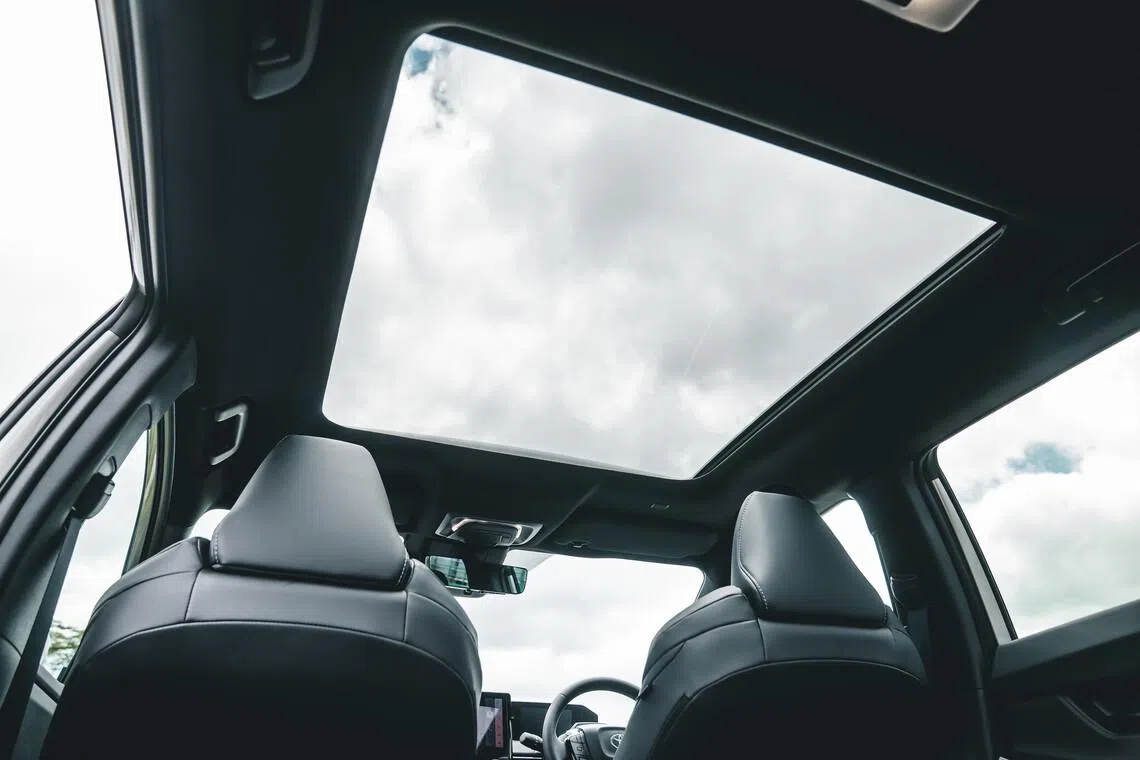
On the plus side, the rear offers plenty of legroom, though headroom is just about passable, and the glass roof comes with a sunshade so a hot day won’t result in a barbecued head. The boot offers 452 litres, which is adequate but not generous by class standards. A larger version, the bZ4X Touring, makes its debut on May 21.
While it’s forgivable that there’s no frunk, it’s inexplicable that there is no glovebox. Who knows what Toyota was thinking there, but on the whole, it’s easy to discern what the brand wanted its first pure EV to be: the bZ4X feels like it was designed to ease you into EV ownership in the gentlest possible way.
If you woke up from a coma after 10 years, you would be able to jump straight in and operate one, right down to using the start button, which is not something you could say about most modern EVs.
Its most appealing trait is that it rides and handles better than the EV norm, but really, the selling point here is that if you’re hesitant about stepping into the new, post-combustion world, the bZ4X feels like an old companion you can count on to guide you along.
Toyota bZ4X
Motor power/torque 227 hp/268 Nm Battery type/capacity Lithium-nickel manganese cobalt/69 kWh Charging time/type 3.5 hours 10 to 100 per cent (22 kW AC), 28 minutes 10 to 80 per cent (150 kW DC) Range 478 km 0 to 100 kmh 7.4 seconds Top speed 160 kmh Efficiency 16.3 kWh/100 km Agent Borneo Motors Price S$231,888 with COE Available Now
Decoding Asia newsletter: your guide to navigating Asia in a new global order. Sign up here to get Decoding Asia newsletter. Delivered to your inbox. Free.
Share with us your feedback on BT's products and services