Cliff Tan has 7 million followers and a 4-month waitlist. Why won’t he expand his business?
In the age of AI, the influencer is betting on something technology can’t easily replicate

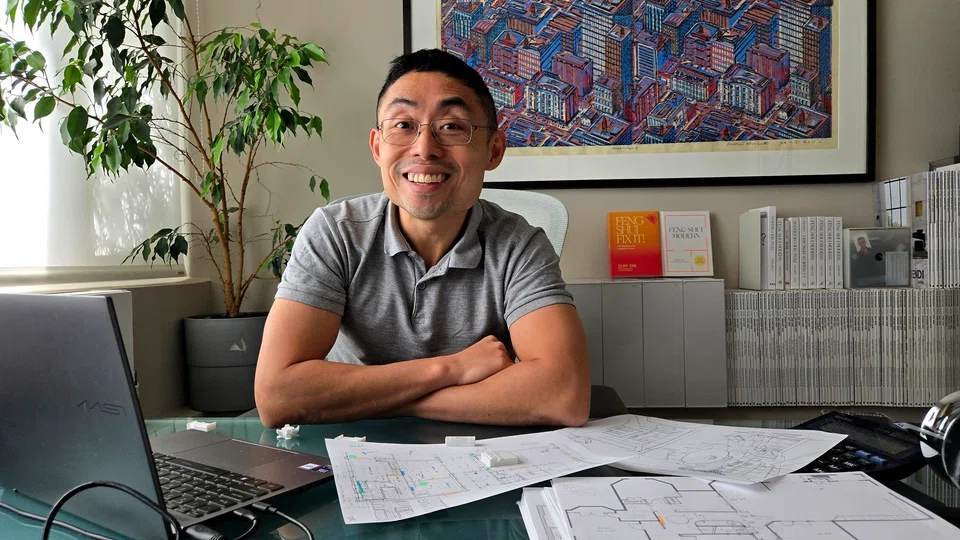
[SINGAPORE] Cliff Tan has seven million social media followers and thousands of clients around the world. His first book on home design has sold 100,000 copies; the second is being rolled out in October.
His one-to-one consultations are booked months in advance. Brands including Ikea, Samsung and LG pay five figures for a sponsored video on his channels.
For most entrepreneurs, this would be the moment to hire more people, standardise the service and take on as many customers as possible.
But that isn’t on the cards for the London-based Singaporean architect.
“I don’t want to scale,” he says.
“My channel, my service, everything about this is supposed to be authentic and personal. Scaling up would create a profit-making agenda... and it was never about that. I genuinely want to help people as much as I can.
“Everything today is a corporation; everything exists for a reason. I want to be like that friend you can go to and know I’m not going to say something just because it brings in profit.”
It is easier, of course, to reject growth when business is already thriving.
Dear Modern, the design practice Tan founded in 2016, charges £360 (US$478) for an hour-long room consultation, £480 for an apartment, £660 for a house and £900 for an urgent or extra-large-home appointment.


As at October, the nearest regular slots are in February 2027.
The prices have come a long way. In 2021, shortly after his TikTok account took off, Tan was charging £50 for a one-hour room consultation and £200 for a 90-minute home session.
“I didn’t want to raise the prices, but the waitlist was getting crazy, stretching to six months,” he says. “People said: ‘You have to raise the prices. Otherwise, you’re never going to get it under control.’ So I raised them – and it’s still a four-month wait.”
Stumbling into worldwide fame
Tan did have one advantage when he was starting out: time to experiment.
After studying at the Architectural Association in London and working at Heatherwick Studio, he left to take on small architecture and home-extension projects. His parents had bought him an apartment in London, something he readily acknowledges gave him a financial cushion.
Dear Modern might have remained a modest architecture practice had the Covid-19 pandemic not intervened.
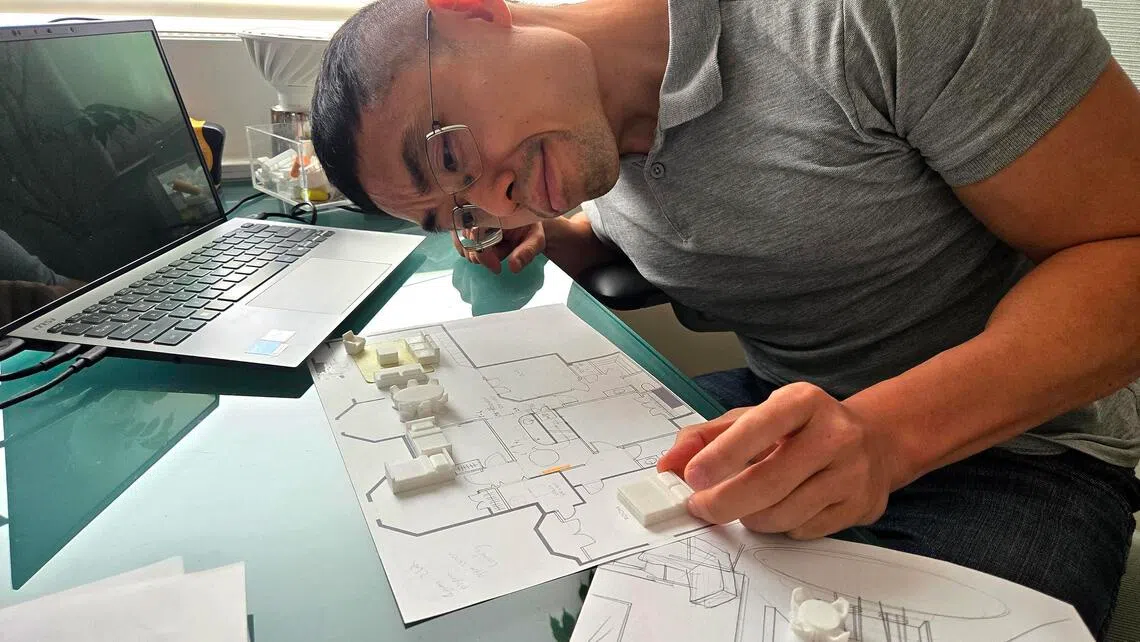
During a two-week quarantine in Singapore in 2021, Tan began filming short videos in which he moved miniature furniture around hand-drawn floor plans while explaining where a bed, desk or sofa ought to go.
One early video attracted millions of views; by that year, he had already amassed hundreds of thousands of followers.
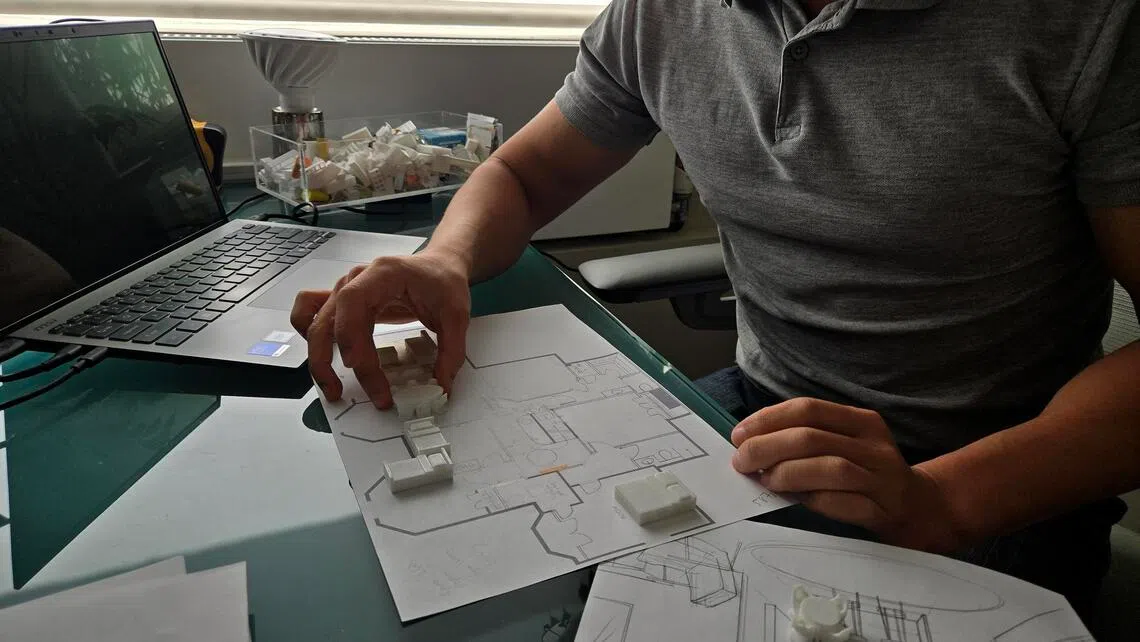
Today, Tan combines architectural expertise, spatial psychology and fengshui to improve the layout and flow of homes, from where a bed should sit to how rooms should relate to one another.
“Although I use fengshui, I have so many Muslim, Hindu and Christian followers. And I think it’s because I present it not as a superstitious or religious thing, but as a practical guide,” he says.
“The feelings towards a particular space are real. The psychology is real. You put your bed or desk in a certain position and people say it’s bad luck – but it also just really feels bad. People can relate to that.”
The approach travels remarkably well. The US accounts for about 30 per cent of Tan’s social media audience, followed by markets including the UK, Australia, Singapore and the Philippines.
He has consulted for clients across Europe, South-east Asia, the Middle East, Africa and the Americas.
Why he left Harry Potter’s publisher
Much of Tan’s thinking appears in his first book Feng Shui Modern, published in 2022 by Bloomsbury, which famously published the Harry Potter series.
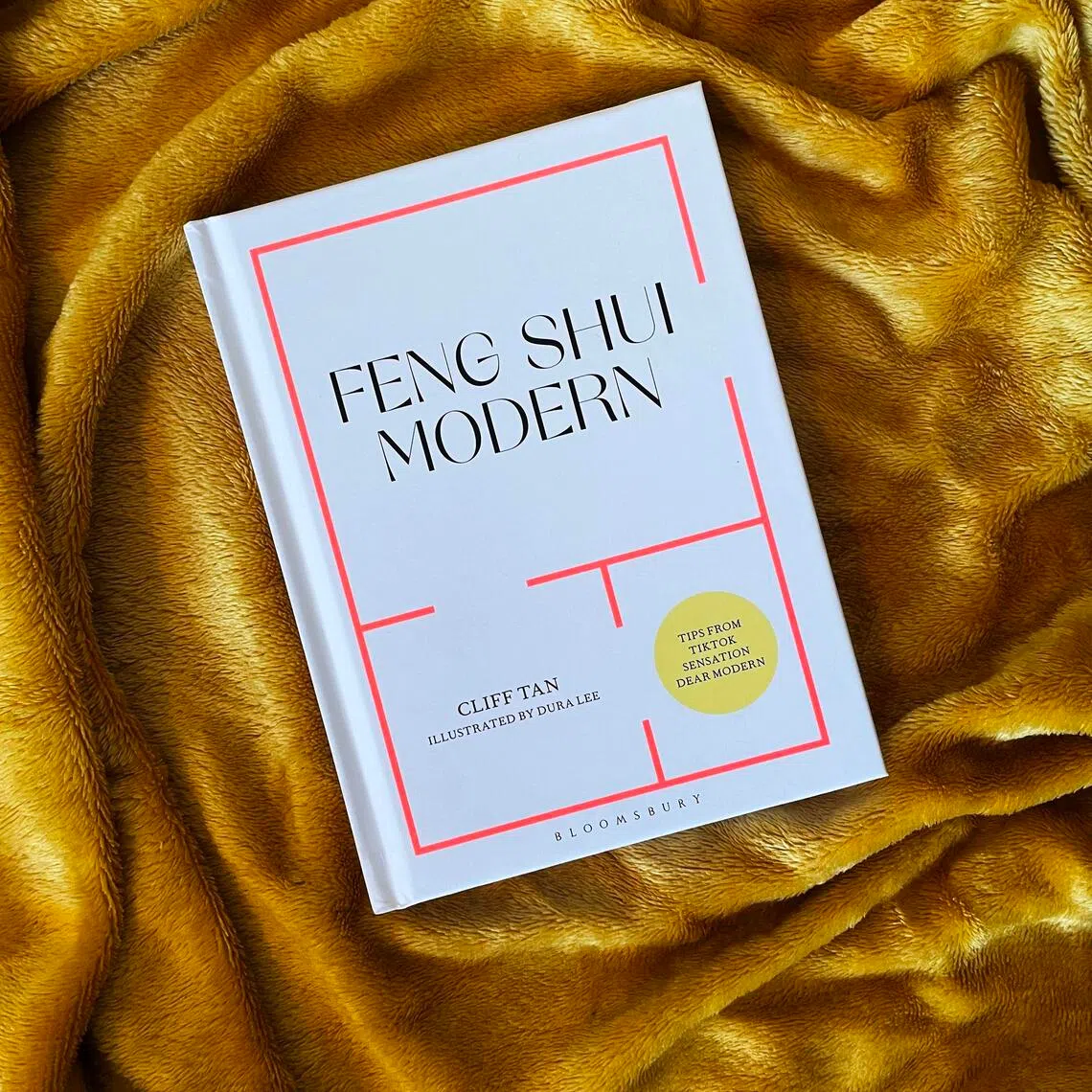
“I sold 100,000 books, each book is about £12 and I get something like 10 per cent,” he says. “So I earned roughly £100,000 over five years – or £20,000 a year. And I’m already considered a successful author.”
He adds: “Selling books is not the way to become rich. Authors are struggling people. Not everybody is JK Rowling.”
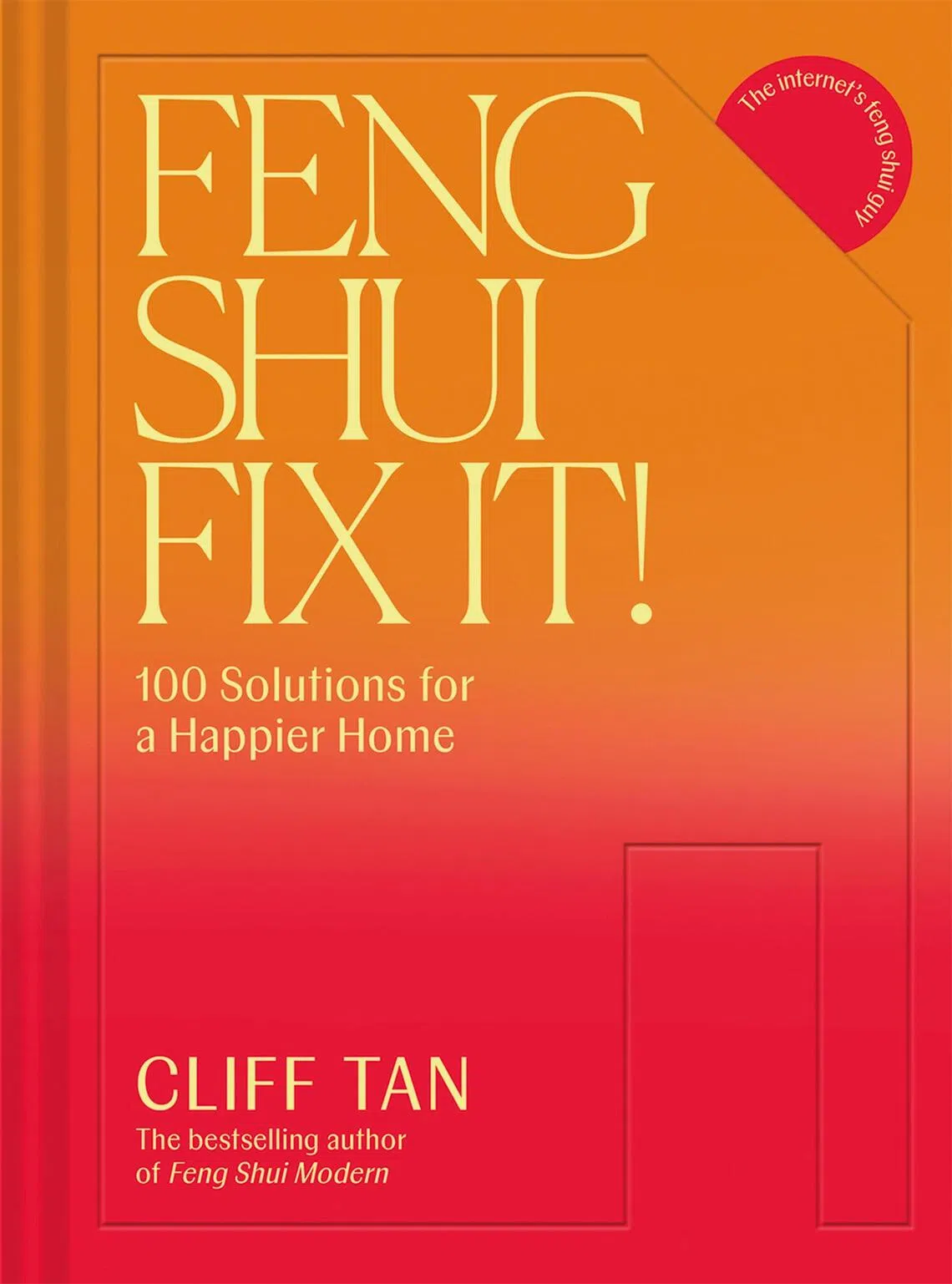
His second book, Feng Shui Fix It! 100 Solutions for a Happier Home, tackles 100 commonly repeated worries – from beds and doors to desks, bathrooms and clutter – explaining the belief, the practical reasoning behind it and what to do about it.
It is published by the much smaller publisher Batsford – even though Bloomsbury wanted another book. Why?
“Lauren Whybrow, the editor who found me and published my first book, moved from Bloomsbury to Batsford. She supported me all these years, so of course I go with her wherever she is,” he explains.
“I know Bloomsbury is more prestigious. But it’s not about the publisher. The person behind it is more meaningful to me.”
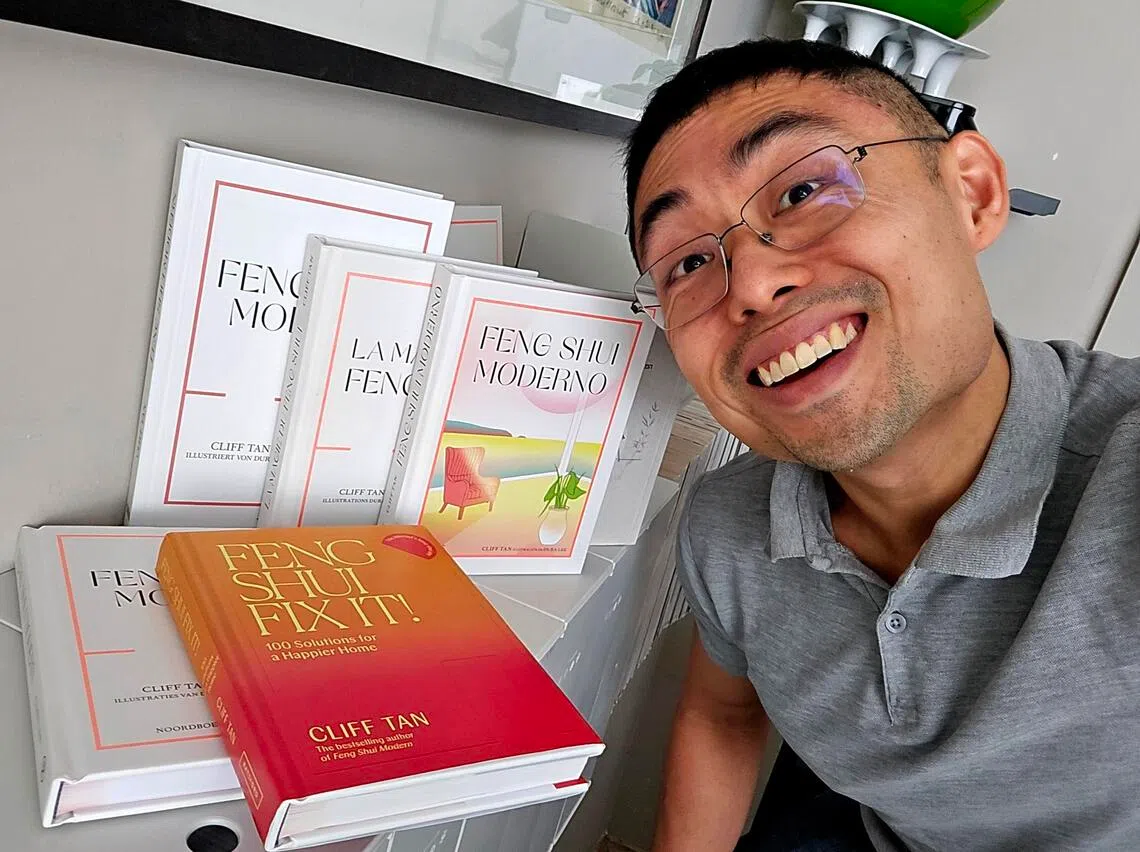
It is another decision somewhat at odds with conventional business logic. Tan repeatedly chooses the relationship over maximising the commercial value of what he has built.
Even his expertise – arguably Dear Modern’s most valuable intellectual property – isn’t something he guards.
“Everything I know, I put online for free,” he says of the advice he gives on social media. “You only need to pay for my advice if you want me to really understand you and your situation in the most intimate way.”
Spawning copycats
He is not especially troubled by the people who lift his ideas, either. “I’m happy that whatever I teach is being spread. I’m happy that people are copying me. Knowledge is meant to be shared.”
How does he know they are copying him, rather than simply arriving at the same advice independently? Because some of the seemingly tradition-based principles they share are modern interpretations he developed himself.
“Three thousand years ago, there was no TV. How did they conclude that a TV is a bad thing to have in the bedroom?”
Applying tradition-based principles to contemporary life, he says, “requires a degree of extrapolation”. “Some of those conclusions I derived on my own. So when I see other people repeating my interpretations online, I know they’re copying me.”
Still, he remains remarkably sanguine – something his seven million followers love him for. “They can copy all they want. I’m quite chill.”
There is also, as it happens, a perfectly reasonable commercial logic to generosity.
Roughly 70 per cent of Tan’s income is from client work, he estimates. Brand partnerships contribute another 20 per cent. The remaining 10 per cent comes from book sales, social platform payments and other sources.
Giving away expertise online is therefore hardly bad business. The content builds an audience and establishes Tan’s authority; the scarce product is access to Tan himself.
Asked what proportion of paying clients discovered him through social media, his answer is immediate: “Everyone.”
“Most of my customers come through social media or word of mouth – people who watch the videos and then tell their families about me.”
During consultations, Tan asks his clients not simply what is wrong with the house, but what is wrong with their lives.
“They definitely have a problem, because if they were happy they wouldn’t come to me... So I ask: ‘What don’t you like about your house? What don’t you like about your life?’ Because they come together.”
At times, he ends up playing marriage counsellor and therapist, with some clients even crying during sessions. “They start to uncover why they are unhappy, and sometimes it hits them right then... My job is to understand the frustration.”
“I’m not selling pizzas”
Tan is not worried that artificial intelligence will take away his work – even though AI can already dispense design advice and generate floor plans.
Ultimately, AI is “just not inquisitive enough”, he says.
A homeowner might ask an AI tool how to knock down a bedroom to create a walk-in wardrobe, whereas Tan would first ask whether the couple plans to have children, how long they intend to live there, and whether either partner works from home.
“If you know what to ask the chatbot, it can give you the right information,” he says. “But many people wouldn’t even know that something is even a question.”
He adds: “My service isn’t ‘tell me what you want, and I’ll give you what you want’. It is ‘I’m going to understand you, and then tell you what you should want’...
“AI is a great tool. But it’s not a human being that fully understands your needs.”
His bet is that as information and basic expertise become easier to obtain, the ability to interrogate, empathise and exercise judgment may become more valuable.
Which returns him to the question of scale.
Tan could train more consultants. He already has an assistant handling simpler room consultations. But a bigger Dear Modern would mean more salaries, more targets and more pressure to turn his personality and methodology into a repeatable product.
“I’ve seen so many things start small and become big, and then they’re just not the same anymore. Put it this way: I’m not selling pizzas. I’m not producing the same thing over and over again. Every client is unique.”
For a man with seven million social media followers, his business philosophy is charmingly old-fashioned: give away the knowledge, charge for your time, and try, as the numbers grow, to remain recognisably human.
Other influencers-turned-best-selling authors
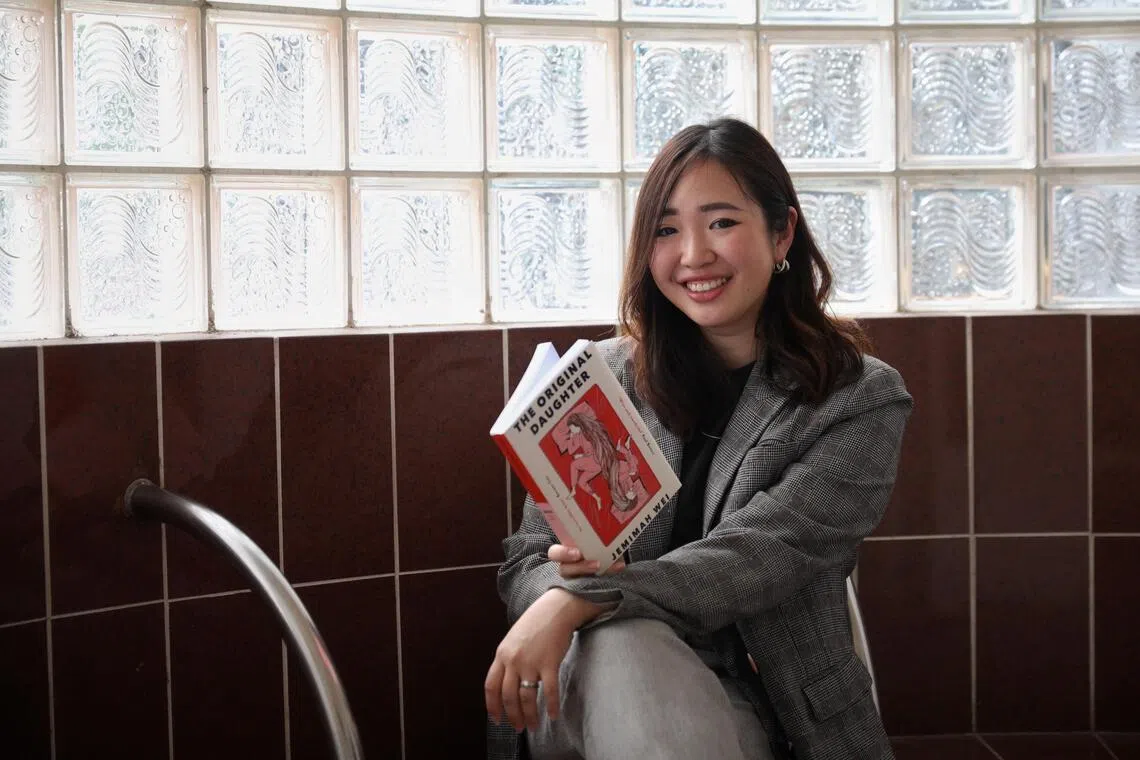
Jemimah Wei
The former blogger and Clicknetwork host spent a decade writing her debut novel, The Original Daughter (2025).
It sold at auction for more than US$500,000 and was selected for the Good Morning America Book Club.
The Woke Salaryman
He Ruiming and Goh Wei Choon turned five years of their popular financial webcomics into Crash Course on Capitalism & Money (2024), which made The Straits Times’ bestseller list.
Leslie Tay
The doctor behind food blog ieatishootipost turned his online writing on hawker culture into The End of Char Kway Teow and Other Hawker Mysteries (2010), another ST bestseller.
Decoding Asia newsletter: your guide to navigating Asia in a new global order. Sign up here to get Decoding Asia newsletter. Delivered to your inbox. Free.
Copyright SPH Media. All rights reserved.