

‘Odyssey’ scholar Emily Wilson, a critic of the film, is redoing her translation
The translator of the Homeric tale caused a firestorm when she slammed Christopher Nolan’s adaptation
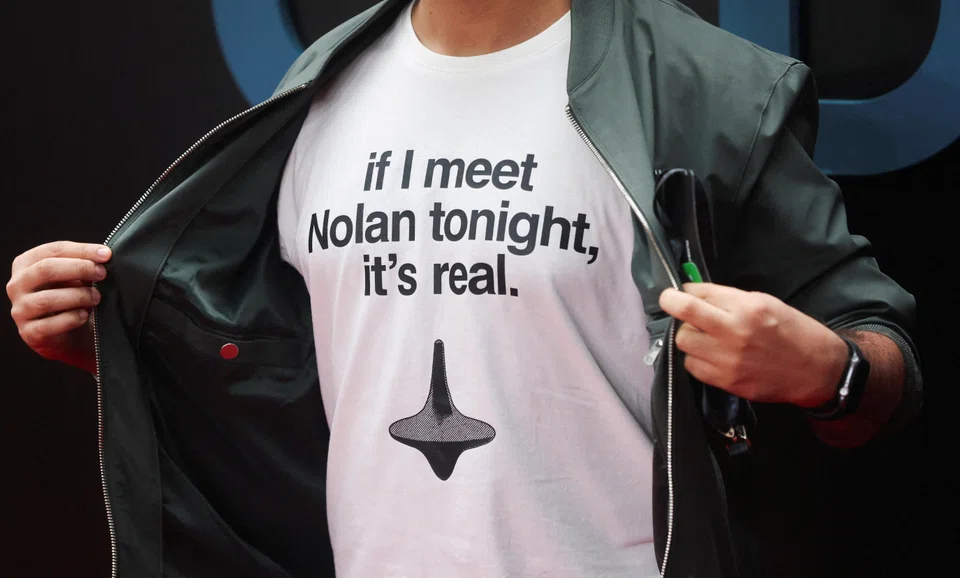
LESS than a decade after becoming the first woman to translate The Odyssey into English, Emily Wilson, the Homeric decoder who started an uproar in July when she panned Christopher Nolan’s film adaptation, is retranslating the ancient Greek poem from scratch.
Wilson’s original interpretation became a bestseller after it was released in 2017 by WW Norton & Co, presenting The Odyssey through what scholars said was a modern lens while remaining faithful to the poem written roughly 2,800 years ago.
Nolan cited Wilson’s translation as influencing his blockbuster film. (That was before Wilson’s scathing criticism of the big-budget production in The London Review of Books.)
But in a highly unusual reboot, Wilson said in a statement on Aug 28 that her translation would benefit from not just revisions, but a fresh start.
“I’m now retranslating The Odyssey from scratch, with an approach closer to that of my translation of The Iliad, using somewhat more lines than the original, enabling more varied word length and pacing,” she said in the statement. “Also, I’ll have much more extensive end notes.”
The project, which Wilson said is a few years from completion, was reported earlier by The Associated Press.
“It’s always a huge privilege to get to spend all day reading Homer and wrestling with the endlessly fascinating challenges of how to convey ancient Greek into fluent English verse,” she said.
Wilson said she remained proud of her 2017 translation of The Odyssey, describing it as “conveying the rhythm, rapidity and freshness of Homeric poetics – features that are genuinely essential in the experience of the original Greek epics”.
Peter Simon, Wilson’s editor and the editor-in-chief of Liveright Publishing, an imprint of WW Norton & Co, said in a statement on Aug 28 that the publishing house became excited when Wilson first mentioned the project.
SEE ALSO





“She has poured so much of her life and scholarship into The Odyssey that her new approach is bound to be thrilling,” Simon said, noting that Wilson’s translation has sold more than one million copies since it was published.
“We saw an uptick, though, as soon as the movie was announced, and a tremendous increase leading into, and following, the release of the film,” he added.
Katrine Ogaard Jensen, executive director of the American Literary Translators Association, said in an e-mail that Wilson was venturing into somewhat uncharted territory.
“While it is common to tweak or edit an earlier version of a translation for new editions, it is fairly uncommon to retranslate your own already-published books in translation completely from scratch,” Ogaard Jensen said.
Still, such an undertaking is not entirely new.
She pointed out that in 2019, Ros Schwartz, a decorated translator of French fiction and nonfiction books, retranslated I Who Have Never Known Men, a dystopian novel by Belgian author Jacqueline Harpman.
Schwartz’s first translation came out in 1997.
Ogaard Jensen said she expects there will be an appetite for Wilson’s fresh interpretation of The Odyssey.
“Her first Odyssey translation was already a sensation; but I, for one, very much look forward to reading her new translation and everything that I know she’ll bring to it,” she said.
“To me and countless others in our field, Wilson’s artistry and deep knowledge of her source material embodies the value of human literary translation.”
Treading on new scholarly ground might not be the sole consideration for such an endeavour. The opportunity to command additional income from book advances and sales can be an enticing one, particularly in the case of The Odyssey, one of the most translated books of all time.
Another example of that commercial success is I Who Have Never Known Men, which rose to prominence on BookTok, a subcommunity on TikTok where readers share videos reviewing and discussing books.
The social media platform has expanded the footprint of many books and helped boost sales.
Wilson, who is department chair of classical studies at the University of Pennsylvania, appeared initially to welcome the renewed attention for The Odyssey that would accompany the film’s release in July.
On a Jul 12 episode of The Daily, the podcast of The New York Times, Wilson said she was “pumped” to see how the tale played out on the big screen.
“I mean, it’s going to be exciting that so many people who may have thought, ‘Oh, ancient literature is boring, or it’s not for me, or it’s too inaccessible,’ are then going to realise, actually, this is a really compelling story,” she said.
“And some proportion of the people who go to the movie will then turn back to the original poem, which I think is great. I love that.”
Asked about purists potentially taking exception to Nolan’s artistic choices, Wilson said it would not be the first time that Homeric poems were adapted for performance.
“I think it’s totally fine and valid for a director to explore his own vision,” she said of Nolan.
But once she saw the film, Wilson did not spare her criticism, writing that Nolan’s adaptation lacked many of the elements that made the poem great.
“It has nothing convincing to say about time, memory, history, war, or about the relationship between one warrior’s glorious return and the lives of his family, adversaries, comrades, friends and neighbours,” she wrote.
“It lacks psychological, emotional, political and ethical depth. Its narrative structure is gimmicky. The writing is abysmal.”
Wilson argued that the film embraced style over substance.
“It’s a family-friendly audio-visual spectacle, like an elaborate Fourth of July fireworks display – and with about the same level of narrative and emotional depth,” she wrote.
Her pointed commentary kindled a debate over balancing commercial success with literary authenticity, temporarily crashing the website of The London Review of Books.
Nolan, whose Oppenheimer won seven Academy Awards in 2024, including for best picture and best director, has not responded publicly to Wilson’s scathing review. NYTIMES
Decoding Asia newsletter: your guide to navigating Asia in a new global order. Sign up here to get Decoding Asia newsletter. Delivered to your inbox. Free.
Share with us your feedback on BT's products and services
TRENDING NOW

Singapore identifies 7 firms responsible for haze fires, notices issued urging action: Grace Fu

Could stablecoins be the future of money?
Singapore should prepare for prolonged haze until November, says Grace Fu

High Court rules against Julius Baer’s Singapore trust arm in US$50 million family trust dispute

