

Up for sale: Singaporean’s ‘unsurpassed’ S$120 million ancient Chinese coin collection
Gilbert Tan has also published a book featuring the rarest pieces, which date back to AD7
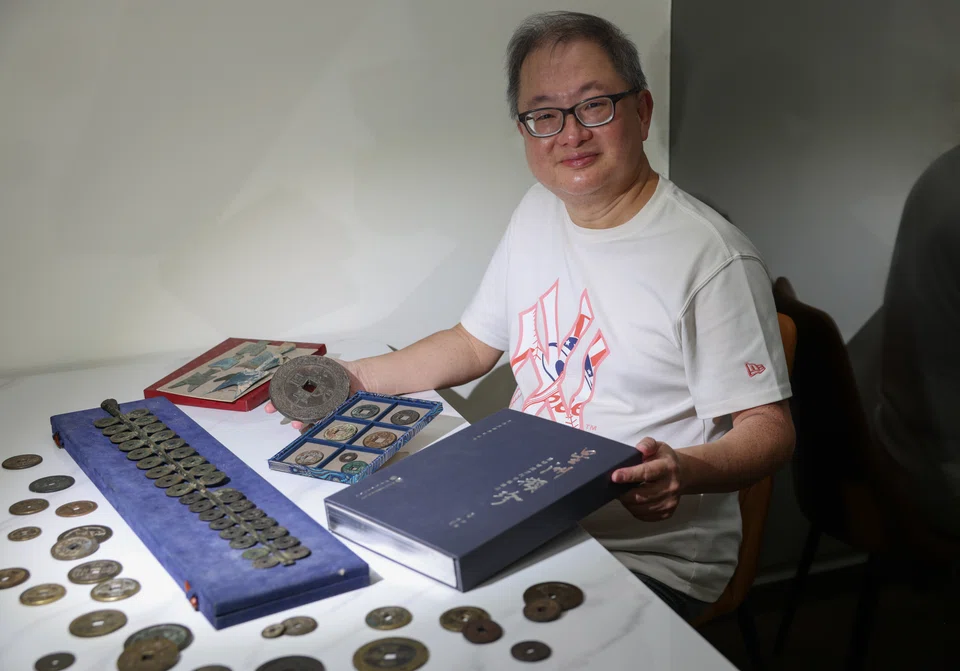
[SINGAPORE] As a child, Gilbert Tan grew up watching Chinese period dramas. In particular, he found scenes of martial artists heading to taverns to drink and make merry fascinating.
“They’ll always slap a few copper coins on the table and that really struck me,” recalls Tan, who became curious about getting hold of the actual coins.
That interest in ancient Chinese coins became an enduring passion when he started to hunt them down as a young adult. Being a novice, he made his share of mistakes, including buying counterfeit coins.
But he soon found a mentor in a coin trader and member of the Singapore Numismatic Association, who once told him that the rarest coins were so expensive that only the Japanese – the top Chinese coin collectors then – could get a hold of them.
Tan found that very upsetting and vowed to topple the Japanese from their perch. That was in 1991.
He went on to pour his heart and soul into learning all he could about the coins and put every effort into collecting them. When he exhausted the possibilities here, he headed to Hong Kong, Macau, Taiwan, Japan and mainland China.
Along the way, he built a wealth of knowledge and hands-on experience from interacting and trading extensively with dealers and other collectors.
He also worked conscientiously on his research, combing through coin catalogues and historical documents, and learnt to distinguish genuine coins from counterfeits. In eight years, he had become an expert in Chinese numismatics.
“I went through and bought lots of coins, and visited many collectors and dealers around the world,” he says. “People are happy to teach and help, as long as you don’t have any ulterior motives, such as trying to steal or cheat.”

In 1999, Tan even spent two months at The Fitzwilliam Museum in Cambridge, UK, where he was a visiting scholar. Under the programme, numismatists worked mainly in the museum’s coin room, with its world-renowned collection and library.
Tan also travelled to see collections elsewhere in Britain and across Europe. There, he helped identify and sort their coins, as well as pick out forgeries.
“Different dynasties have different calligraphic styles, so they are like signatures on the coins,” says Tan. “Some of the writing was done by the emperors themselves, and the calligraphy by the Song emperors especially was very fine. People collected them for their beauty, not just for the money.”
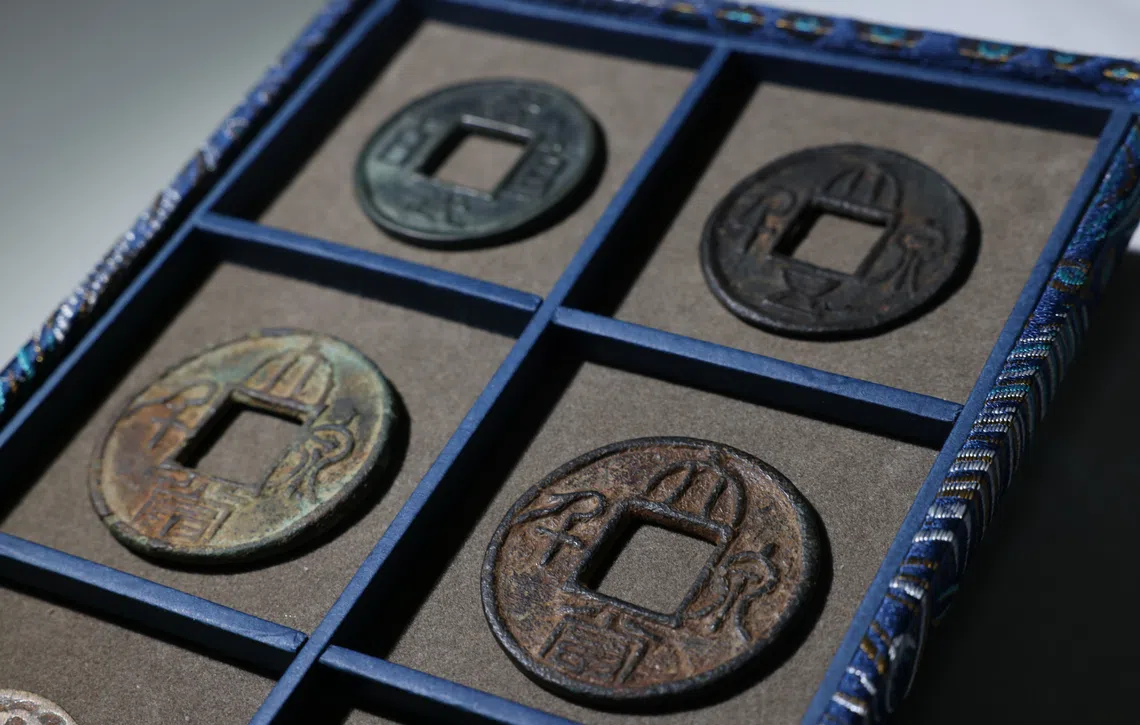
Over the decades, Tan, who has an accounting degree and helped manage his family’s property rental business, continued to build his collection, focusing on ancient Chinese cash coins from AD7 to the late Qing dynasty.
Cash coins are a specific type of low-denomination round coins – mainly in copper – with a square centre hole. These are separate from spade, knife and shell money, and gold and silver ingots, which stopped being produced after AD7.
Tan now owns 270 of the world’s top 300 rare coins from the period, in a roughly 9,000-coin collection he estimates to be now worth a staggering S$120 million.
“Singapore is a red dot, with only a very small proportion of the Chinese in the world, yet no one has surpassed me in collecting post-AD7 Chinese coins,” he says with pride.
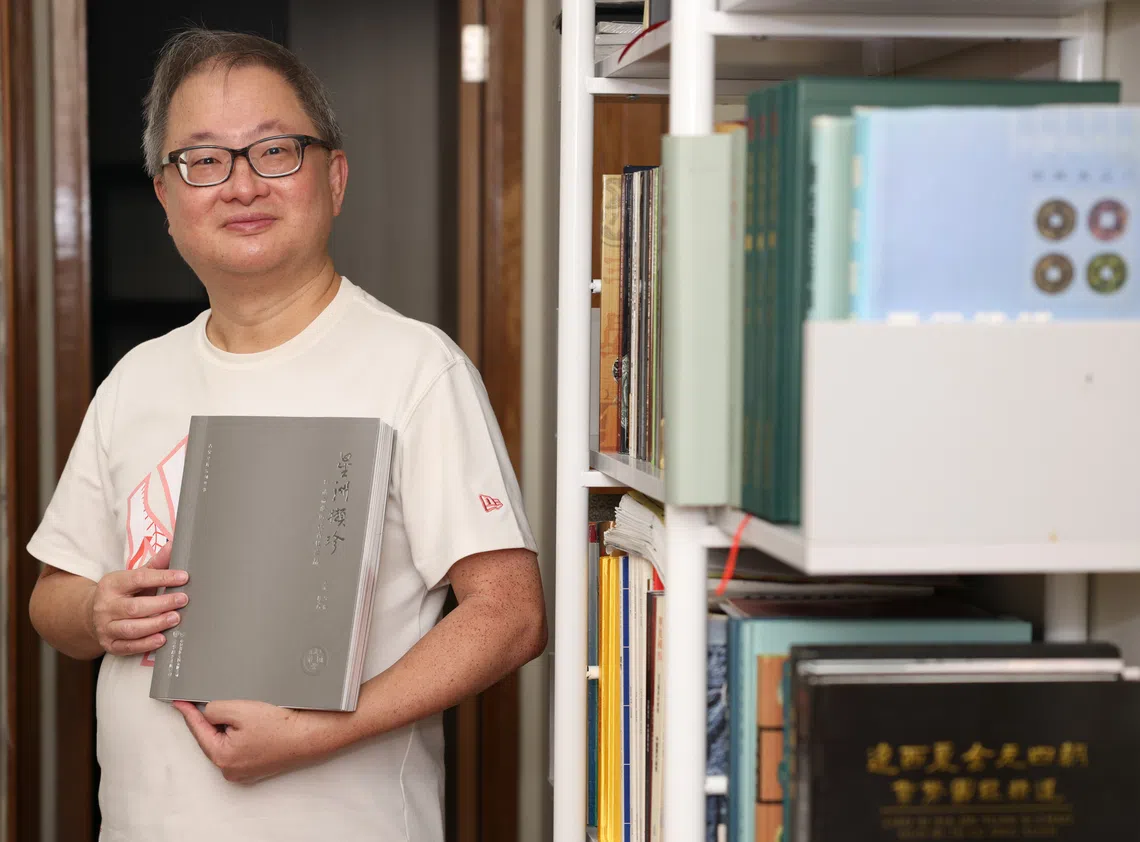
This year, as he turns 60, Tan published a 301-page tome in China – where most collectors are today – detailing the rarest pieces in his prized collection.
“Many collectors publish books in their names during milestones in their lives,” he says of the book, which is dedicated to his wife, with its title loosely translated as Singapore’s Gilbert Tan’s Choicest Ancient Chinese Cash Coins.
Almost all the 1,000 copies printed, priced at 815 yuan (US$121) each, have been sold.
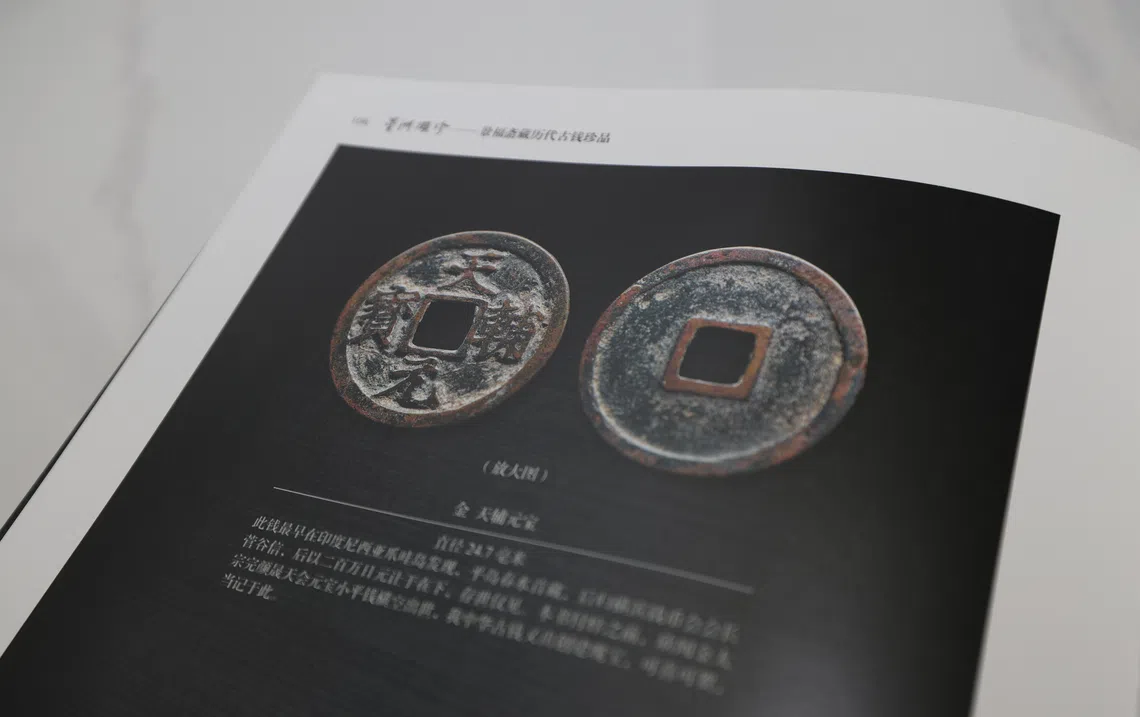
The coins in this photographic compendium cover exceptional pieces that are arranged chronologically, starting from the pre-Qin period through the Tang, Song, Yuan, Ming and late Qing dynasty to the early days of the Chinese republic.
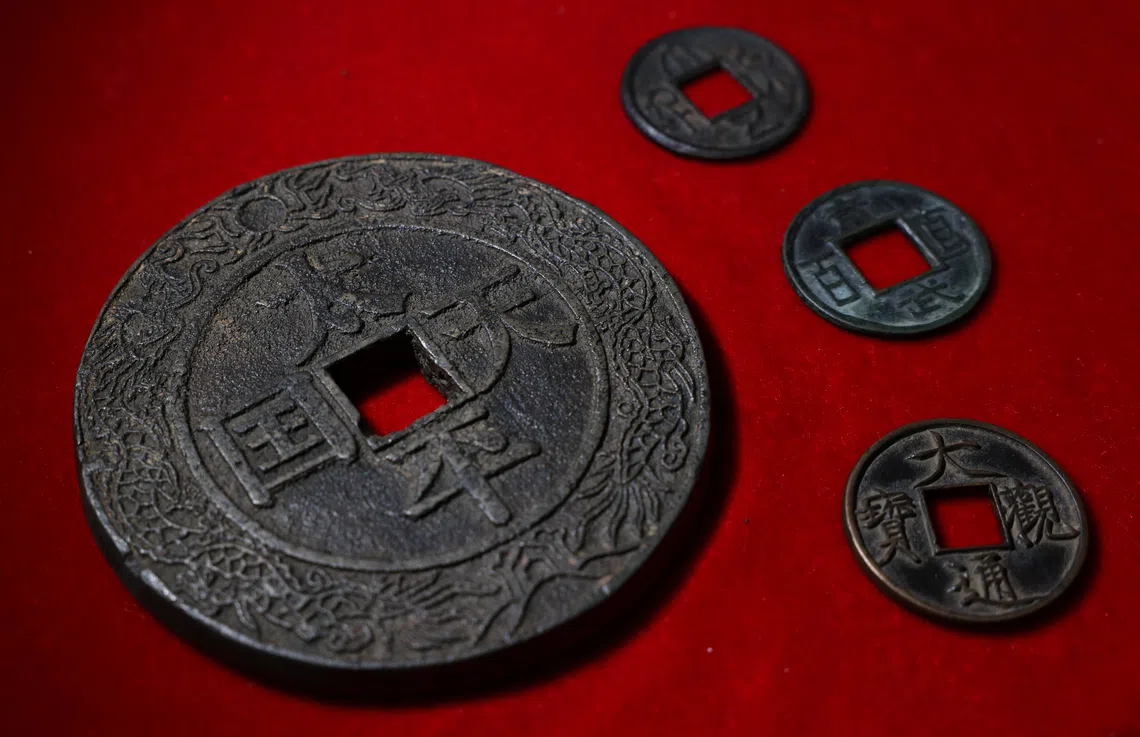
The centrepiece is a palm-sized copper piece weighing 650 g. This coin is also the most valuable in his collection, estimated to be worth S$10 million.
Having spent all his adult life collecting in order to reach the apex and then to document his feat, Tan is now ready to let his collection go.
“My greatest satisfaction is that I’ve done what I set out to do, so I will retire and sell my collection,” he says, adding that his two children are not interested in collecting.
“If I keep the collection and they sell it later on, they may not be able to realise the coins’ true value. Then I’ll be turning in my grave.”
Decoding Asia newsletter: your guide to navigating Asia in a new global order. Sign up here to get Decoding Asia newsletter. Delivered to your inbox. Free.
Copyright SPH Media. All rights reserved.
TRENDING NOW

S$8 billion wiped off OCBC value as shares slide 5.8% in heavy trade

Grab CEO’s wife Chloe Tong on life with Anthony Tan and finding her purpose

Brookfield denies accusation it cut Soilbuild out of Mapletree deal

8 public officers referred to police over property buys near unannounced MRT stations: Chan Chun Sing

