Bizlink Learning Academy launched to help PWDs build employability skills
These include independent living, employment readiness and vocational training
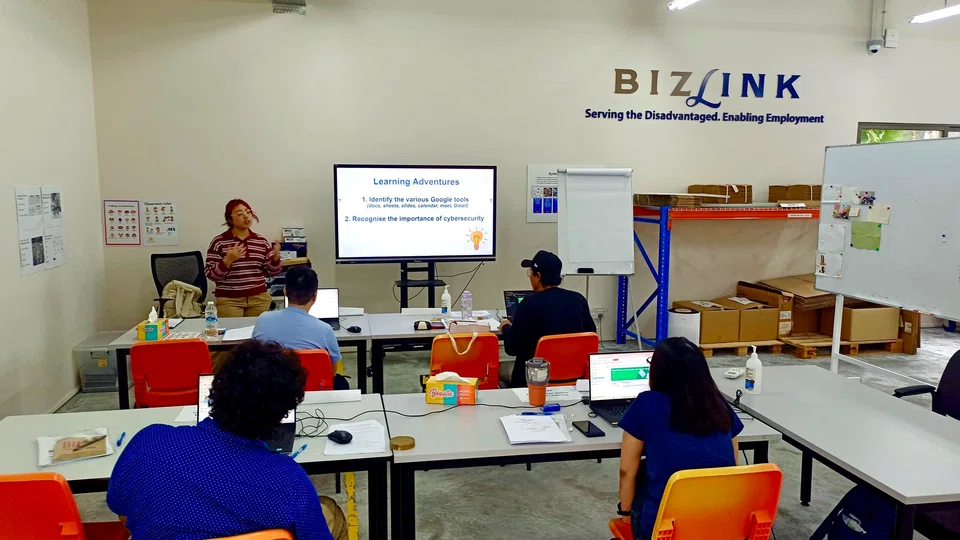
[SINGAPORE] Non-profit Bizlink Centre launched Bizlink Learning Academy (BLA) on Friday (Nov 6) to help persons with disabilities (PWDs) build their employability skills.
BLA is a curated suite of training programmes and courses designed to equip PWDs with practical skills, such as artificial intelligence and communication, and enhance their employability.
Ang Li May, CEO of Bizlink Centre, said the academy provides a “more structured approach” to learning. The centre runs sheltered workshops, train-and-place programmes, work therapy programmes and a day activity centre for PWDs.
The BLA programmes, ranging from a few days to several months, are conducted in Bizlink’s premises in Chai Chee, Jurong and Macpherson.
Although BLA was officially launched on Friday in conjunction with Bizlink Centre’s 40th anniversary, programmes under the academy have been rolled out since October, with 30 participants so far.
Ang said BLA is targeting 200 to 300 beneficiaries within one year.

Building employability
Programmes under BLA are grouped under independent living skills, employment readiness, future-ready skills and vocational skills.
Independent living skills include learning how to take public transport, while employment readiness programmes include effective communication and self advocacy, working in teams, managing emotions at the workplace, and resume writing and interview preparation.
“These are sets of programmes that we think are important for them to actually be prepared for work, and to stay in work,” said Ang, adding that certain ones include core skills all beneficiaries have to pick up, such as resume writing.

She noted that integration into the workplace is a challenge for PWDs. Many beneficiaries experience “shock” when they start working, as they are not prepared for workplaces with open employment. As a result, they may leave their role shortly after.
Meanwhile, future-ready skills include financial literacy, cybersecurity awareness and prompt engineering for AI to support written communication. Ang said AI is an “enabler” for PWDs to communicate more effectively.
“The challenge is equipping them with the understanding of what AI can do for them. For example, we can guide them on how to use AI to improve their writing,” she added.
Programmes will be available to beneficiaries at a subsidised price, since BLA is partially funded by a grant from SG Enable.
Vocational programmes and social enterprises
Over the past 40 years, Bizlink Centre has provided vocational training and employment support to PWDs, with a focus on physical maintenance, daily living skills and preparation for open employment. In the last financial year, it supported around 700 beneficiaries.
Besides a day activity centre to train practical skills and sheltered workshops, where beneficiaries work on projects given by companies, Bizlink also runs a work therapy programme to train PWDs in vocational and soft skills.
This can last six months to a year, and serves as a “bridging programme” to help PWDs with the transition from special education schools to social enterprises, after they turn 18.
Ang said: “It supports them by getting them to understand work functions and etiquette, and trains them using mock-up materials.”
Bizlink Centre operates six social enterprises in various areas of work: a data management centre, logistics and fulfilment services, cleaning services, gifts and design, hampers and wellness packs, and food and beverage.
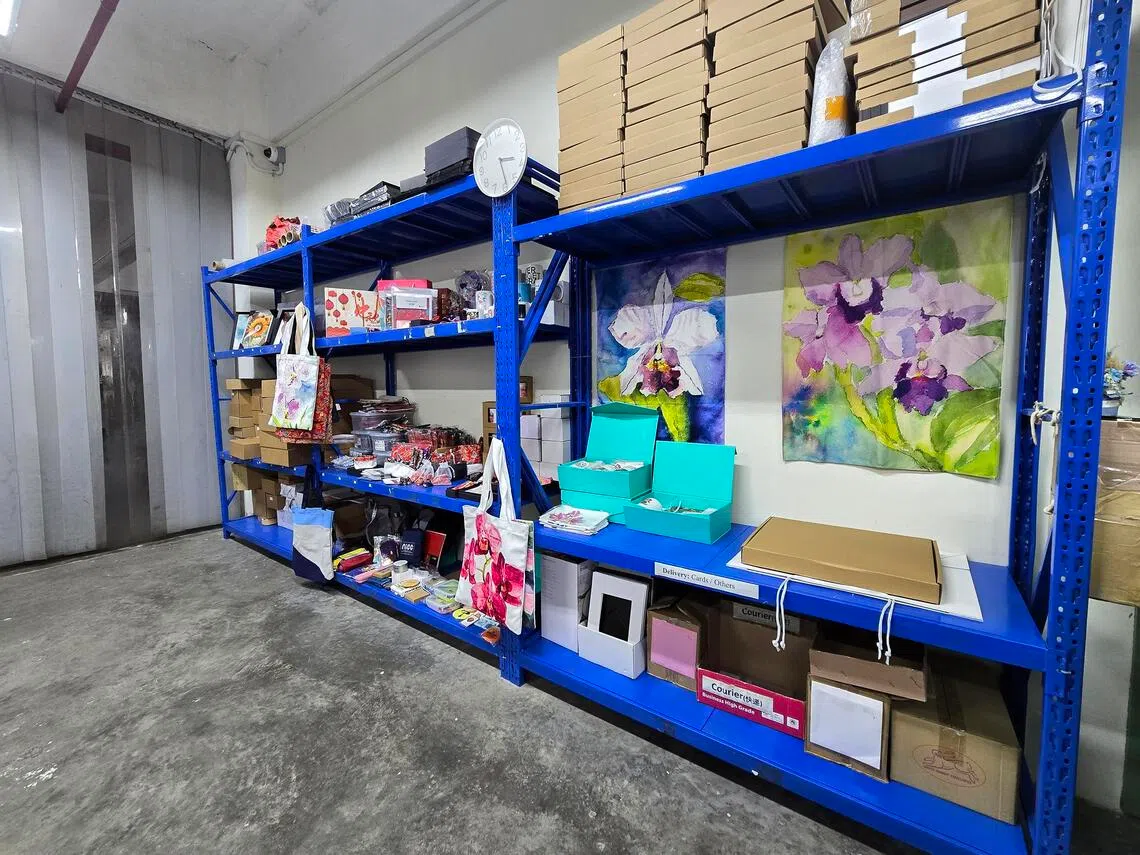
For each area, the non-profit collaborates with industry partners to provide employment opportunities to PWDs.
It works with hospitals, for example, to sell hampers, and auditing companies to help with documentation.
From sheltered workshop to open employment
One beneficiary that transitioned from sheltered workshops to open employment is 29-year-old Timothy Mok, who has been working as a warehouse assistant at Loft Logistics since March. He previously underwent training at Bizlink Centre in e-commerce fulfilment, and worked in warehouses at other companies.
He said he enjoys his current job, where he packs, labels and scans orders in a warehouse.
Daryl Chan, co-founder of Loft Logistics, said Mok – who is on the autism spectrum – mainly learns from on-the-job training.
Chan approaches inclusive hiring by allowing Mok to try out different tasks, before identifying his strengths and focusing on areas where he performs best. This process can take up to one year.
A job coach from Bizlink is present at Loft Logistics’ premises on a weekly basis to support Mok, and help him adapt to the workplace.
Chan said inclusive hiring has had “unintended positive outcomes”, as he witnessed other employees become more empathetic and understanding. Loft Logistics currently hires two PWDs, and Chan said he is open to hiring more in the future.
Decoding Asia newsletter: your guide to navigating Asia in a new global order. Sign up here to get Decoding Asia newsletter. Delivered to your inbox. Free.
Copyright SPH Media. All rights reserved.