

‘Enabler, not disruptor’: Firms use tech to support persons with disabilities at work
‘Smart woks’ and document-retrieving robots are among solutions employers are leveraging
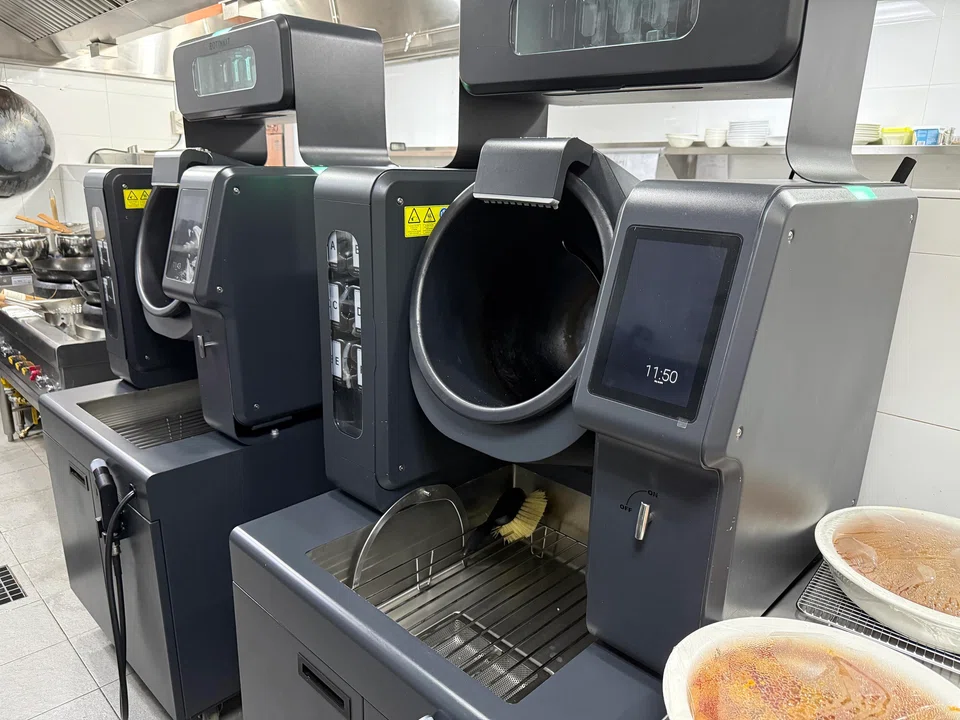
[SINGAPORE] Surviving two strokes has not stopped chef William Toh, who works at Metropolitan YMCA’s restaurant, from continuing his two-decade-long career in F&B.
Toh, who has weakness in his left side, uses a “smart wok” in the kitchen, putting in his recipes and fine-tuning them using trial and error.
Jeffrey Aw, head of social impact at Metropolitan YMCA, said: “His hands and feet may not be so strong, but he still has the brains to cook. In order not to hamper his ability to cook, we give him technology.”
The approach is the same with other employees who are also persons with disabilities (PWDs), when it comes to manual tasks such as cutting and preparing ingredients.
For Metropolitan YMCA president Charis Lim, technology is “meant to elevate human potential”.
“That’s what we’re seeking to do: find different means in which we use technology to reduce pressure and make workflow processes simpler, so that we can resolve complex work functions that PWDs often have to go through.”
Metropolitan YMCA has an automated minimart, where patrons can shop and check out their own products. PWDs do the stockpiling; they also work as lobby ambassadors, restaurant servers and housekeepers.
“Technology is an enabler, not a disruptor, to human potential,” he said. “At the minimart, we don’t need people to be at the cashier spending all their time just scanning items... We can diversify work functions, because we put people at the centre of it all.”
Tech can handle the lower-value and repetitive work, Lim added, while PWDs can do higher-value work and interact with customers. This also allows them to take on more front-facing positions.
SEE ALSO




“We want to give them visibility (through these) roles,” he said. “We want to give them that pride so they have a sense of belonging and ownership for the work that they do.”
Metropolitan YMCA aims to have PWDs make up 20 per cent of its workforce across all functions by 2030; the figure was 12 per cent as at April.
Importance of digital literacy
The number of PWDs in Singapore securing employment is rising. The average resident employment rate for PWDs aged 15 to 64 increased from 28.2 per cent between 2018 and 2019, to 32.7 per cent between 2022 and 2023.
Data from the Ministry of Social and Family Development showed that the proportion of employed PWDs in full-time employment rose from 74.5 to 79.7 per cent over the same period, pointing to an upward trend.
The city-state aims to reach a 40 per cent employment rate for working-age PWDs by 2030.
Abhimanyau Pal, the CEO of SPD – formerly known as the Society for the Physically Disabled – said that employers are generally “more receptive to hiring PWDs in recent years”.
This is because they “(recognise PWDs’) strengths and contribution to the team, as well as the increasing importance of corporate purpose and values in companies”.
He noted that technology has been integrated into most workplaces and job functions for PWDs, creating a wider range of job roles and opportunities for them.
“As workplaces continue to evolve, there will likely be a broader shift away from repetitive manual tasks towards roles that require digital literacy, adaptability and problem-solving skills.”
Companies using tech
Several companies that actively hire PWDs have emphasised the importance of training their staff to use tech.
IHH Healthcare , which hires PWDs in its pharmacy, radiology and administration units, has an ongoing partnership with the Autism Resource Centre to train staff to work in healthcare.
One of its clients, Gerald Wong in the radiology department, works as a healthcare assistant and sorts patient records to prepare them for dispatch. He uses Britney, a robot that retrieves the records and delivers them, allowing him to focus on other duties.
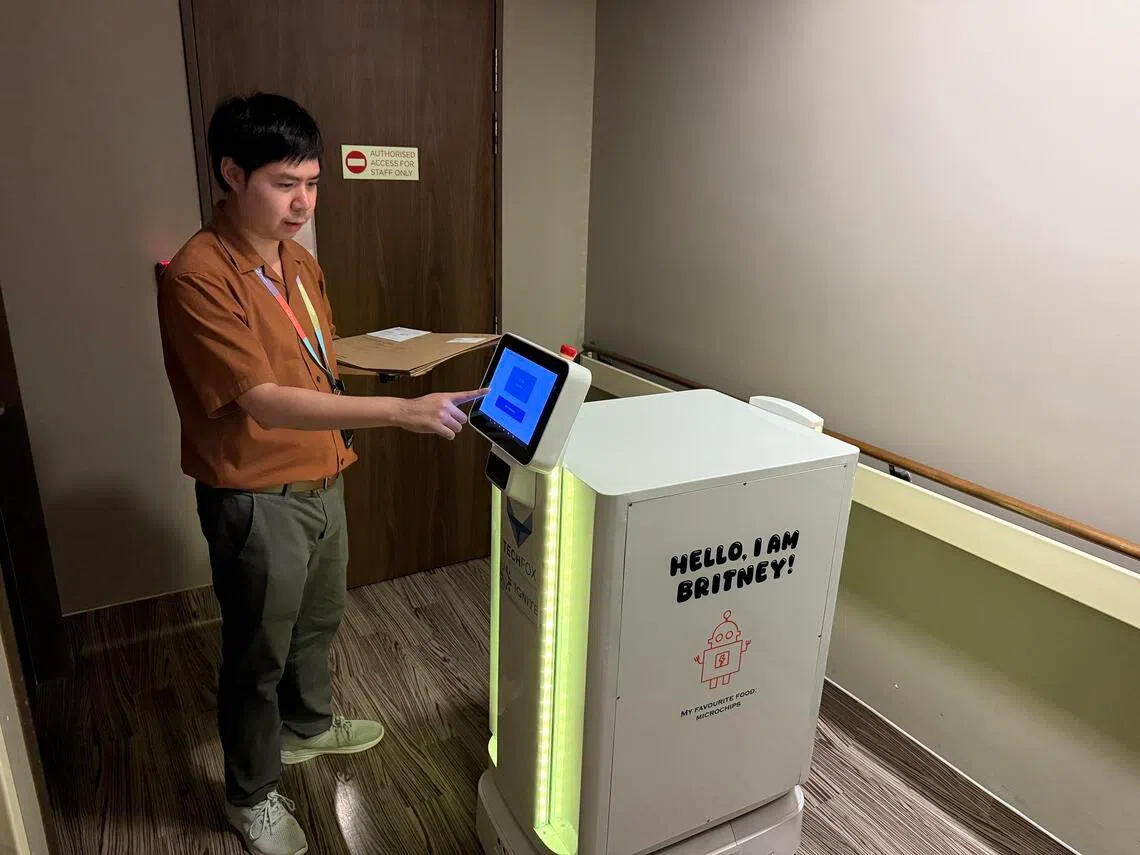
Sherry Tan, chief corporate officer of IHH, said: “When we introduce tech into our operating system, it is to improve the productivity of everyone rather than to replace anyone... Healthcare is always a human-touch area.”
Other tasks undertaken by PWDs include packing and labelling medication, as well as managing medical records; these involve the use of certain machines or software.
Tech is “part and parcel” of their work, Tan said, and added that PWDs are trained accordingly.
Similarly, real estate company Ascott hires PWDs in various departments including guest services, housekeeping and F&B. They use tech to support their daily work, such as property management systems for guest information and reservations.
Linda Ong, director of human resources at Ascott, said: “We rely on technology as an enabler to streamline routine work processes, reduce manual work, and improve productivity and efficiency so that the employees can make better use of their time doing higher-value-added work.”
She added that the company is open to exploring the use of new technologies.
In 2025, insurer Singlife partnered non-profit TomoWork for its subsidiary Propel to hire PWDs who regularly use tech on the job. For example, analyst Chew Ler Gi helps to automate commission statements.
Pal noted that assistive technology has “further improved workplace accessibility and expanded the types of roles PWDs can pursue”.
Persons with vision loss, for instance, can use screen readers to read e-mails or manage customer enquiries, and hard-of-hearing employees can use live captioning during meetings.
Training the next generation
The SIM People Development Fund, SG Enable and Institute of Technical Education collaborated on the Enabling Pathway Programme to enhance employment opportunities for students who are PWDs. These students use tech in sectors such as aviation, transport and logistics.
They monitor flight schedules, manage ground operations, conduct maintenance checks on public transport and update inventory systems.
Since its launch in 2024, the programme has supported 16 students with internships; employers include SBS Transit, PSA Singapore and Changi Airport Group.
An SG Enable spokesperson said that students can “progressively take on more complex tasks” as they gain confidence, with “step-by-step guidance, troubleshooting and ongoing feedback throughout the process”.
“To build a more inclusive ecosystem beyond training students with disabilities in technology, SG Enable also partners employers to create technology-enabled roles through job redesign.”
SG Enable also announced in October that it is expanding its Sector Train-and-Place programme beyond hospitality to five more industries: F&B, logistics, information and communications technology, healthcare, and human resources and administration.
The programme is expected to train 800 PWDs by 2030 and connect them to employment opportunities.
Decoding Asia newsletter: your guide to navigating Asia in a new global order. Sign up here to get Decoding Asia newsletter. Delivered to your inbox. Free.
Copyright SPH Media. All rights reserved.
TRENDING NOW

Stocks to watch: CapitaLand Ascott Trust, Keppel Infrastructure Trust, iFast, ESR Reit, First Sponsor

Indonesia says gas export cuts to Singapore remain within contract terms

If Europe goes to war, the fallout will be felt in East Asia

Government to bring forward raising of retirement age, give employers more financial support to create flexi-load jobs

