

BMW iX3 50 xDrive review: What a week with BMW’s most important car taught me
A week behind the wheel of the new car reveals whether the marque’s US$11.4 billion bet on tech has paid off
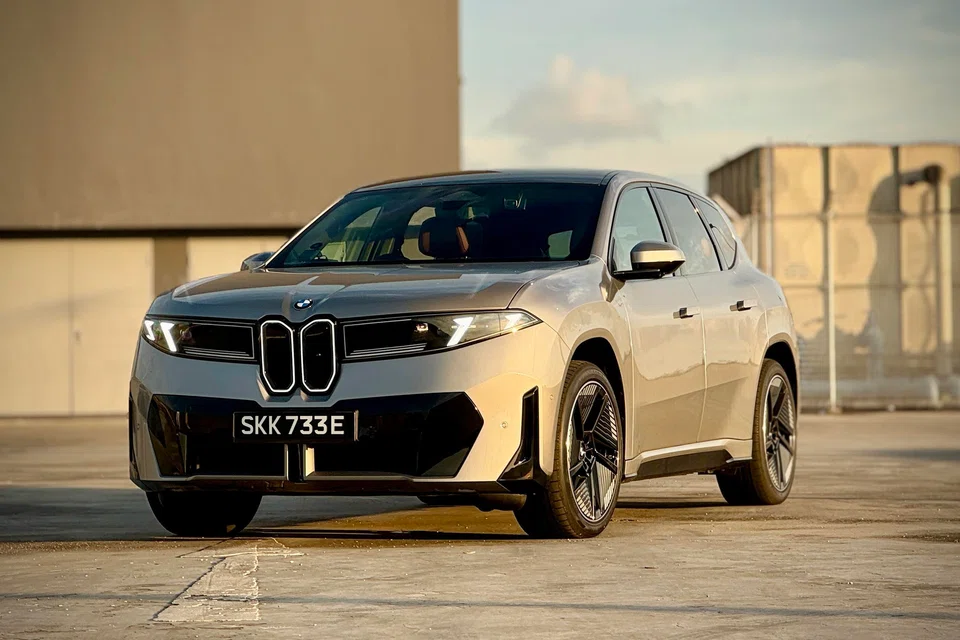
[SINGAPORE] I learnt something about myself during my week with the new BMW iX3 50 xDrive: Evidently, I am a sucker for a good light show.
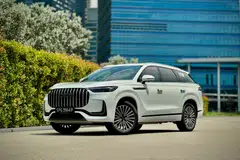
Whenever I walked up to the smooth-skinned SUV, the little LEDs that light up its face performed a quick greeting dance and I felt a little fuzzy inside each time. Maybe I’ve been married too long.
The more interesting truths were about the iX3, which matters to BMW way more than anything else the Munich-based luxury player has put out for decades.
It debuts Neue Klasse (which means “new class” in German), the company’s new technology platform, built on a fresh electronics architecture whose components have funky names like Heart of Joy, and an operating system that will eventually spread to every new BMW.
The next cars built on the same bones – the new 3 Series and the bigger X5 – have already debuted, and the stakes could not be higher; BMW reportedly spent US$11.4 billion on the technology reboot that has to usher it into the post-combustion era.
The early signs are good. When I drove the iX3 on Spanish mountain roads and a private racing circuit months ago, I came away impressed and wanting more. Yet, the real test was always going to be a week of Singapore traffic, not a closed track in Andalusia.
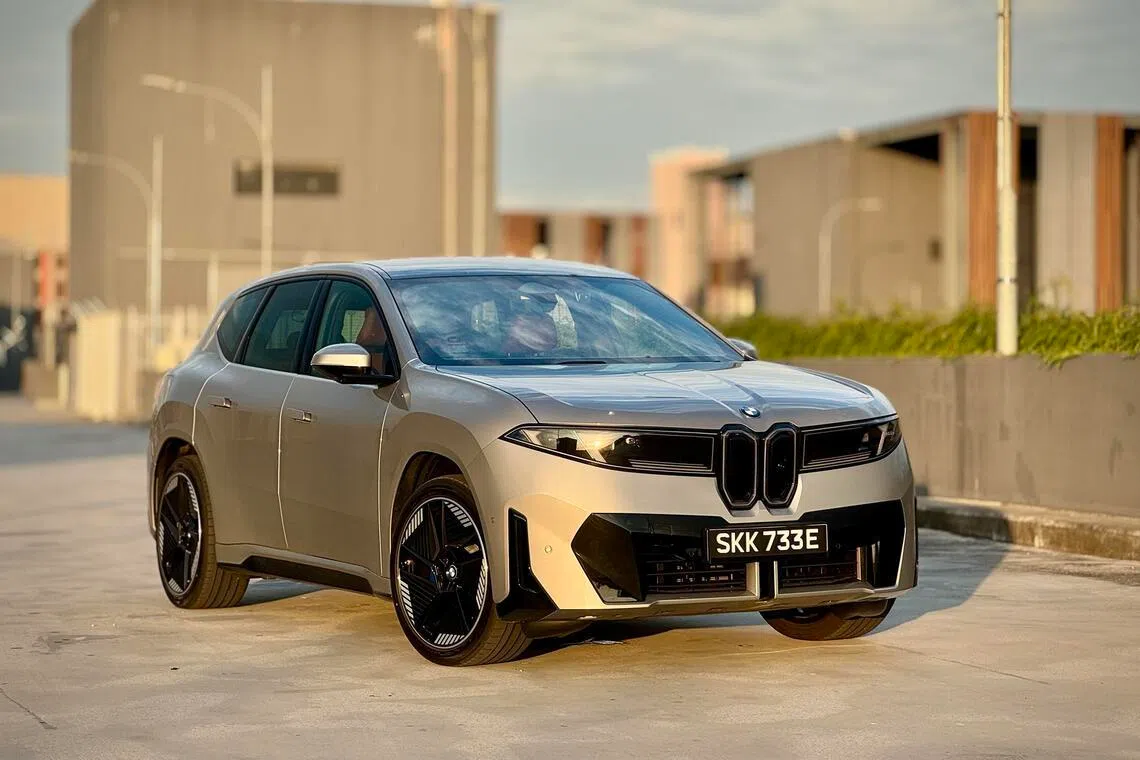
My week started with a big number: BMW claims 805 km of range for the iX3 50 xDrive, the only version you can buy here for now, with two motors and 469 horsepower. The problem with that figure, and all official consumption claims, is that it’s achieved without air-conditioning.
Not wanting to discover what a baked potato feels like, I kept the climate system running, which gobbled roughly 23 per cent of power consumption. Theoretically, that left 620 km of range, remarkably close to what I actually achieved: 622 km on a single charge, which makes BMW’s claim both valid and impressive.
While the iX3’s poise and communicative steering were a joy on the track, the unexpected highlight on day-to-day drives turned out to be its adaptive braking.

Ease off the accelerator and the BMW practically freewheels to conserve momentum, braking automatically if there’s a car ahead, all the way to a dead stop if need be.
The clincher is that it eases off the braking force just before it comes to a complete halt, sparing you from the head-nodding jerk that even skilled drivers don’t always manage to avoid. In the start-stop traffic that makes driving in cities such a pain, this alone makes you think that BMW’s software is a step ahead of the rest.
Inside, the Panoramic Vision display, a 1.5-metre strip that stretches from pillar to pillar, also feels genuinely next-generation. Clear, tasteful and easy to read, it’s the most obvious signal that BMW really wanted to change things up.
I got on well with the touchscreen and its parallelogram shape, too, though its interface isn’t as customisable as I would like. Also, the lack of physical controls means you still have to jab the screen too many times. I want my massage now, not three fingertaps later.
But what I liked least were the digitally aimed air-con vents, a fiddly downgrade nobody asked for. Another niggle: The steering wheel’s vertical spoke design looks confused rather than futuristic, and seems an odd choice to inflict on buyers (until you realise that BMW charges extra for something more normal).
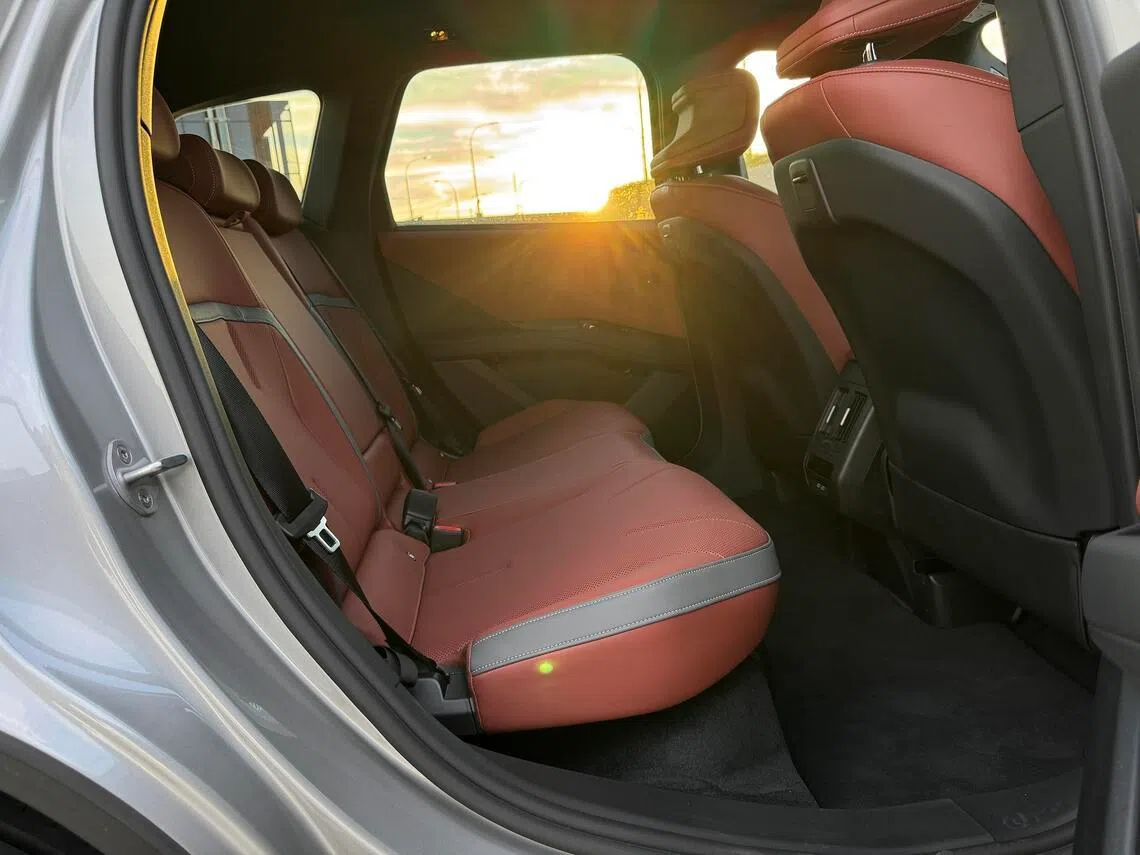
As a family SUV, though, the iX3 still ticks all the boxes. It’s roomier in the back than ever, and the boot is competitive in size, with a small frunk to give loose items a permanent home.
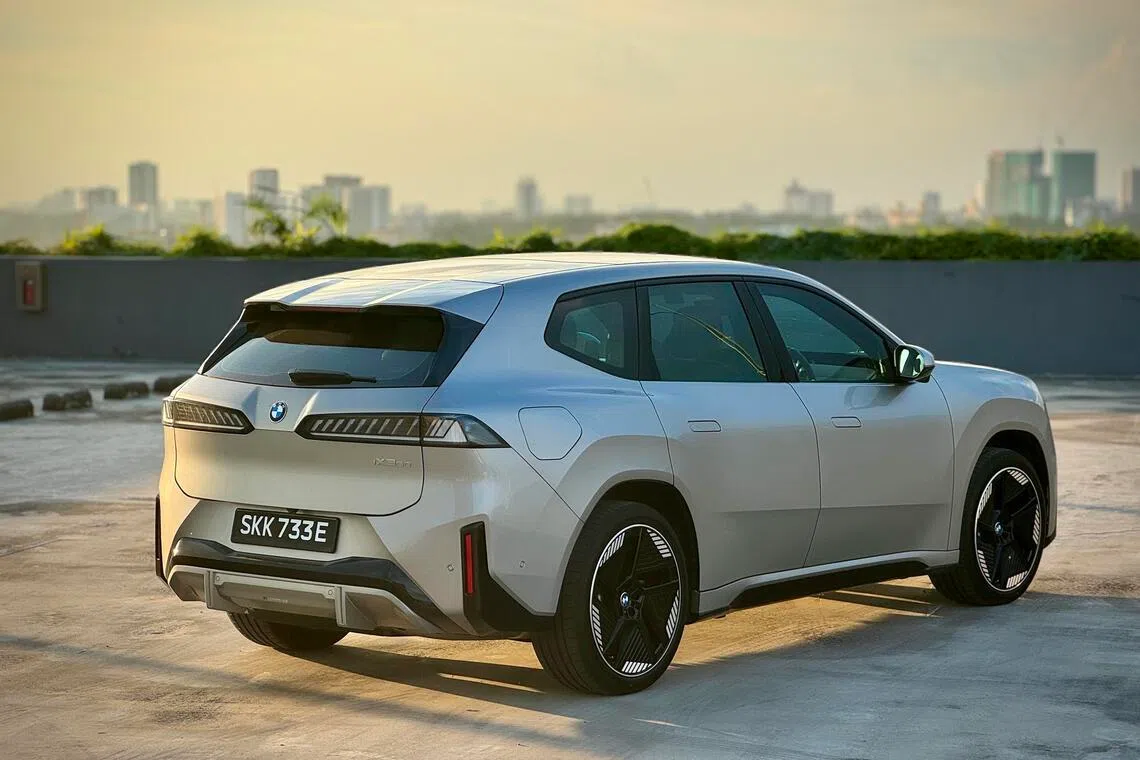
My main complaint didn’t take a week to form. The iX3 simply doesn’t feel very premium inside, especially for a car priced at S$387,888 with a Certificate of Entitlement.
Some of the cabin plastics feel like they belong in a car half the price, and features found in cheaper SUVs aren’t here: ventilated front seats, a second phone charging pad, self-opening and closing doors or a cooler box, to name a few.
Still, BMW has never peddled cars on the strength of value for money.
Anyway, what should we make of the fact that the iX3 50 is sold out here for now, and that buying one means joining a waiting list?
Perhaps, things like annoying air-con vents matter little in the face of advances in range and a lovely new user interface. Or perhaps BMW’s big bet on Neue Klasse paid off long before my week with the iX3 started.
BMW iX3 50 xDrive M Sport
| Motor Power/Torque | 469 hp/645 Nm |
| Battery Type/Net Capacity | Lithium-Nickel Manganese Cobalt/108.7 kWh |
| Charging Time/Type | 11 hours (11 kW AC), 21 minutes 10 to 80 per cent (400 kW DC) |
| Range | 805 km (WLTP) |
| 0-100 kmh | 4.9 seconds |
| Top speed | 210 kmh |
| Efficiency | 18.9 kWh/100 km |
| Agent | Eurokars BMW or Performance Motors |
| Price | S$387,888 with COE (estimated) |
| Available | July 2026 |
Decoding Asia newsletter: your guide to navigating Asia in a new global order. Sign up here to get Decoding Asia newsletter. Delivered to your inbox. Free.
Share with us your feedback on BT's products and services
TRENDING NOW

Companies still in search of AI use cases with worthwhile ROI, says Broadcom’s CEO

Malaysian king buys stake in Singapore-listed mining firm expanding into rare earths

Once staunchly pro-China, Malaysian Chinese businesses are now distancing themselves from Beijing

Singapore’s wealth management success should extend to everyday families

