

Mirko Febbrile – the journey of a chef
The co-owner of restaurants Somma and Fico talks about how living in Singapore brought him closer to his own roots
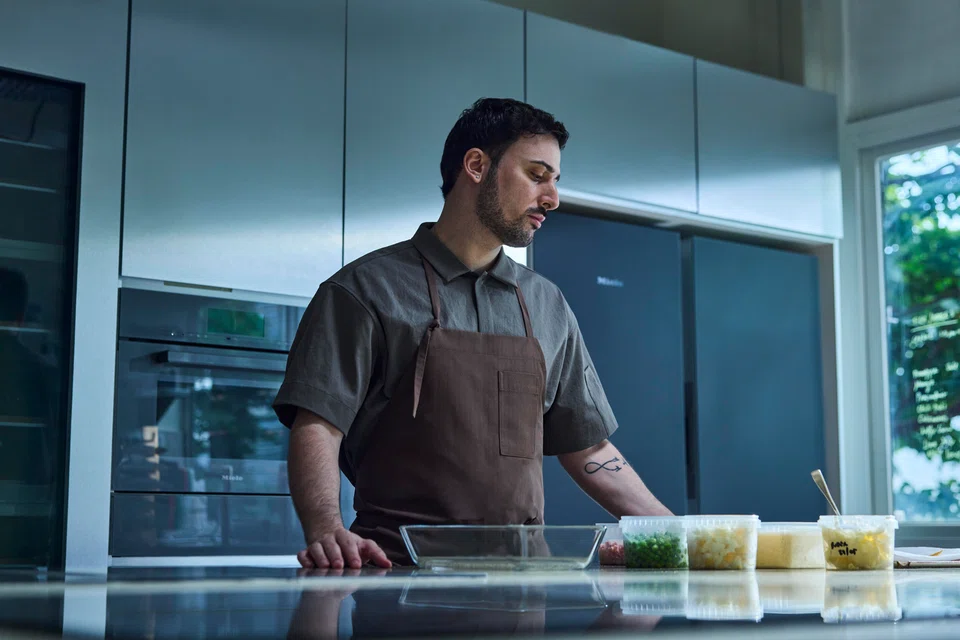
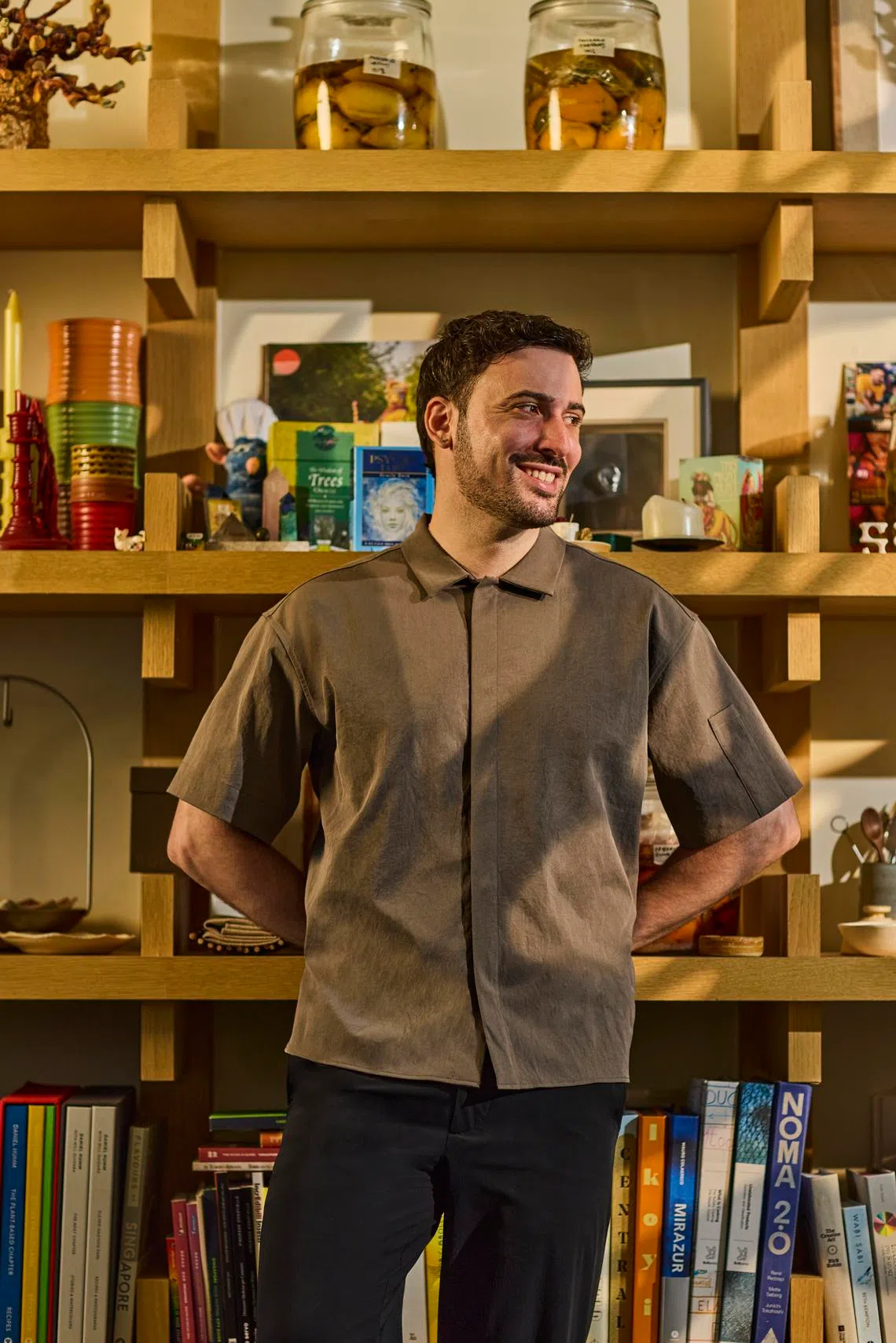
MIRKO FEBBRILE MAY BE AN Italian chef, but he doesn’t have a grandmother story to tell.
“I didn’t grow up with my grandma making fresh pasta – I don’t have that Massimo Bottura story,” deadpans the Puglian chef-partner of restaurants Fico and Somma. “I grew up reheating leftovers of my mother’s cooking.”
What he does have is a tale of his own – that of a small-town boy from Bitonto with big-city dreams, who arrived in Singapore as a fresh-faced 23-year-old in 2015 and scored his first Michelin star by the time he was 25.
Now, 11 years after his first taste of chicken rice, he calls Singapore home – a city that didn’t just shape him as a chef, but also brought him closer to his own roots.
Journey of self-discovery
Coming from a creative family, Febbrile had a choice between becoming an interior designer or a chef. But his mother convinced him that there were few career prospects for a designer where they lived.
“‘People have to eat, so you will always have money in your pocket,’” he recalls her saying. “In hindsight, I should have become a designer because chefs don’t make any money!”
Still, accolades came early for the culinary school graduate who studied languages at university, worked at McDonald’s at night, and honed his craft at restaurants and bars in his hometown. He was recruited by fellow Bari native Beppe de Vito to join his il Lido group, eventually helming the one-Michelin-starred restaurant Braci.
Singapore opened up new opportunities to travel, even as he immersed himself in the city’s melting pot of cultures. But the deeper he explored, the more he felt drawn to Puglia. “Because of the distance, I wanted to discover more about where I came from.”
When he left Braci in 2021 to start a new venture with the Lo & Behold Group, he decided to go home for six months first. He was also burnt out from the relentless pace of Michelin-starred kitchens – he wanted to reset and reconnect.
He returned with a clear vision for Fico and, later, Somma: to deliver an authentic dining experience that captures “where I come from and where I am now”.
With Fico, “I didn’t want to be the Italian restaurant that overcooks their pastas to please the local palate, or serves chilli crab tagliolini and wagyu beef tartare”, he says. “I opened Fico because I missed the food I used to have every day in my hometown.”
Fico’s no-compromises ethos and “Puglia farmhouse” setting in East Coast Park made it a hit with locals, but the greatest validation came from his mother, who came to visit and declared his orecchiette with turnip tops and focaccia as good as anything she’d had back home.
A chosen family
Recreating the flavours of home is one thing, but family is another. Febbrile may not have blood relatives here, but he has built a family of his own: a small circle of “ride-and-die” friends and his teams at Somma and Fico.
“The tricky thing about family is that you don’t get to choose them,” he says. “But with these people, I chose them or they chose me. It’s a different kind of family, but we’re a bunch of people fighting for the same thing every day.”
But keeping a family together presents its own challenges. “The way we are stretched is insane,” says Febbrile about the pressure to put together an ambitious production such as Somma while juggling events, pop-ups and supporting operations at Fico.
“Despite all the difficulties – and trust me, there are a lot – the dedication and commitment that they have is beyond what any boss or company can ask for. And the only way that everything stays afloat comes down to the culture you create.
“If you don’t bring people together, they won’t care, and you can’t force them to.”
That explains the ethos of Somma, which is Italian for “sum” – as in “the sum of choices that have marked our journey so far”, explains Febbrile. But it’s not just about him. “It’s the sum of all the actions everybody on the team has made and taken responsibility for.”
Food as love
The group dynamic is clearest at the end of an exhausting service, when everyone visibly unwinds, says Febbrile.
“There might be one section with some leftover trimmings that they’ve made into tacos for everyone, or someone might have made fried rice out of some lobster tails and packed it in takeaway boxes. They’re sharing, and it shows how everyone is looking out for each other.”
Such spontaneity shows that the culture is working, he adds. It’s different from the staff meal in the afternoon, where everyone takes turns to cook for the whole team, although that in itself is something to look forward to.
“We have a lot of different nationalities so there’s Croatian food, Italian, Malaysian, Filipino. It’s nice to have such diversity, and a safe environment for everyone to test out recipes and get feedback from their peers.”
With Febbrile and his team having spent so many hours at Somma, its test kitchen has naturally evolved into a social space as well. This is where recipes are trialled, using Miele appliances including ovens and fridges where the restaurant’s cheeses are aged.
Febbrile is a long-time Miele user, and apart from technical performance, he values the brand’s human touch which extends beyond just business. “They still place a lot of importance on personal relationships and day-to-day presence. That’s very rare today.”
Besides testing recipes, Febbrile might even make his favourite lasagna, based on his aunt’s recipe. “It’s different from the usual because in southern Italy we have many variations. This one has hardboiled eggs in it, with mozzarella, prosciutto, peas and, of course, bechamel and ragu.”
Unlike regular lasagna that holds its shape when cut, Febbrile’s version “opens up because it’s so moist, and you eat it like a normal pasta dish but with a crisp topping”. He loves it so much that “for my last meal before I die, it will be a Coke with ice and lemon, and this lasagna”.
But for now, the boy from Bitonto still has his sights on bigger things. “I want to keep building but it’s not for the sake of expanding. If anything, I don’t want to be remembered for something that I created, but because I brought a different perspective of what the industry can be.
“I didn’t become a chef because of a grandmother’s story. It was more about choosing a craft that would let me express my point of view – to tell my own story.”

Decoding Asia newsletter: your guide to navigating Asia in a new global order. Sign up here to get Decoding Asia newsletter. Delivered to your inbox. Free.
Copyright SPH Media. All rights reserved.
TRENDING NOW

Once staunchly pro-China, Malaysian Chinese businesses are now distancing themselves from Beijing

Looking beyond looming CEO succession, should UOB potentially pursue a transformative merger?

Could stablecoins be the future of money?

Grab CEO’s wife Chloe Tong on life with Anthony Tan and finding her purpose

