

AO Restaurant – more ‘aiyo’ than ‘aha’ at Orchard Towers
The former Esora chef tries to reinvent familiar favourites with mixed results
NEW RESTAURANT
AO Restaurant 1 Claymore Drive #01-01 Claymore Drive Singapore 229594 Tel: 8092-6532 Open daily: 11 am to 10 pm
[SINGAPORE] Just as the owners of AO – and Cloudfields – gravitate towards crumbling architecture to house their outlets, we lean towards anything modern, clean and with a low probability of meeting passing rodents.
To get to Cloudfields, we had to navigate the dilapidated surrounds of Tan Boon Liat Building. Now, we manoeuvre the periphery of Orchard Towers to find this two-letter dining outpost that seems to have a lot to say but doesn’t quite get its point across.
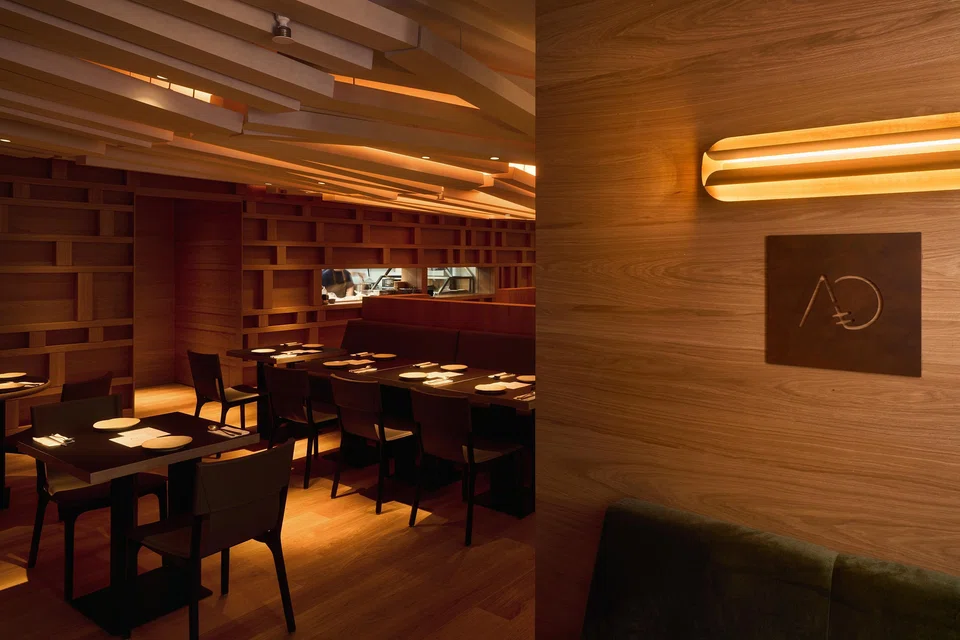
Visually, anything would look stylish after the faded signage, cracked walls and odd bit of rubbish we have to pass by to find AO. But it is pleasingly warm and cosy with soft lighting, plenty of wood, and ramrod-straight banquette seats for the posturally challenged.
Still, it is a tad too cosy for those who don’t want to accidentally raise an elbow and knock a chicken wing out of their neighbour’s hand. For all its attempts to create a warm environment, it has a weirdly stressful vibe, with poor acoustics and servers who seem somewhat disoriented by the noise and the idea of serving stuff in general.
The food is devised by the former chef of Esora, and you can see him trying to carve out an identity beyond the high-concept contemporary Japanese narrative of the defunct Michelin-starred eatery.
But rather than any “aha” moments, AO is more likely to elicit an “aiyo” or two.
The menu is sort of Japanese, kind of casual, a bit of everything else – but mostly anything goes.
SEE ALSO
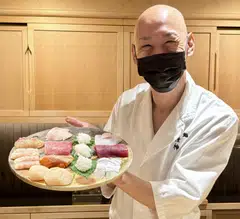
Because they think we’re in a hurry (we’re not), they bring all our food at once.
We get oysters (S$24) – four puny specimens covered in some kind of soya sauce jelly bits and foam, as if they’re embarrassed about their less-than-pristine au naturel selves. Overdressed and not too impressed.
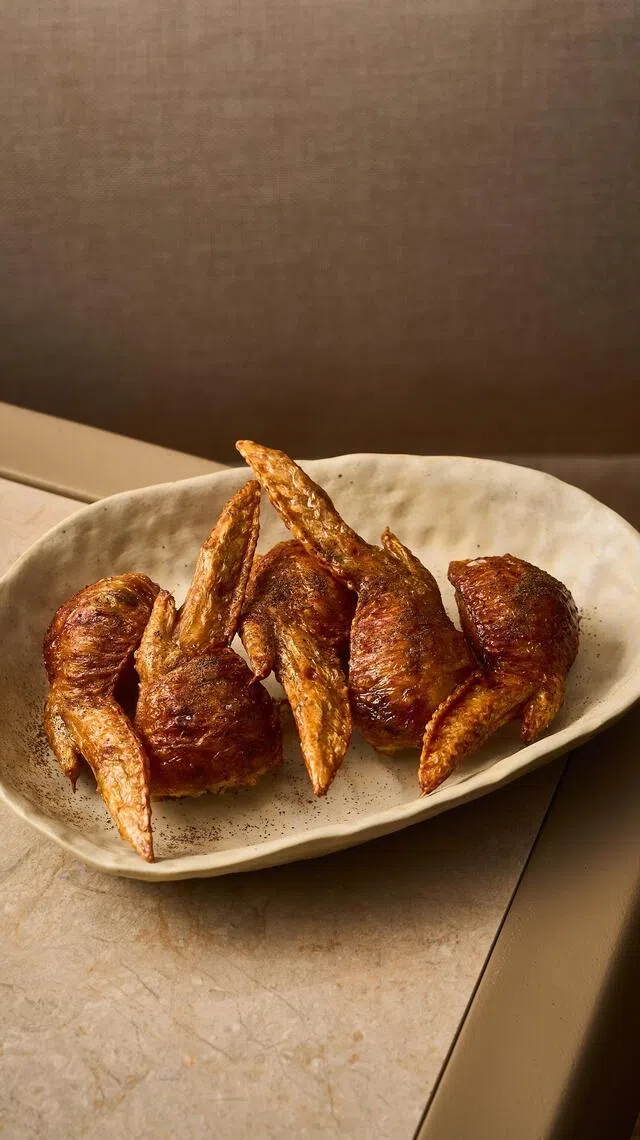
Chicken wings (S$22) could use a little more chicken under the skin, because it’s mainly a ball of chewy truffle-infused mochi rice stuffed into a fairly crisp sheath and adorned with a wing tip. Snack-wise, it passes muster without trying too hard.
The real head-scratcher is the wagyu tongue curry (S$34) – possibly the outcome of a bitter argument between Japanese curry, Korean army stew and an onsen egg that tried to mediate and totally regretted getting involved.
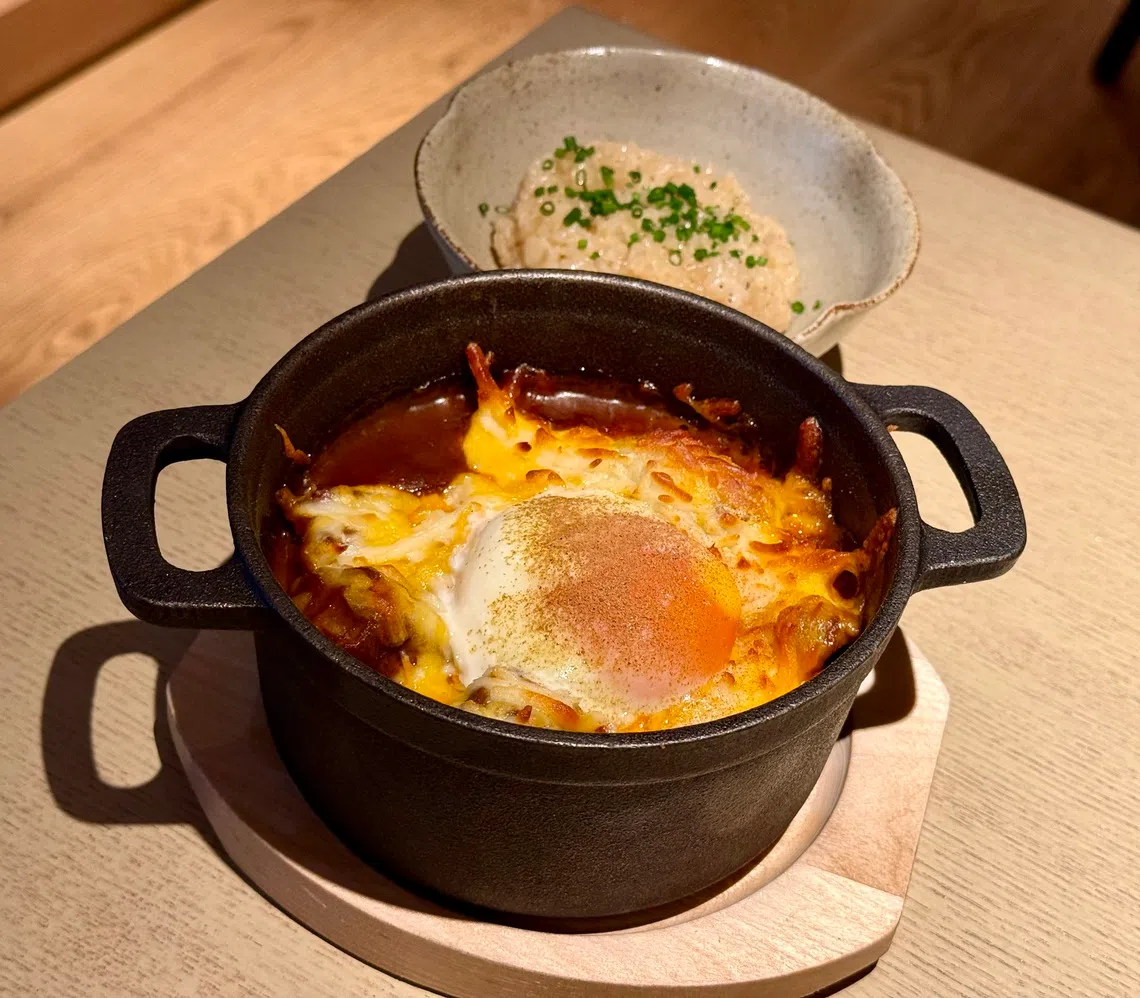
There are cubes of tongue – tender with appropriate bite – sitting in a sweetish, powdery, roux-based curry sauce with strong spices. There’s something familiar about it, like a bad memory hidden so deeply it would need hypnosis to extract. Then there is a thick layer of melted cheese that was just told to show up, along with random bits of cauliflower and eggplant. Finally, the runny onsen egg. The garlic rice on the side, though, is delicious.
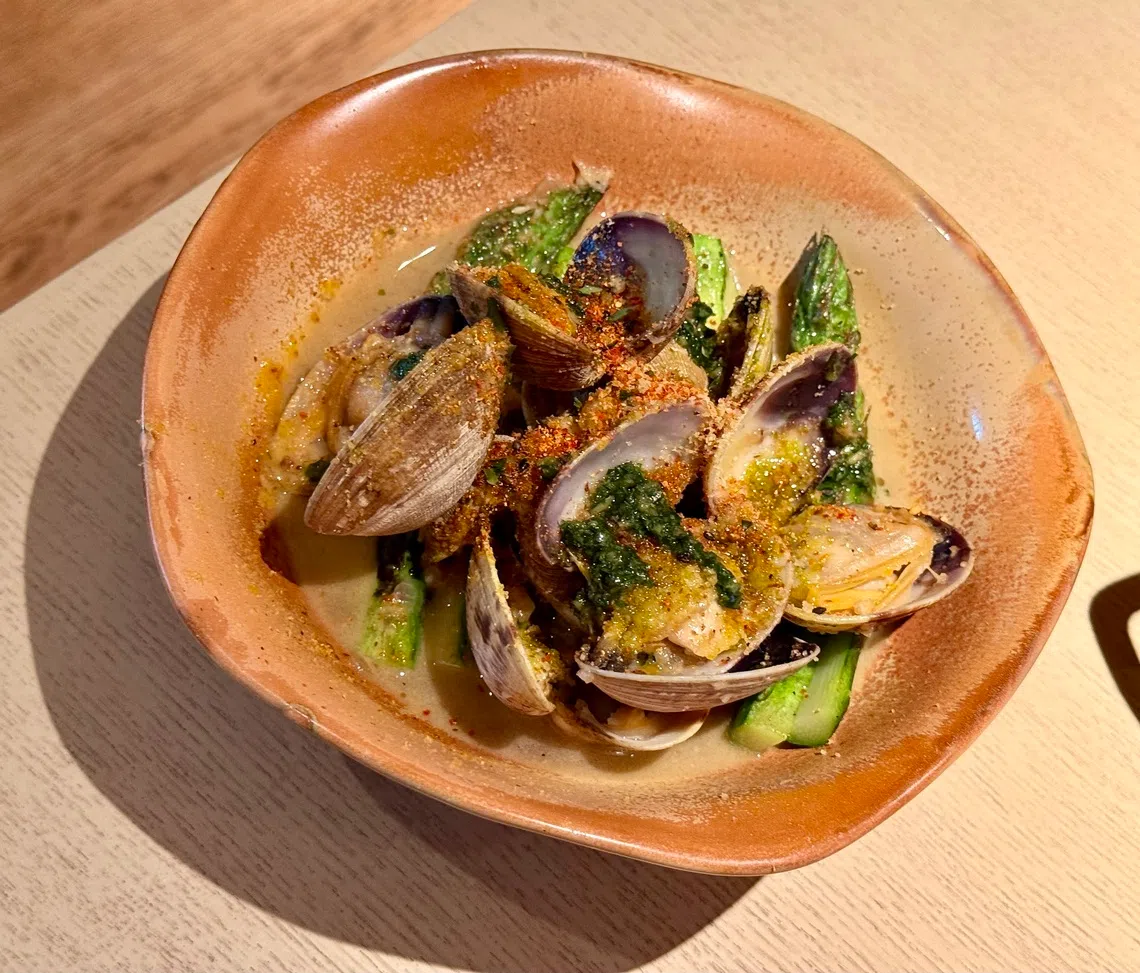
The littleneck clams (S$20), cooked in sake with asparagus and kombu, and showered with a surprisingly generous amount of grated mullet roe for the price, have an odd taste profile we can’t quite put our finger on, much less enjoy.
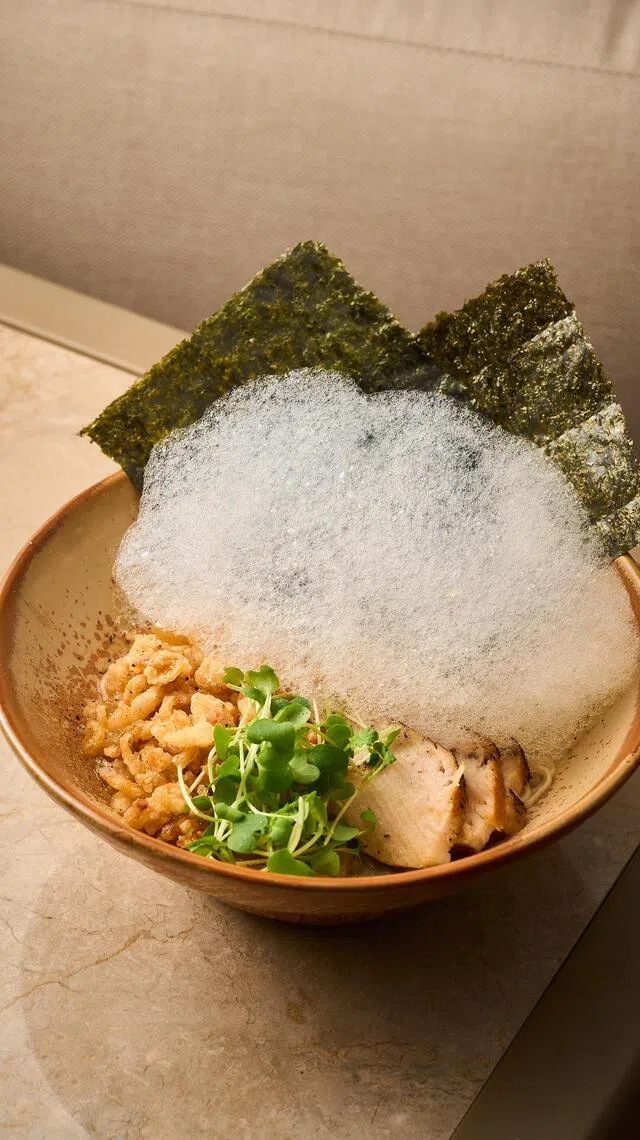
Where its mantra of “reinventing the familiar” makes a bit more sense is in its signature fish-based ramen (S$28) with its fancy name of sakurai-dai sea bream ramen.
The meaty, milky fish broth could be hotter but it has depth, and turning a slab of sea bream into chashu-like thin slices is a nice idea. Tempura batter crisps add needed crunch. What we can’t accept is the foam – which we thought was banned as a culinary embellishment in the 90s – sitting on top of the broth like a nice bubble bath.
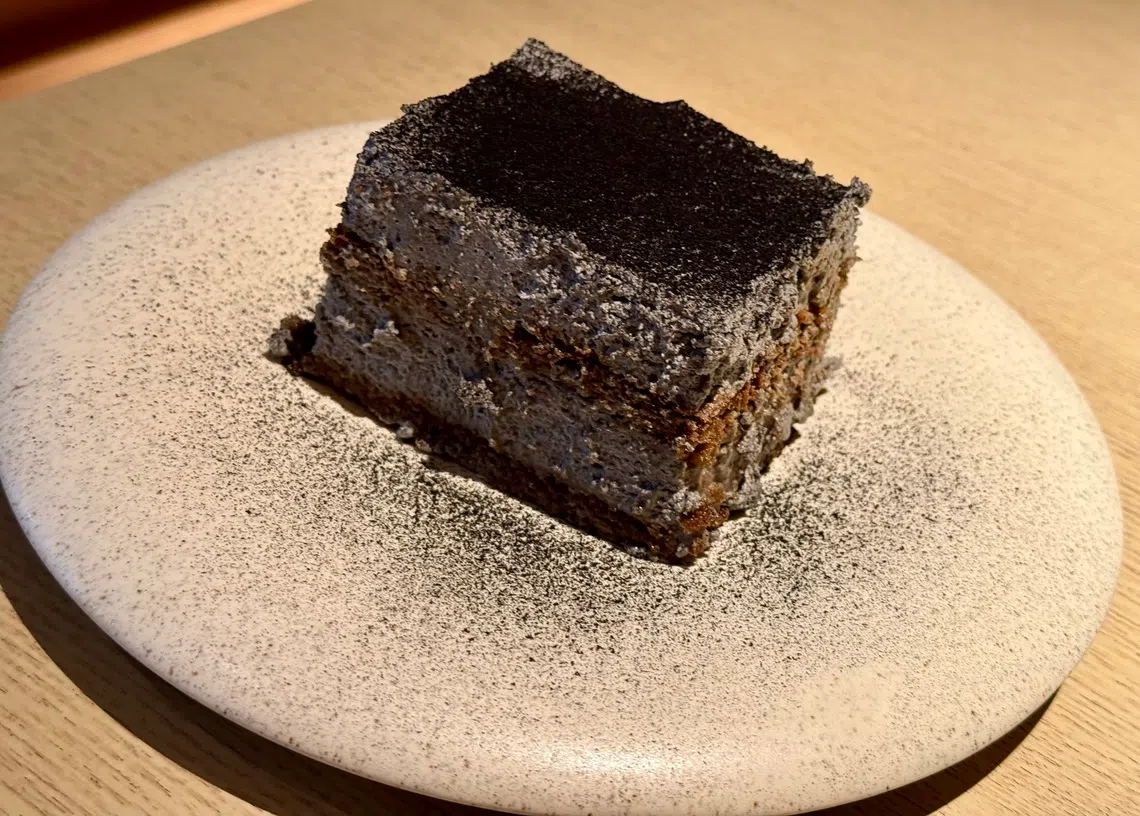
A black sesame tiramisu (S$16) that looks like dessert served at Halloween Horror Nights is a relatively nice try, optics aside. Grey sesame cream layered with coffee sponge won’t win the most appetising cake sweepstakes, but is still a respectable end.
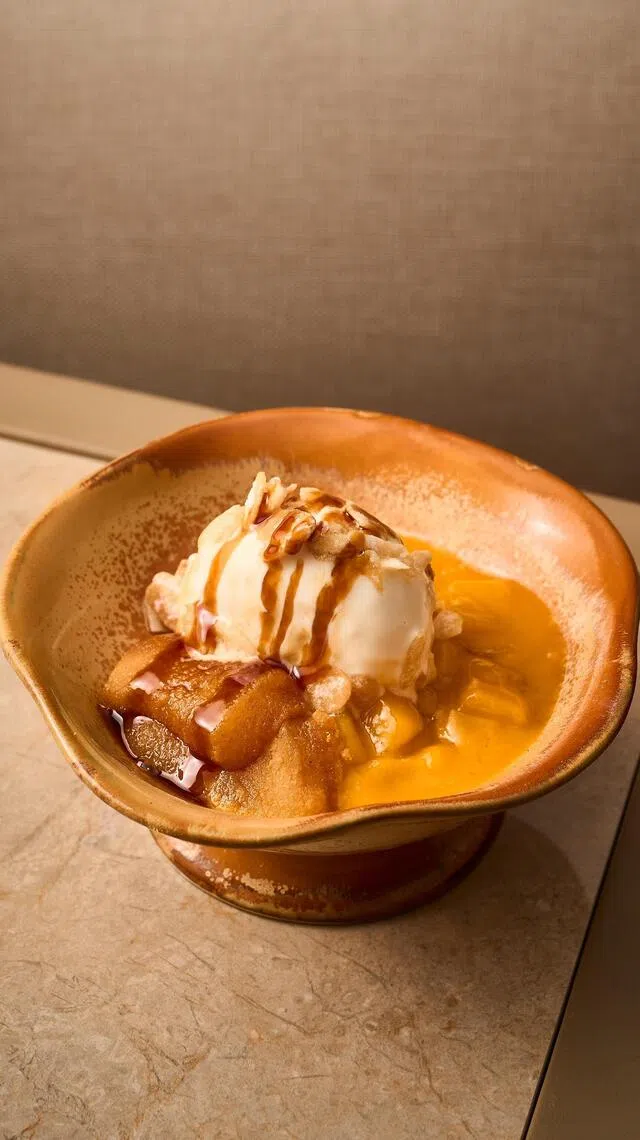
Not so the tofu ice cream, offered in three ways (S$16), of which we picked the wrong one. Tasting like tau hway churned into a creamy mix with the same dull flatness of soya bean, it’s paired with chopped mango and squares of mango-flavoured warabimochi that are more gummy than slippery jelly.
While AO gets an A for intention, a menu rethink might still be useful. But the diners around us seem quite agreeable with the concept, so it might just be a case of mismatched expectations. AO could spell A-OK to some, but we need a few more letters for it to spell yum.
Rating: 6
Decoding Asia newsletter: your guide to navigating Asia in a new global order. Sign up here to get Decoding Asia newsletter. Delivered to your inbox. Free.
Copyright SPH Media. All rights reserved.






