

Despite 2025’s high-profile closures, Singapore’s retail and entertainment sectors are not shrinking: observers
Exits by notable brands from Cathay Cineplexes to Eggslut likely signal market recalibration rather than a contraction, they say

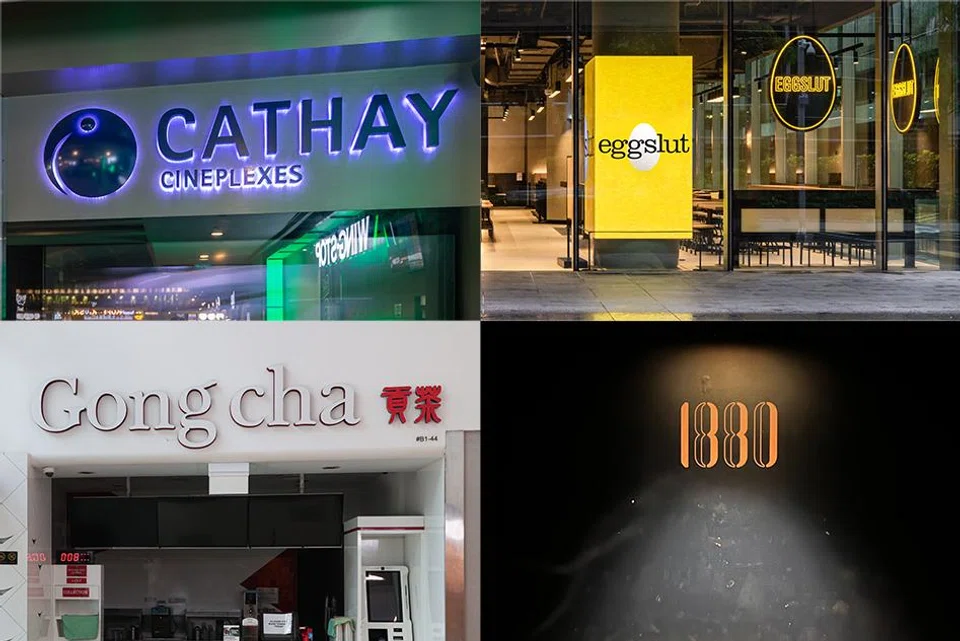
[SINGAPORE] Singapore’s retail and entertainment landscape faced high-profile closures and downsizing in 2025, with businesses battling cost pressures and stiff competition.
Dampened consumer sentiment also contributed to the tough business climate. Singapore’s consumer sentiment score was down year on year in 2025, and was among the lowest in South-east Asia, UOB’s Asean Consumer Sentiment Study found. It also noted that local consumers have become cautious about spending and are cutting back on non-essentials.
The F&B industry, in particular, came up against rising rents, labour shortages and shifting consumer tastes, and became increasingly at risk of oversupply as openings outnumbered closures, which put pressure on profits.
Greater outbound travel, which is known to lower domestic consumption, also contributed to tough business conditions, market observers The Business Times spoke with said.
Amid the F&B sector’s high churn and industry woes, closures claimed casualties across market segments, from international chains like Eggslut to fine-dining restaurants like Michelin-starred Alma by Juan Amador and local joints like Cantonese zi char eatery Ka-Soh.
The arts and entertainment industry was not spared, as the cinema sector recorded exits from two prominent players: silver screen stalwart Cathay Cineplexes and independent cinema The Projector.
Both shut abruptly and entered voluntary liquidation, citing challenges faced by Singapore’s cinema industry amid the sector’s global decline. Singapore’s largest cinema operator Golden Village has since taken over Cathay’s former Downtown East space and The Projector’s Cineleisure space.
Other casualties include Enclave Bar, a live-performance venue and F&B joint on Neil Road and The Closet Lover, a home-grown fashion label.
Beyond full-scale exits, the threat of closure that looms over businesses like stunt school Sandbox Training Ground, now facing bankruptcy, alongside the downsizing of household names like Haidilao and Books Kinokuniya, point to the retail sector’s struggles.
SEE ALSO



Haidilao closed its flagship Clarke Quay outlet in August after shuttering several outlets earlier this year, and Kinokuniya reduced the size of its principal Takashimaya store.
Notable closures in 2025 include:
- Cathay Cineplexes: The cinema chain operated by mm2 Asia ended its 85-year run on Sep 1 when talks with creditors fell through, after having shuttered multiple outlets amid mounting payment demands from claimants over owed monies this year.
- Eggslut: The American sandwich chain closed its last Singapore store on Feb 28 after closing one in 2024. Its departure from Singapore after around four years followed its exit from Hong Kong in February, and South Korea in 2024.
- The Projector: The indie cinema’s abrupt closure on Aug 19, described by some as a blow to the local arts scene, came weeks after it announced plans to re-focus on its original Golden Mile Tower outlet.
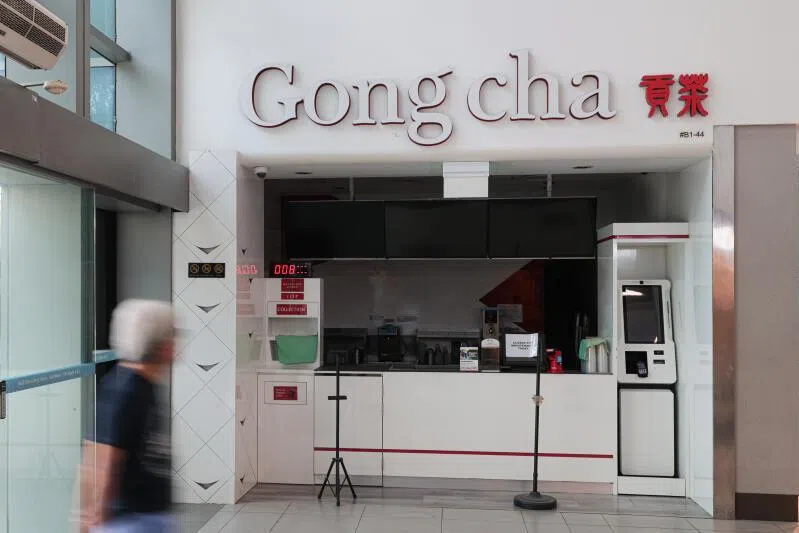
- Gong Cha: The Taiwanese bubble tea brand closed all its local outlets in October, citing plans to relaunch in 2026 with new franchisees.
- 1880: The private club closed on Jun 17, with debt owed to over 200 creditors after an aggressive expansion into Hong Kong and Bali. Its brand rights were acquired by Icon1c, the group behind Mandala Club; plans have been made to reopen the club at a new venue.
- Prive: The Prive Group announced the closure of all its restaurants on Sep 1, amid market challenges and rising costs; two of its establishments, Chinese restaurant Empress and Prive ACM at the Asian Civilisations Museum, were taken over by Commonwealth Concepts and Baker & Cook respectively.
- Twelve Cupcakes: The pastry chain founded by former model Jaime Teo and radio DJ Daniel Ong closed on Oct 30, leaving staff with unpaid wages. The chain’s losses had deepened for three consecutive financial years.
Closures signal market recalibration, not permanent shrinkage
The year’s closures signal market recalibration rather than permanent shrinkage, said Knight Frank head of retail Ethan Hsu. He said Singapore’s retail and entertainment landscape is not contracting but rather, evolving.
Joan Chen, CBRE’s head of retail services (Singapore), said population growth is set to continue supporting retail and entertainment demand.
While the market is experiencing regular tenant churn, vacant spaces are typically being swiftly filled as expanding retailers and new-to-market brands seize opportunities to establish a foothold, said Cushman & Wakefield research head Wong Xian Yang.
This comes as Singapore’s status as a regional tourism hub and strategic launchpad to South-east Asia continues to make it attractive to new-to-market brands, he added.
Spotlight on omnichannel marketing, experiential retail in 2026

OCBC chief economist Selena Ling suggested that there may be further consolidation and churn in F&B and small retail stores as a strong Singapore dollar continues to drive outbound travel.
CBRE’s Chen noted that shifting consumer tastes and economic conditions are shaping the evolution of formats and concepts. For example, she said, fine-dining operators have pivoted to a la carte menus or rebranded themselves as casual-fine restaurants catering to increasingly cost-conscious consumers.
Chen said cinemas still play a key role in local entertainment culture, even amid the rise of streaming services and shifts in consumer preferences post-Covid.
“The ability of operators to reposition and elevate themselves above the competition (streaming platforms) will help attract movie-goers back for a differentiated cinematic experience,” she said.
One key trend set to shape the retail and entertainment sectors in 2026 is omnichannel integration, said Jenny Khoo, head of retail and workspace management at Lendlease.
This comes as customers are becoming increasingly discerning and seeking experiences beyond mere “transactional experiences”, she noted. Hence, successful operators will be those who “integrate a strong digital presence with compelling physical experiences”, she added.
Knight Frank’s Hsu agreed, noting that hybrid events and digital engagement tied to physical spaces are emerging as key differentiators for operators.
Another key trend for 2026 is experiential retail.
Khoo said: “The trend of retail-tainment is expected to intensify as we see more pop-ups, immersive experiences and collaborations between partners to create shareable moments that drive social engagement.”
Likewise, Knight Frank’s Hsu said F&B and entertainment operators are doubling down on experiences “that go beyond the ordinary” to cater to the “increasingly experience-driven Singapore consumer”. These include experiences that offer Instagrammable environments and interactive concepts.
Catering to Gen Z shoppers will thus be another key trend for retail and entertainment in 2026, as the demographic is expected to account for an increasing share of consumers, said Khoo.
“Not a zero-sum game”: Local versus global brands
While well-capitalised global brands are more resilient against costs than their smaller or independent counterparts, this does not mean that there is no space for local operators in Singapore’s retail and entertainment scene, said OCBC’s Ling and Knight Frank’s Hsu.
“The current landscape isn’t strictly a zero-sum game between global giants and local independents. The narrative is more about resilience and adaptability than size,” said Lendlease’s Khoo.
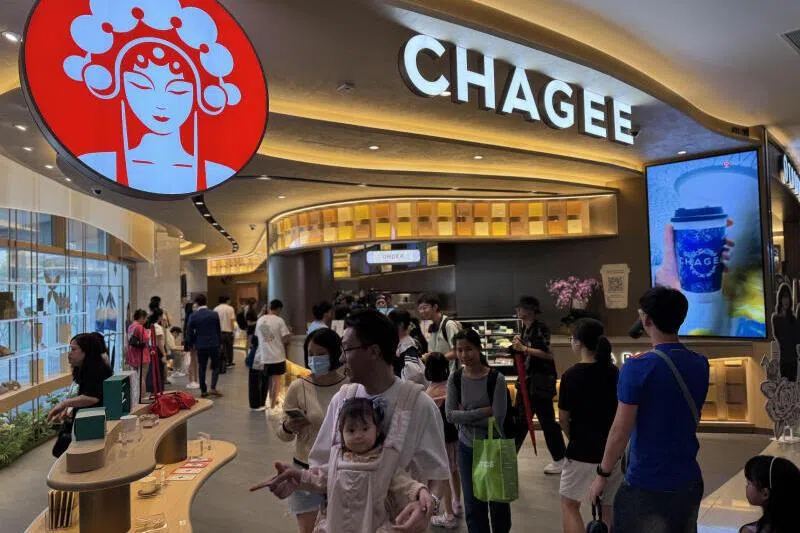
Hsu, agreeing, said the rise of international and global franchise brands like Chick-fil-A or Chagee does not signal the disappearance of independent and local brands, but highlights a phase in which “differentiation, strong branding and experiential execution are the essential survival factors”.
Even as Singapore consumers seek accessibility to global brands, Lendlease has observed interest in both home-grown and international brands, said Khoo.
Thus, local brands’ success and longevity hinge on their ability to carve out a defined niche and hyper-specialise to charge premium prices and avoid direct competition with global players, says OCBC’s Ling.
Leveraging omnichannel strategies such as pop-ups, or going into collaborations or co-renting to lower costs through shared kitchens and collectives, scaling overseas and tightening cost control may contribute to these brands’ success, she said.
Decoding Asia newsletter: your guide to navigating Asia in a new global order. Sign up here to get Decoding Asia newsletter. Delivered to your inbox. Free.
Copyright SPH Media. All rights reserved.
TRENDING NOW

Once staunchly pro-China, Malaysian Chinese businesses are now distancing themselves from Beijing

Looking beyond looming CEO succession, should UOB potentially pursue a transformative merger?

Could stablecoins be the future of money?

Grab CEO’s wife Chloe Tong on life with Anthony Tan and finding her purpose

