

Mozza restaurant to grow presence in Singapore; chefs behind Fico, Buona Terra, Pun Im open new outlets
Chefs are betting on expansion in an embattled F&B industry
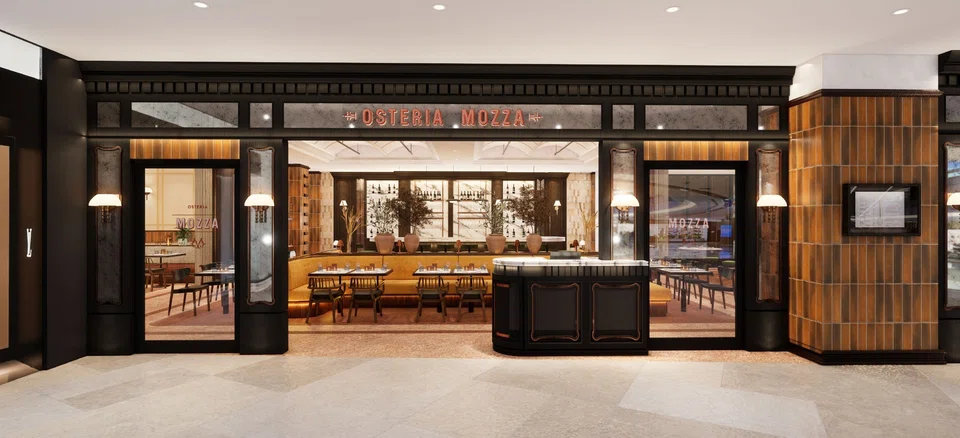
[SINGAPORE] American chef Nancy Silverton’s Mozza Restaurant Group is set to expand in Singapore as its flagship Osteria Mozza restaurant relocates from Hilton Orchard Singapore to Ion Orchard, and a new concept takes its place.
Under her partnership with OUE Restaurants – the food and lifestyle arm of property group OUE Limited – the popular Italian pizza-centric eatery will be reframed to serve a larger demographic of shoppers, tourists and office workers at the Orchard Road mall, says its chief operating officer Andrew Ing.
Taking over its hotel space will be Chi Spacca, the only Asian outpost of Silverton’s Los Angeles meat and grill concept, which will open in the fourth quarter of this year.
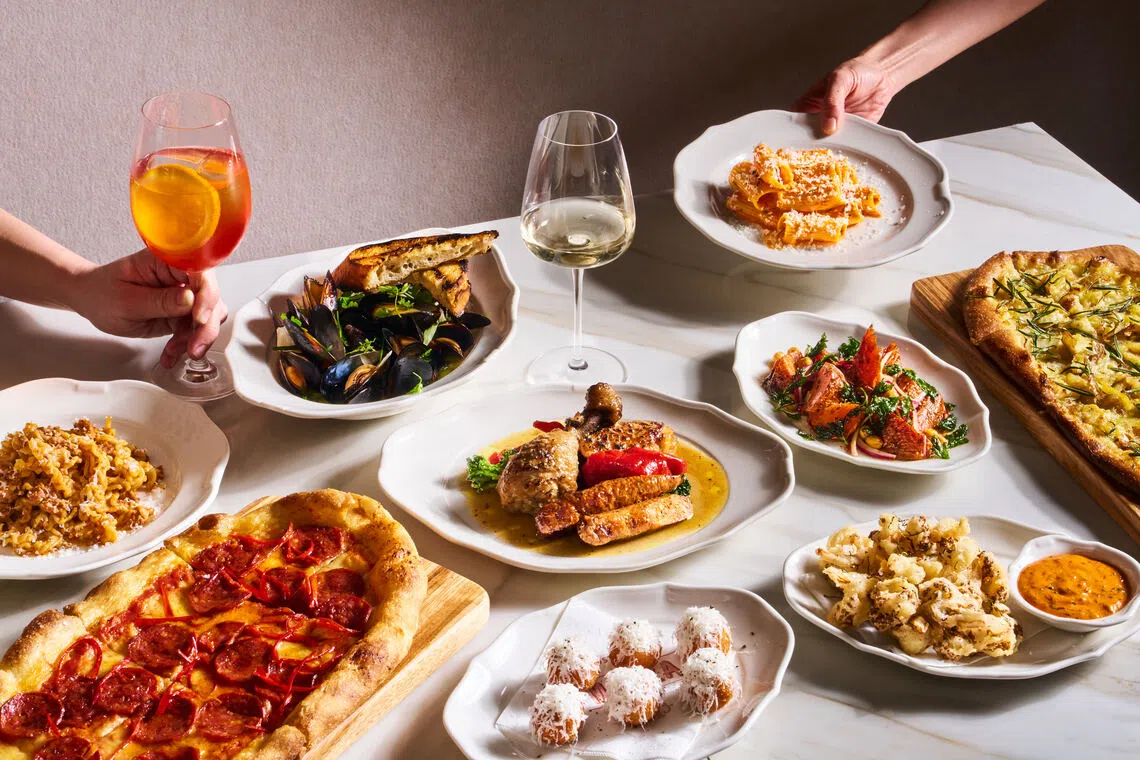
Ing explains that the move to Ion “allows us to evolve Osteria Mozza from being primarily a destination restaurant into one that can fit more naturally into a customer’s day”. A bigger menu has also been planned to cater for all-day dining.
It also takes Mozza out of the hotel equation, with its “dual-layer dynamic managing both hotel expectations and ownership”, says Silverton, paving the way for it to operate as a standalone venue working directly with OUE.
The restaurant operator also counts Gilmore & Damian D’Silva, Iyasaka by Hashida and Chatterbox in its stable of eateries.
Unlike Mozza, Chi Spacca will not serve pizza or pasta but is centred on seafood, meat and vegetables prepared in a wood-burning oven and grill. A signature item will be focaccia di recco: a paper-thin, cheese-stuffed flatbread from Liguria.
Silverton, who plans to visit Singapore regularly, describes Chi Spacca as a year-long chef residency led by local talent and Mozza representatives, overseen by herself. The residency format is designed to allow it to evolve to meet the expectations of the local market.
“We’re not bringing something new, we’re just adding to an already vibrant scene here with something that works very well in Los Angeles,” says Silverton. “We’re not a steakhouse but a grill-forward Italian restaurant.”
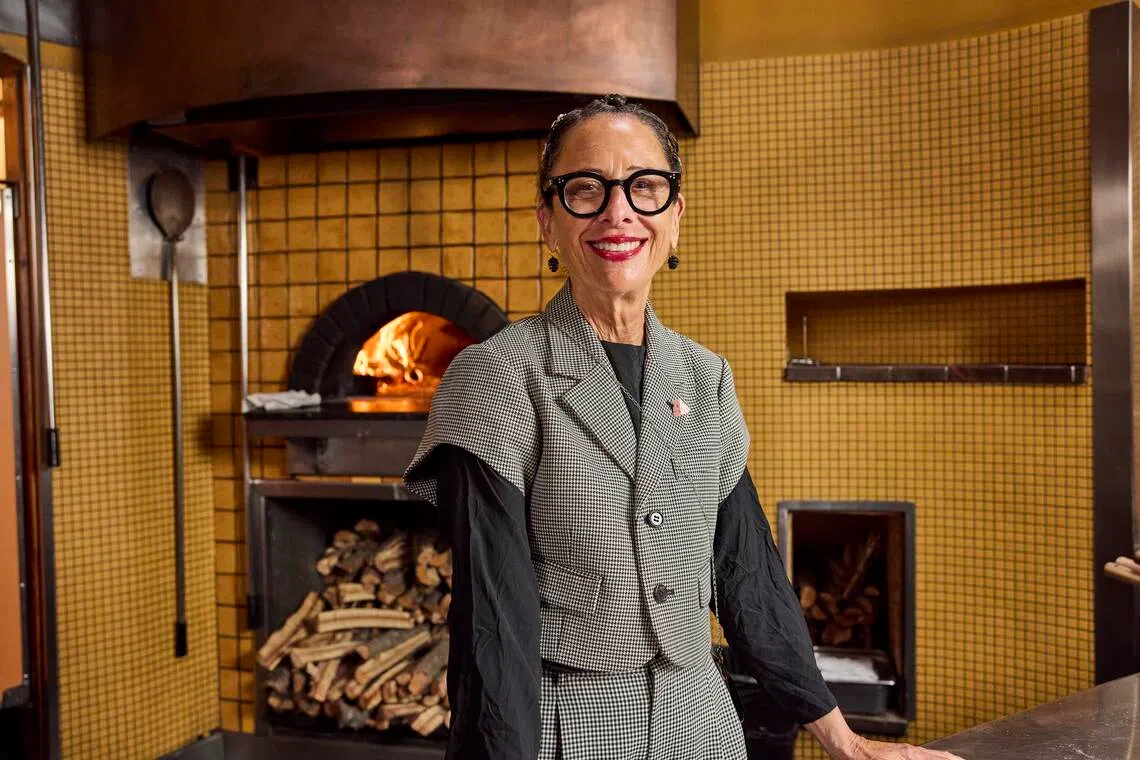
The 72-year-old has had a long presence in Singapore beginning in 2010 with Osteria Mozza and Pizzeria Mozza at Marina Bay Sands; those shut in 2018 following a sexual misconduct scandal involving her former partner Mario Batali. She returned to Singapore with Osteria Mozza in 2022.
Operating in Singapore is highly competitive but “the restaurant business is tough anywhere in the world”, says Silverton. “The market in Singapore is similar to Los Angeles, with fierce competition and success reliant on getting every touch point right – service, design and food.”
The strategy for Osteria Mozza, she adds, is to position it not as a “special occasion” spot but an approachable one that would attract more frequent diners.
As the new Ion space cannot house a traditional wood-burning oven, the restaurant will offer signature paddle-shaped pizza ala pala baked in a high-performance oven, and piadina sandwiches, a popular street food that uses pizza dough as a base for different fillings.
With the opening of Chi Spacca, the Mozza brand is primed for expansion “when the right opportunities arise”, Silverton says. Ing notes that OUE assesses each opportunity according to its growth potential rather than target segment, which explains its portfolio of both high-end and casual concepts.
“The operating environment remains challenging, with cautious consumer spending, intense competition and rising operating costs,” he says.
“Our priority over the next few years is to strengthen and optimise our existing portfolio while being selective about expansion opportunities.” He points to the group’s expansion of Chatterbox in Tokyo and Taipei as an example of revenue diversification.
“Our goal is not to have the biggest portfolio but the most relevant and sustainable one.”
Fico to open at Tanjong Beach Club
From East Coast to Sentosa, Italian eatery Fico is set to take over the restaurant operations at Tanjong Beach Club on Sep 28, with renovations underway to bring a taste of chef-partner Mirko Febbrile’s cuisine to the beachfront getaway.
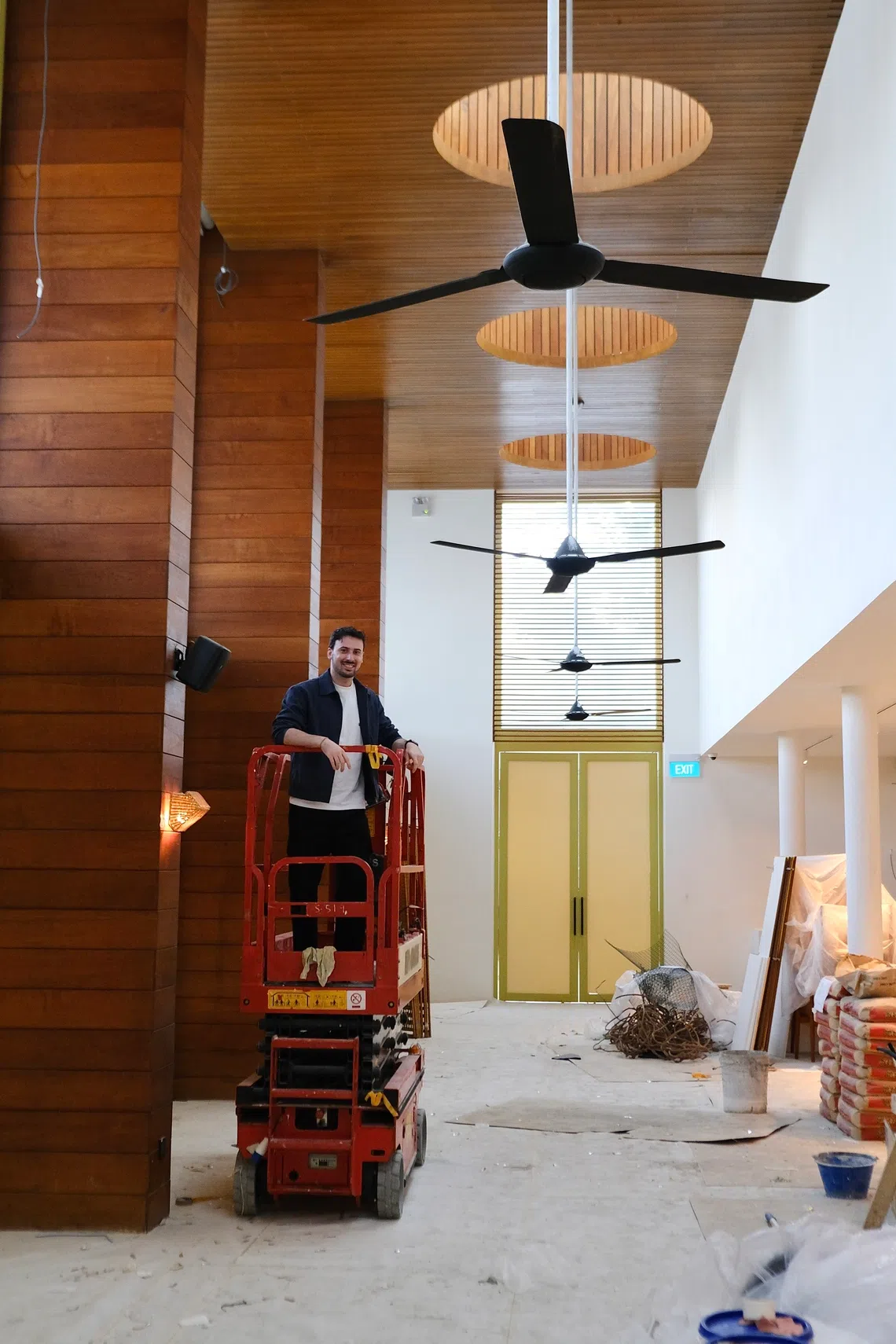
Both Fico and Tanjong Beach Club are part of the Lo & Behold Group. The club, which opened in 2010, closed for a major overhaul in late 2024 before reopening in early 2025 with a refreshed concept.
The decision to convert the restaurant into a second Fico came about as the group considered ways to grow this bucolic, destination-driven concept.
“Fico has grown into one of the strongest concepts in our group since opening at East Coast Park in 2023,” says managing partner Wee Teng Wen. “The demand for that kind of dining – unhurried and transportive – has been consistent, and we’ve been looking at where else it could live. Tanjong Beach Club became the clear answer.”
Febbrile says that the menu concept will be tweaked to fit the surroundings. “The food will be lighter and suited to a day by the beach, featuring fresh seafood, coastal flavours and a stronger aperitivo element.”
Wee adds that Fico “would also bring a new dining crowd who might never have planned a day on the sand, and occasions the beach club alone may not have reached, from weekday lunches to celebration dinners”.
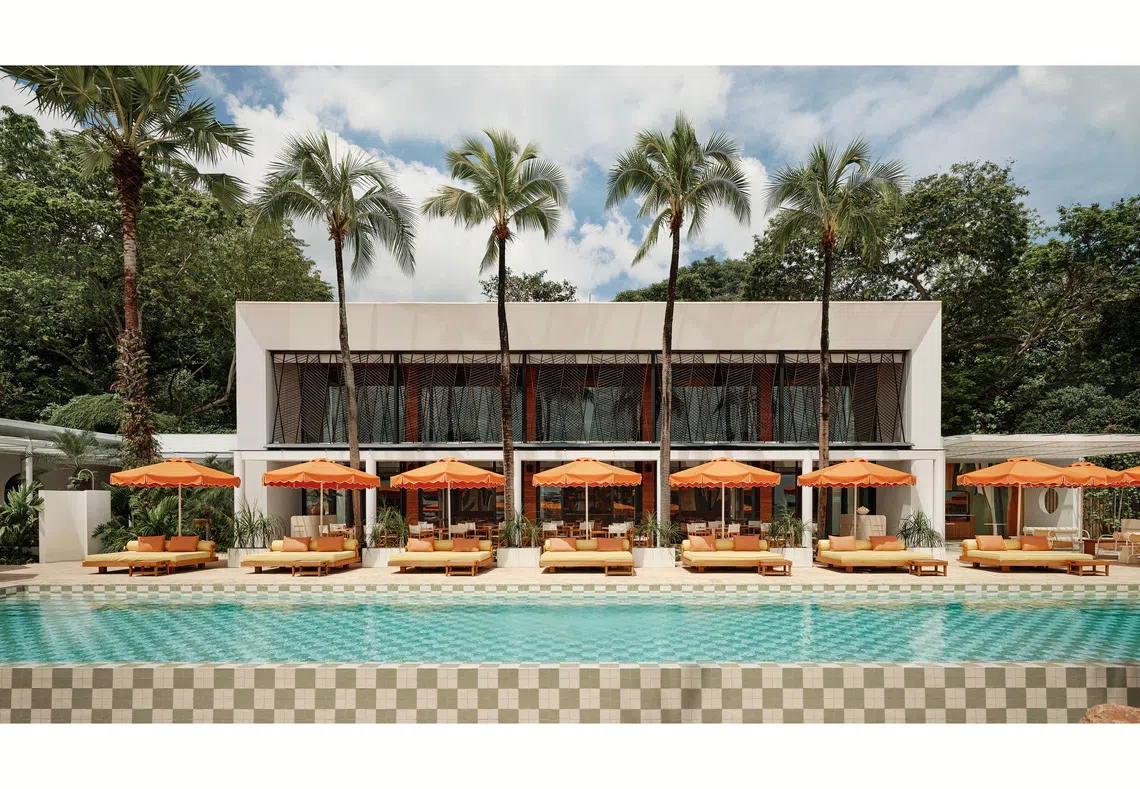
The second Fico adds to Febbrile’s growing portfolio, which includes the innovative fine-dining restaurant Somma and the newly launched Verso, an “experiential culinary studio”.
The latter is an events-led venture that goes beyond conventional catering to designing bespoke dining experiences for commercial clients. Febbrile sees potential in this market segment, “with strong interest from brands and partners to collaborate with both Fico and Somma”.
Although the F&B market is challenging, “it doesn’t mean you stop looking for opportunities to grow”, says Febbrile. “For us, it’s not just about opening new restaurants but strengthening the concepts we already have.”
Fico recently concluded a successful pop-up at New Bahru, and while there are no plans to open a permanent space in town, the experience has shown that there is potential to scale the business.
Meanwhile, the dinner-only Somma will open for lunch for the first time on Saturdays, a commercial decision to boost business and make it “more accessible to someone who may be curious about the restaurant but aren’t ready to commit to a longer dining experience”.
Michelin-starred Buona Terra in expansion mode
The Italian expansion continues with Assaggi, currently one of the hardest to book restaurants in town, which is helmed by Denis Lucchi, chef of the Michelin-starred Buona Terra.
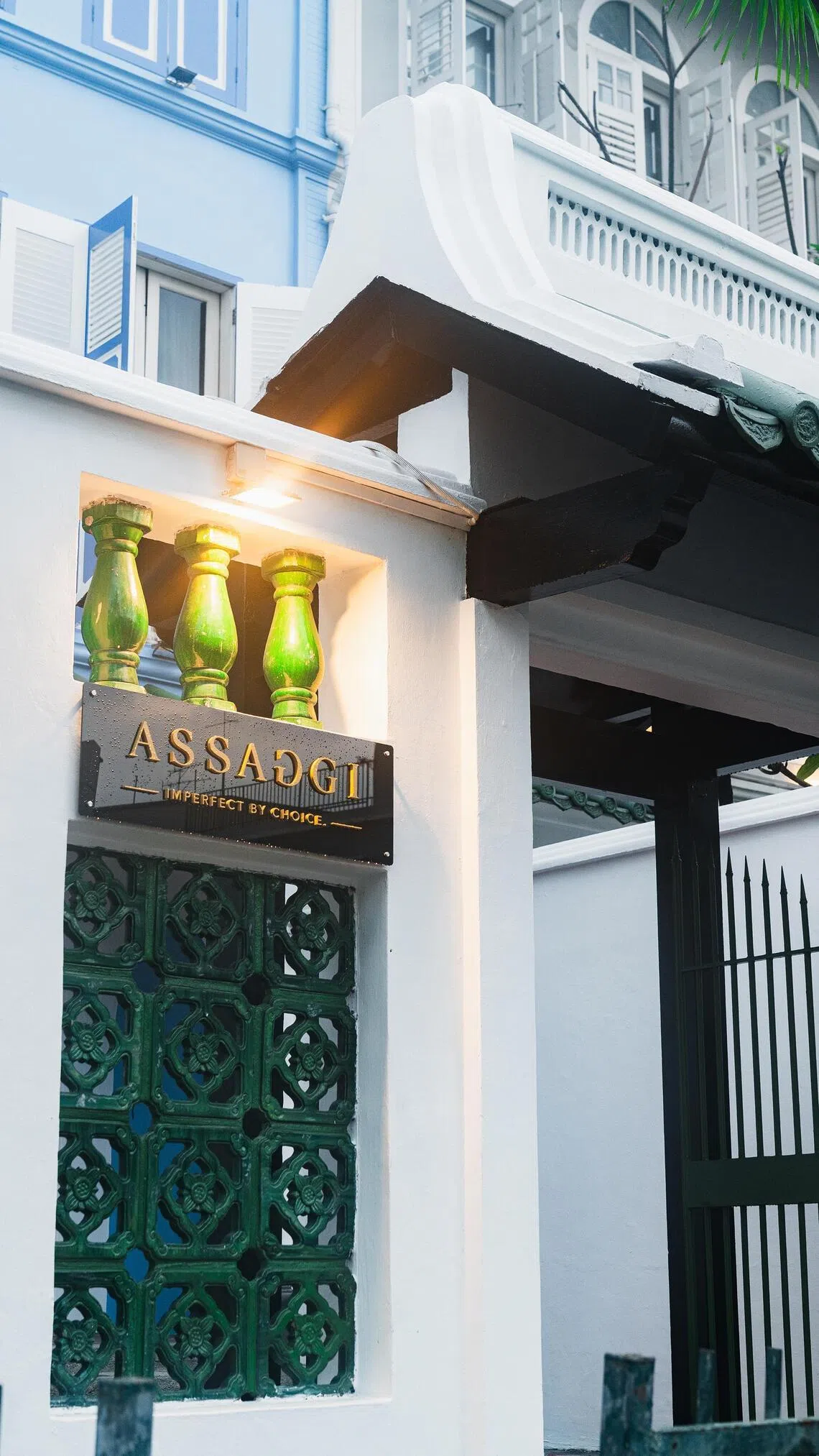
The Neil Road restaurant is the second successful outlet that Lucchi has opened since 2024 when he launched Locanda, a casual trattoria in Rowell Road that is still doing well today.
While Lucchi had intended to open another Locanda in the Assaggi space, it was too small. He opted for an in-between concept instead – similar to Buona Terra, with a set menu format but in a more relaxed setting, and prices that start at S$58.
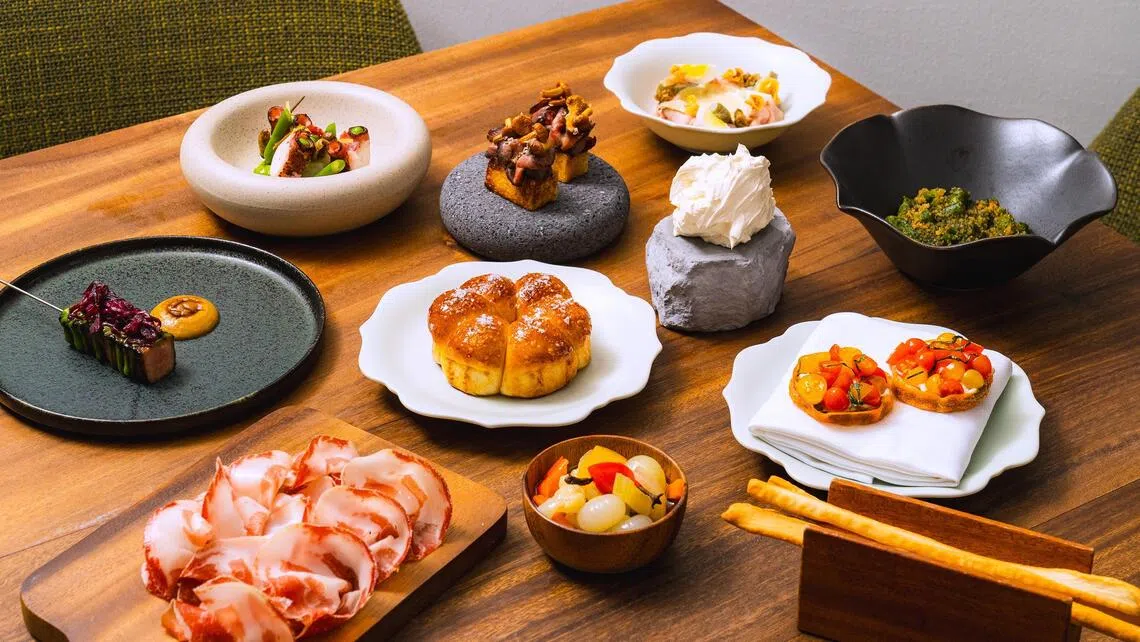
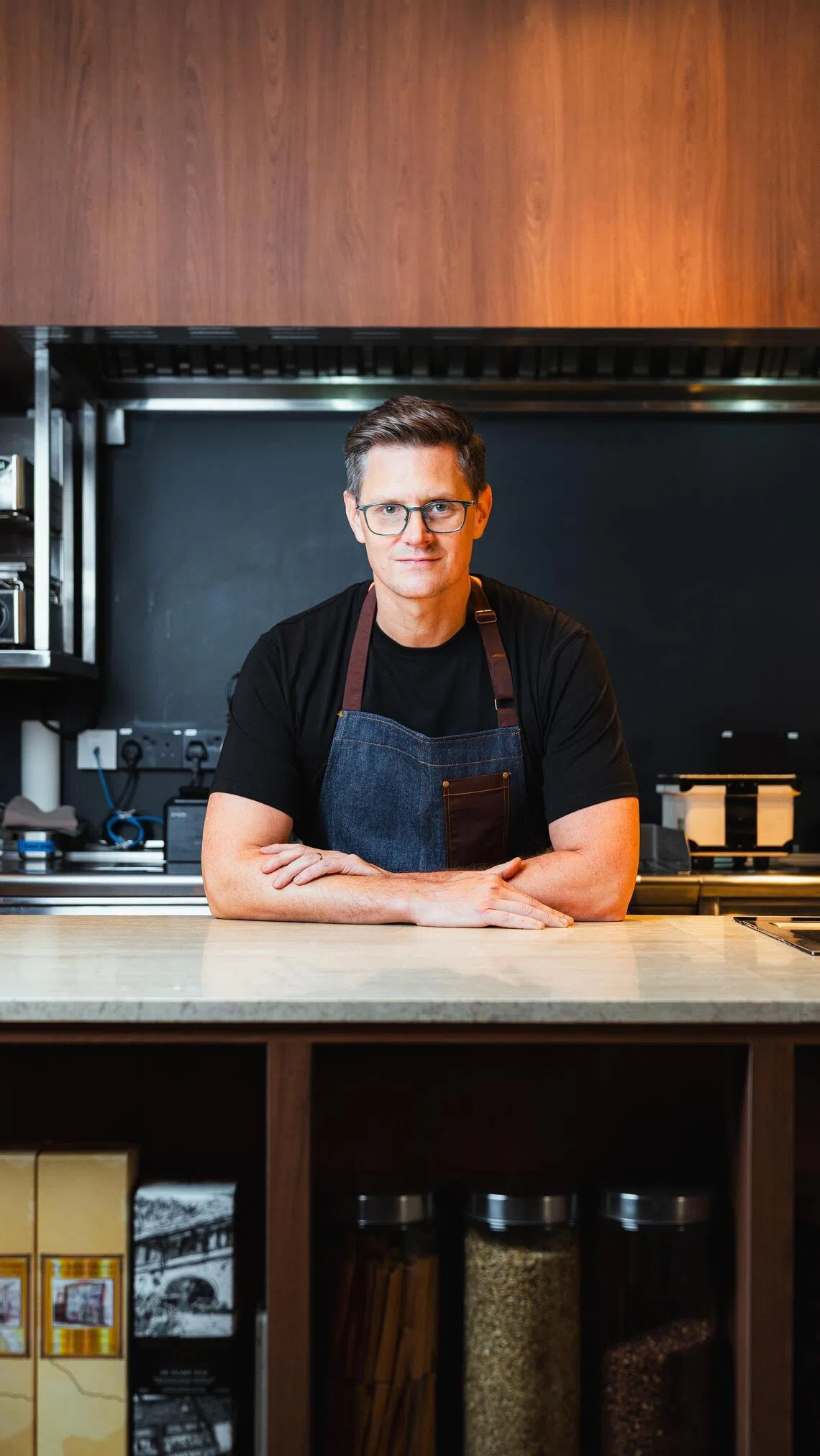
Despite now having three restaurants under his belt, Lucchi remains the chef of Buona Terra, where he has been for some 13 years. The restaurant is part of The Connoisseur Collection Group, but Lucchi had been tasked to expand its portfolio of Italian restaurants.
Opening Locanda was not in response to a struggling fine dining industry that saw at least 10 Michelin-starred restaurants close down in the past two years. “Apart from Covid, Buona Terra has always been sustainable and profitable,” says Lucchi. “We didn’t open Locanda because Buona Terra was struggling, but rather to diversify our business.”
Despite his reservations about Locanda’s location in Little India, the outlet was profitable from the first month.
“Of course, we are not at the crazy level of being completely full every day like the first few months, and lunch is still a challenge, but it continues to do very well.”
He concedes that “there was definitely some initial impact on Buona Terra, but that was something we anticipated”.
While Locanda was not meant to support Buona Terra’s bottom line, the response has worked both ways.
“Some existing Buona Terra customers gravitated towards Locanda when they wanted a more casual experience, but Locanda also introduced us to completely new customers – some of whom eventually became customers of Buona Terra as well.”
Despite Assaggi’s initial boom, Lucchi remains realistic. “We all know there is often a bubble around a new opening. It might last three, four or five months. For me, the real test of a restaurant is not how difficult it is to book during the first few months; the strong restaurants are the ones that are still performing years later.”
And although he has taken on more entrepreneurial challenges, Lucchi sees it more as an extension of his role as a chef rather than moving away from it.
“When we open a new restaurant, I particularly enjoy giving opportunities to those who have worked with me rather than bring in someone completely new.”
Both Locanda and Assaggi are run by chefs from Buona Terra’s kitchen. Looking forward, Lucchi sees Locanda as the most scalable concept. Assaggi was created in response to its location, while “Locanda is easier to replicate, and there is a strong demand for what it represents: a classic trattoria with good, approachable food”.
But while his ambition is to manage a larger group of Italian restaurants and concepts, he will always keep Buona Terra as his flagship. “It’s my first baby, and the place where I can always go back, cook and feel at home.”
From hedge fund manager to owner of two Thai restaurants
Italian restaurants are not the only ones enjoying a growth spurt.
Singaporean Vincent Pang started dabbling in Thai cooking in 2020 during the Covid-19 pandemic, when he turned his tiny apartment into Pun Im – a private dining kitchen – while holding down his day job analysing the stock markets.
But in 2025, he made the plunge into the unpredictable F&B industry with Im Jai by Pun Im – a full-service restaurant in Tanjong Pagar.
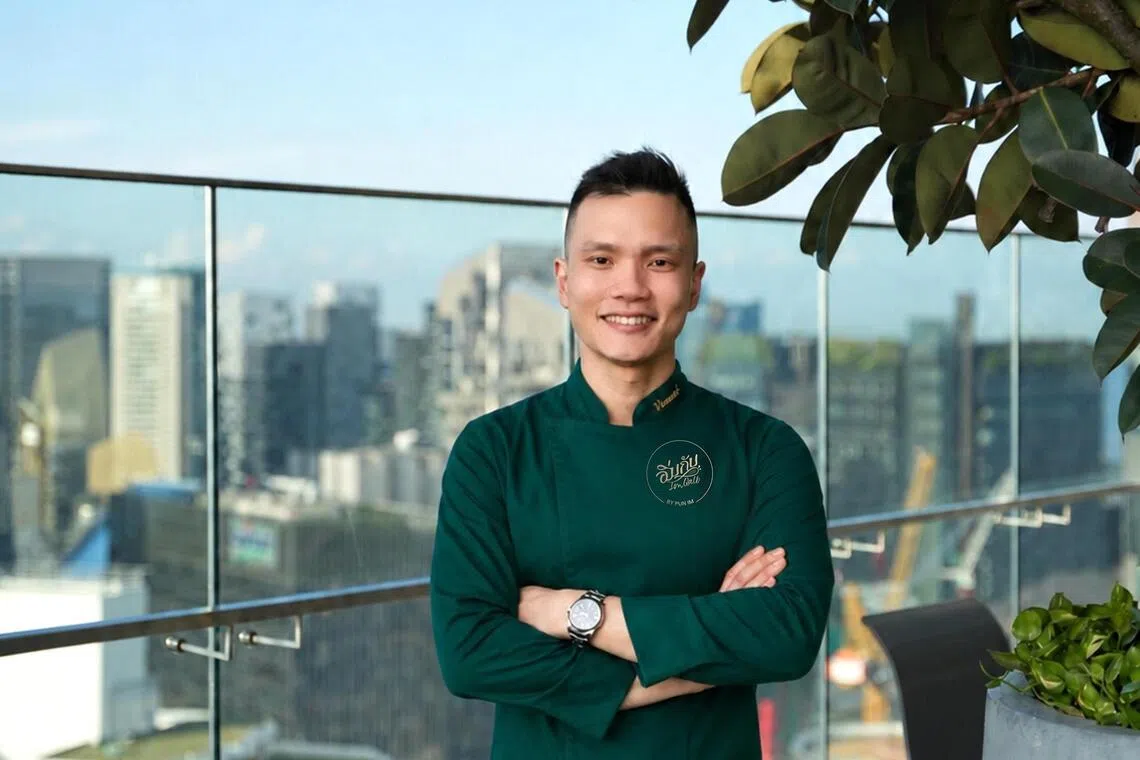
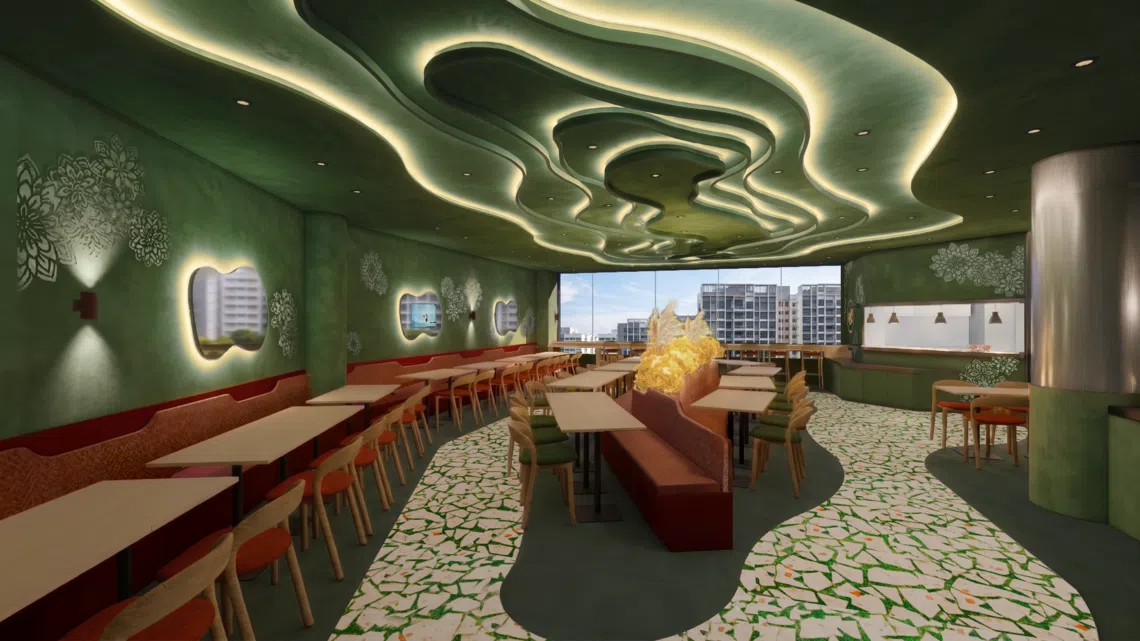
Although the restaurant has yet to break even, Pang has made yet another gamble with new outlet Im Qalb by Pun Im in Tampines Mall, serving southern Thai cooking influenced by Malay culinary traditions. The restaurant is currently working towards halal certification, and is a response to the queries he received at Im Jai from Muslim diners.
Scheduled to open on Sep 2, Im Qalb’s Thai-Malay cuisine is reflected in dishes such as crab tahu kai jeow, which combines traditional deep-fried omelette and classic tahu telur. Fried banana fritters get the Malay goreng pisang treatment, while ayam percik is done southern Thai style.
Pang feels that the Tampines location lets him diversify his customer base away from the largely office crowd in Tanjong Pagar.
Fluent in spoken and written Thai, Pang’s passion for the cuisine and culture has fuelled his business ambitions despite his struggles to stay afloat.
“Im Jai is still working hard to stabilise and break even,” he says. “We have a few growth engines we hope to focus on, namely corporate bento and mini buffet catering.”
Expanding with Im Qalb “is a business decision made after many rounds of risk evaluation”, says the former finance professional. “Im Jai hasn’t stabilised, but there wouldn’t be Amazon or Taobao in the world today if their expansion plans were made only after breaking even.”
Both restaurants come under the umbrella Pun Im group, which also includes the Im Sabaai brand of Thai snacks such as housemade pork floss.
The bigger picture for the group is to grow the various sub-brands; he aims to open another branch of Im Jai in 2027 if things go according to plan, and to develop more products under the Im Sabaai brand.
“In the long run, I hope to add more sub-brands to our portfolio,” Pang adds. “It’s my dream to open a Thai cooking school in the future.”
Decoding Asia newsletter: your guide to navigating Asia in a new global order. Sign up here to get Decoding Asia newsletter. Delivered to your inbox. Free.
Copyright SPH Media. All rights reserved.
TRENDING NOW

S$8 billion wiped off OCBC value as shares slide 5.8% in heavy trade

Grab CEO’s wife Chloe Tong on life with Anthony Tan and finding her purpose
Brookfield denies accusation it cut Soilbuild out of Mapletree deal

8 public officers referred to police over property buys near unannounced MRT stations: Chan Chun Sing

