

Riesling – elegance in a glass
With its low alcohol content, this versatile German wine is perfect with local food
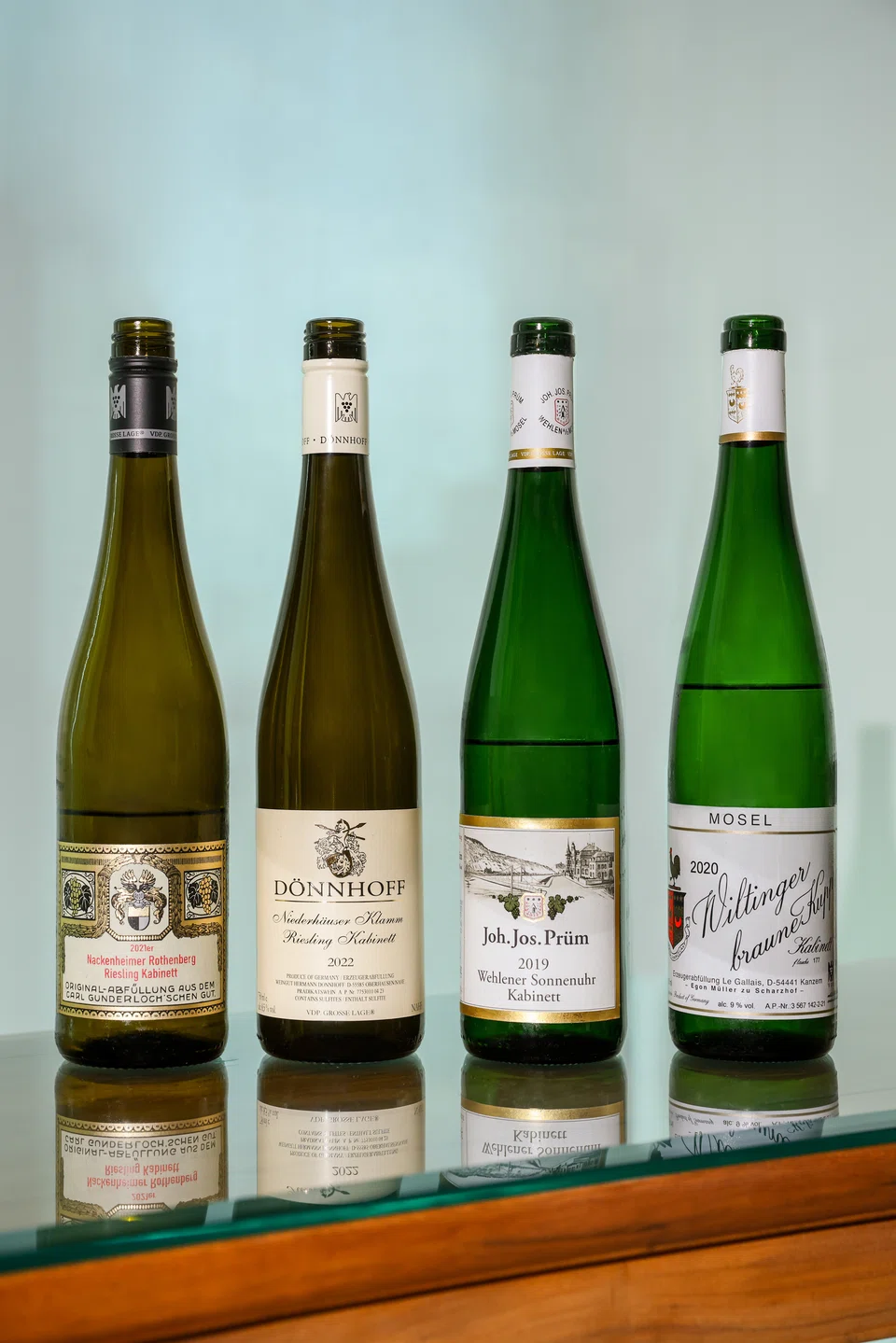
THE land of Oktoberfest, fairytale castles and the famed River Rhine is also home to world-class Rieslings. This versatile grape comes in many expressions – from dry and steely to medium-sweet and floral to lusciously sweet. German Riesling can be enjoyed in its youth but also has magnificent ageing potential.
What is a Kabinett – or Spatlese, Auslese and the like?
Pradikatswein is the classification system in Germany that is based on the ripeness of grapes at harvest.
This system is categorised into five levels of sweetness starting with the Kabinett before moving on to Spatlese, Auslese, Beerenauslese, Trockenbeerenauslese – indicating the progressively higher sugar content and potential sweetness in the wine.
The Kabinett is the most delicate, with the least amount of sugar, and can come in different degrees of sweetness and dryness, with Feinherb or Halbtrocken being medium-dry, and Trocken being the driest expression. Typically light-bodied with high acidity, this category is Egon Muller’s choice for pairing with South-east Asian cuisine.
Climate
Germany has a cool continental climate and is among the coolest regions of the grape-growing world because of its location in the high northern latitudes. The River Rhine helps to moderate the climate through heat retention and light reflection. The lack of extreme heat and the continued presence of cool nights, allows the grapes to produce excellent sugar levels with high acidity.
The grapes are often not picked until the middle of November (in comparison, the usual harvest season in France can start from August, ending in October). This late harvest gives a higher sugar content. As the best sites are found on steep and often stony and slate hillsides, the grapes are all handpicked.
Food Pairing
Kabinett Rieslings go well with South-east Asian as well as Japanese cuisine. For example, you can enjoy it with the likes of Hainanese chicken rice, mee rebus and rojak. But it is also as good with spicy tom yum and Thai mango salad as it is with delicate sushi and tempura. For European-tuned palates, foie gras, rillettes, grilled chicken and fish and chips are also popular pairings. The Kabinett should be served from 13 to 15 deg C and should not be decanted.
Who’s who in the world of Riesling
No conversation on German Riesling is complete without mention of Egon Muller. The Scharzhof manor house (which, incidentally, is featured on the wine label) in the wine region of the Mosel, has been in the family since 1797. Known to make “breathtaking” Rieslings, Egon Muller’s Trockenbeerenauslese recent sale at £11,700 (S$19,800) per bottle from London’s Hedonism wines makes his Kabinett the biggest bargain available to sample what this great winemaker is capable of.
Another legend is Johann Josef Prum (popularly known as JJ Prum). Founded in 1911, fourth-generation Katherina Prum, continues to offer ethereal Rieslings. The longevity of their wine is legendary with the Prums keeping their wines (even the Kabinetts) for many years in the bottle.

Donnhoff is another legendary family associated with the Rieslin. In existence since the mid-18th century, it has been described by Robert Parker as “one of the world’s greatest wine estates”. The estate is today helmed by Cornelius Donnhoff.
Founded in 1890, Johannes Hasselbach is today running Weingut Gunderloch and following his father’s philosophy of understanding that the winemakers are employees of the vines. Can Rieslings age, you ask him? He recommends 10 years as a good window to open your wines, but he also reminds us that the wines still have great ageing potential, having recently opened a 30-year-old village Kabinett Riesling to find it light and energetic with lively acidity.
The common perception is that German Riesling is all about sweet saccharine wines, but its wide range of characteristics show otherwise.
Tasting Notes
Weingut Gunderloch Nackenheimer Rothenberg Riesling Kabinett 2021. Rheinhessen. 9 per cent
2021 was the coldest winter experienced in the region in over 40 years. Attractive aromas of lime, jasmine, white flowers, white peach and a touch of petroleum. On the palate, flavours of slate, herbs and spice with good weight, acidity and balance.
The Nackenheimer Rothernberg is a single vineyard and has been in the family for six generations. The steep slopes and a unique clay slate clay composite are what give this wine its unique character.
JJ Prum Wehlener Sonnenuhr Riesling Kabinett 2019. Mosel. 9.5 per cent
White flowers, spice, lemon, slate, saline and yellow fruit greet you on the nose. Ripe with aromas and flavours of tropical fruit and mango. The palate is soft and restrained with medium complexity. Give this wine time to open.
2019 was a warm vintage with the months of June to August reaching temperatures of 39.5 deg C. The Wehlener Sonnenuhr vineyard sits on a majestic site with extreme steepness of up to 70 per cent gradient and optimal south-south-west exposure. The wine writer Stuard Pigott writes: “JJ Prum’s Sonnenuhrs are classic examples of how the best Mosel wine’s natural sweetness magnifies, rather than obscures, their character.”
Egon Muller 2020 Wiltinger braune Kupp Riesling Kabinett. Mosel. 9 per cent Monopole
The residual sugar is lush and mouth-filling. Ripe and elegant with aromas of granny smith apple, peach, green grass and citrus. This stands out with its unique slate minerality. Lovely acidity with an elegant yet intense structure. The Wiltingerbraune is from a Grand Cru vineyard. The 2020 vintage was hot and dry which saw early harvest with no botrytis and no Auslese being produced.
Muller, who has been running the vineyard since 1991, reminds us that the Kabinett wine is not merely a product of grapes that didn’t make it to the Spatlese category. He adds that “with global warming, the style of the Kabinett Riesling is changing”. With alcohol levels now seen at 12 per cent ABV in the Southern growing regions, the “light” style of Kabinett is getting harder to produce. Climate change is affecting the ripeness level of the grapes and Kabinett wines today tend to be sweeter and richer. This may be a new style in the making.
Weingut Donnhoff 2022 Niederhauser Klamm. Riesling Kabinett. Nahe. 9 per cent
Aromas of starfruit, lemon and peach greet you on the palate. A luscious and rich mouthfeel with an energetic finish, this was a delightful sip and will suit those who prefer a richer style of Kabinett. Very approachable now. The Niederhauser Klamm is vinified as a single vineyard and is situated among the steepest of slopes in the region with extremely stony soils, heavily comprising porphyry mixed with black slate.
Decoding Asia newsletter: your guide to navigating Asia in a new global order. Sign up here to get Decoding Asia newsletter. Delivered to your inbox. Free.
Share with us your feedback on BT's products and services
TRENDING NOW

World’s largest offshore wind platform by Seatrium consortium on track to be completed by 2028

Is stamp collecting enjoying an analogue revival or are its best days over?

GovTech retrenches another 38 staff in second round of layoffs

MBS adjusted property Ebitda falls 20.6% in Q3 with fewer high-roller visits, weaker hold

