

The US Open is now a food festival with a side of tennis
With options abound, one could almost forget about the matches
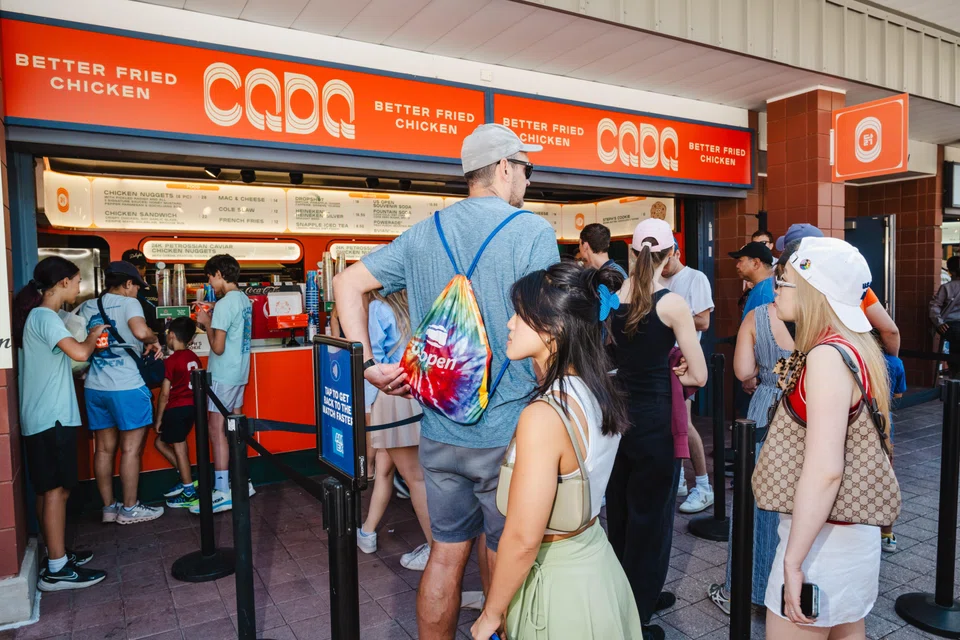
[NEW YORK] For his first visit to the US Open in Flushing, Queens, Andres Flores had an agenda.
It was Aug 25, the Tuesday of Fan Week, when spectators could enter the grounds of the Billie Jean King National Tennis Center for free. Flores, 38, who works in construction and lives in Queens, first watched Novak Djokovic practice for a few minutes.
Then came the main event. “I have to try all the food and drink,” Flores said.
In the food village, he went to the stall run by Salt Hank’s, a trendy sandwich shop, to get the viral French Dip. “There’s a line in the West Village all the time, so it’s actually easier to try it here,” he said, laughing.
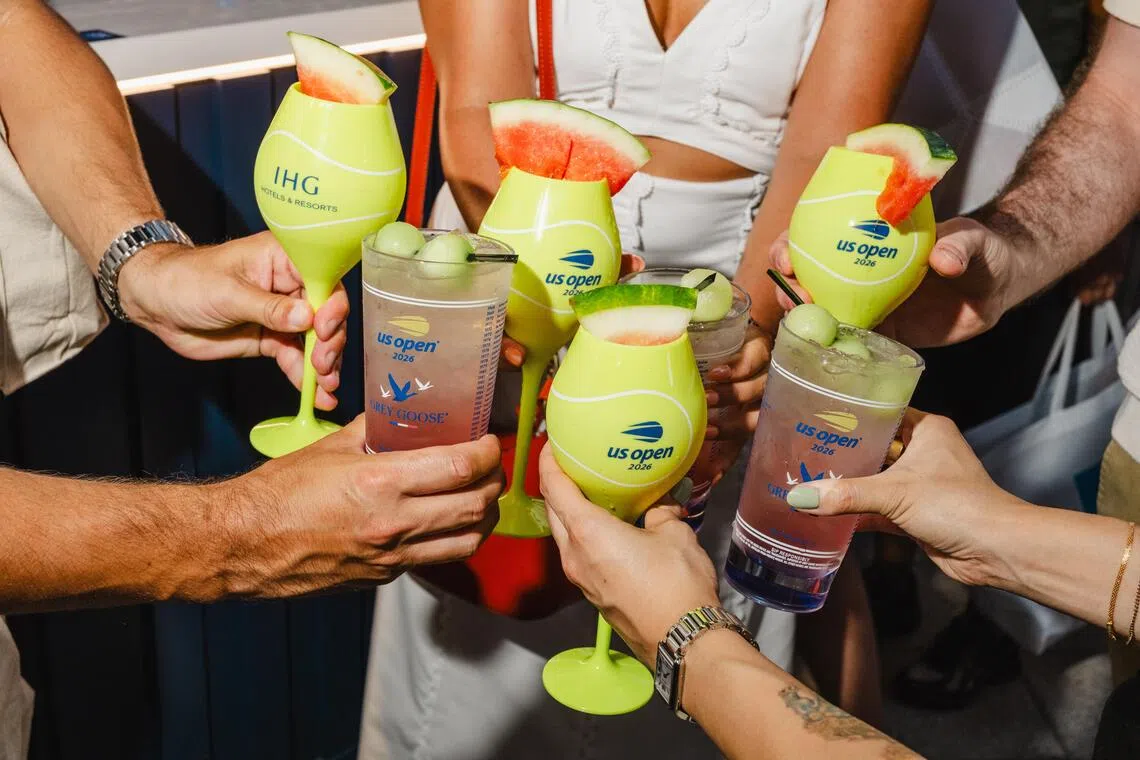
His next stop was Red Hook Lobster Pound; he also had three Grey Goose Honey Deuce cocktails, the US Open’s signature drink garnished with melon balls and served in a six-inch plastic tumbler that lists the names of every tournament champion on the side.
“I’ve been wanting to try this for a long time,” Flores said. Was it worth the hype? “Absolutely.”
Who’s coming courtside?
Over the last several years, the US Open has become a destination for New Yorkers and tourists, as much for the food and drink as the action on the courts. Each year, the tournament attracts more celebrity chefs, buzzy New York City restaurants and liquor partners with new (and sometimes pricey) offerings.
Danny Zausner, chief operating officer of the USTA Billie Jean King National Tennis Center, spends all year scouring New York City for the best restaurants and persuading them to set up shop at the tournament.
New to the scene this year are Salt Hank’s; Cosme, a Mexican restaurant in Flatiron by Enrique Olvera, offering duck carnitas and corn husk ice cream; and Miznon, a fast-casual Mediterranean restaurant known for its vegetables, serving dishes such as chicken schnitzel and hummus plates.


“Imagine yourself watching a tennis match and eating green beans,” said Eyal Shani, founder of Miznon. “That’s going to happen this year.”
Simon Kim, the restaurateur behind Coqodaq, which already sells its viral US$100 box of caviar-topped gluten-free chicken nuggets at the tournament, has a new stall selling gimbap filled with sauteed beef in a sweet and savory bulgogi sauce, and earthy burdock root.
Morimoto, which has long served sushi in the premier level of Arthur Ashe Stadium, is preparing hand rolls for the first time this year.
Then there are the requisite drinks – puns and kitsch included.
At the Dobel Tequila Club, a bar outside Court 7, fans can order the Match(a) Point, a new cocktail made with Diamante Cristalino tequila, Yoshi matcha liqueur and coconut water.
Moet & Chandon is offering a new cocktail made with champagne and lime wheels, poured over ice and served in what looks like a tennis ball canister.
Collectibles are very much a thing at the US Open. You will spot fans walking around with the US$39 Watermelon Slice, a bright yellow goblet that looks like a tennis ball (only 350 are served a day).
Heineken 0.0, the brand’s non-alcoholic brew, is served in a limited-edition can that was created in collaboration with Serena Williams.
“Costs” for concern
There’s so much choice, it’s almost difficult to focus on tennis. But the fans turn out in droves: Last year, more than one million people attended the tournament.
So it might be surprising that it’s hard for vendors to make much money at the US Open. “If you’re doing this purely as a payday, probably not the right event for you,” Zausner said. Many restaurants pay rent for their space, as well as costs for ingredients and service.
The volume of food made and served every day is mind-blowing, said Kim of Coqodaq, who has worked the tournament for three years. This year, Coqodaq purchased 2.8 tonnes of rice and 750 kg of burdock. “Last year we were so short-staffed our CFO became a chief fryer officer.”
Many restaurants that contact the US Tennis Association (USTA) and Levy Restaurants, the company that manages concessions and catering for the US Open, are turned down.
Either they can’t manage the logistics of operating for three weeks straight (Salt Hank’s closed its West Village location to be at the US Open) or their menus are too similar to other offerings.
The USTA has final say over the food and the prices.
“All of our partners come to us with price recommendations every year of what they would like to charge, and we push back on it,” said Zausner, who nevertheless acknowledged soaring costs for restaurants.
Still, prices can feel high for spectators who are already paying three to five figures for tickets.
Salt Hank’s French Dip Sandwich, for example, is US$38 (compared with US$32 at the shop), and Pasta Ramen’s chicken teriyaki ramen is US$29. (Some of the cocktail prices have plateaued. The Honey Deuce has cost US$23 for the last few years; the Ace Paloma has remained at US$22.)
“A rite of passage”
In a move to exclusivity that should be familiar to fans of any sport, this year, in the midst of an US$800 million overhaul, there are new hospitality spaces on the lowest level of Ashe. The Blue Room has a members-club feel and offers a menu created by chef Ed Brown.
“The US Open seems like a food festival,” said Aliye Reinhardt, 23, who lives in Fairfield, Connecticut, and works at a utility company.
“I’ve seen all these places on TikTok, and I’ve been wanting to try them,” she said. On her list was the frozen Honey Deuce and chicken nuggets from Coqodaq. She opted for the six-piece set for US$28, without caviar.
“I’ll probably post a picture of the Honey Deuce on social media,” she said. “I think that’s a rite of passage.” (More than 700,000 were sold last year.)
Reinhardt scored a hard-to-get ticket during Fan Week: to see Roger Federer return to centre court to play an exhibition match. Still, that wasn’t the highlight of her day.
“I might be more excited about the food.” NYTIMES
Decoding Asia newsletter: your guide to navigating Asia in a new global order. Sign up here to get Decoding Asia newsletter. Delivered to your inbox. Free.
Share with us your feedback on BT's products and services
TRENDING NOW

Once staunchly pro-China, Malaysian Chinese businesses are now distancing themselves from Beijing

Looking beyond looming CEO succession, should UOB potentially pursue a transformative merger?

Could stablecoins be the future of money?

Grab CEO’s wife Chloe Tong on life with Anthony Tan and finding her purpose

