Singapore’s St Luke’s hospital launches primary-care palliative programme
With a S$2.2 million investment from the Lien Foundation, it aims to help over 1,200 patients in four years

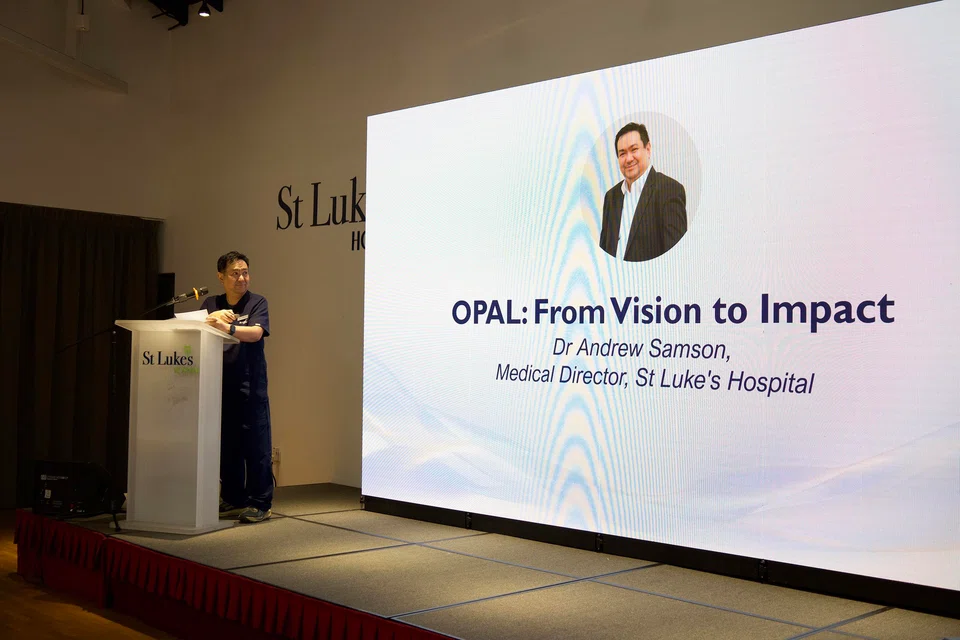
[SINGAPORE] The first hospital in Singapore dedicated to the care of older people on Tuesday (Oct 27) launched a programme aimed at changing perceptions about palliative care.
St Luke’s Hospital’s Opal programme looks to support patients living with serious, life-limiting illnesses and their families by bringing palliative care into the picture earlier in the healthcare journey.
The name Opal is inspired by the word “pal” and the opal gemstone, which reveals rainbow colours when it catches light. The hospital said the programme represents hope, transformation and emotional healing, even in the face of serious illness.
Opal is backed by a S$2.2 million investment from the Lien Foundation, a Singapore-based, healthcare-focused philanthropic house.
St Luke’s Hospital said at the launch that the investment would give support to more than 1,200 patients over four years.
The event was attended by Minister of State for Health Rahayu Mahzam, who is also Minister of State for Digital Development and Information.
Opal will partner with general practitioners (GPs) and healthcare specialists to identify and refer patients to the programme.
Lee Poh Wah, CEO of Lien Foundation, said in a statement: “Opal is Singapore’s first major step towards embedding palliative care into primary care, so that patients receive support earlier.
“Families are better equipped to navigate uncertainty, and conversations about what matters most become a natural part of care.”



The hospital said that partnering with GPs would give the programme reach because GPs handle about 80 per cent of all primary care needs in the city-state, making them the first to know about developments in their patients’ health.
Dr Andrew Samson, medical director at the hospital, said the aim is to identify emerging palliative care needs sooner, so as to be able to provide appropriate care and advice.
“The traditional approach tends to focus first on disease-directed treatment, with palliative care introduced only when the treatment options become limited, or when patients approach the end of life,” he said.
Unfortunately, this practice has given rise to the perception that receiving palliative care means giving up hope.
He said several types of patients, including those with dementia, cancer and progressive heart disease, can benefit from earlier access to palliative care.
“A patient can continue to receive treatment for cancer, heart failure or other serious illnesses while also receiving support in the managing of their symptoms, (thus) maintaining their emotional well-being and plan for the future.”
The Opal programme is anchored in St Luke’s community clinic, meaning that patients who enroll in it after being referred through GPs or hospitals will be supported by St Luke’s multidisciplinary team of family physicians, nurses, medical social workers and counsellors trained in palliative care.
Opal is not meant to replace specialised care that a patient is already receiving, but complements it.
The Opal programme is launched at a time when Singapore is becoming a super-aged society, meaning that more people are now living longer, often with multiple chronic conditions and serious, life-limiting illnesses.
Decoding Asia newsletter: your guide to navigating Asia in a new global order. Sign up here to get Decoding Asia newsletter. Delivered to your inbox. Free.
Copyright SPH Media. All rights reserved.