

Tsao Pao Chee partners StanChart Foundation to advance youth employment in S-E Asia’s ocean economy
TPC’s philanthropic arm says there are viable businesses that lack access to capital, capabilities
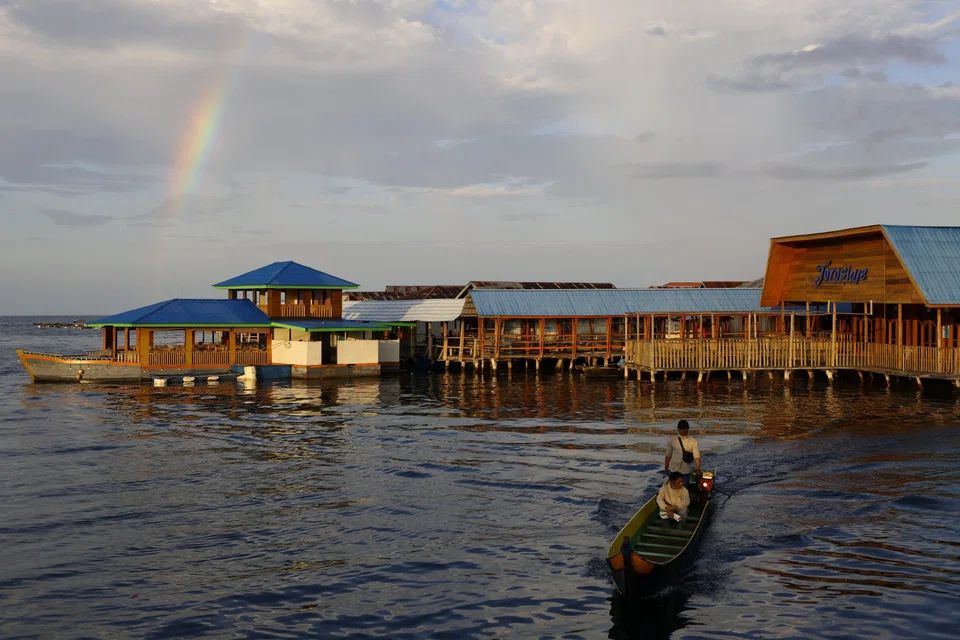
[SINGAPORE] Tsao Pao Chee (TPC) and No 17 Foundation have partnered Standard Chartered Foundation to create and implement youth employment pathways in ocean and food-systems sectors in South-east Asia.
TPC is a more than 120-year-old family business that has roots in shipping and logistics, and also operates businesses in the well-being space.
The organisations will explore opportunities in Indonesia, Vietnam, Malaysia and Singapore, looking at ventures in the blue economy, they told The Business Times in an interview after the partnership was announced during TPC’s At One Impact Week 2026.
Patrick Lee, StanChart CEO of Singapore, Asean and South Asia, and trustee of StanChart Foundation, said: “The sector is already a vital source of livelihoods across the region, playing a significant role in the regional economy.”
He noted that Asean presents a “compelling opportunity”, as many young people face barriers when it comes to accessing quality jobs, entrepreneurship opportunities and support.
“We observed gaps at multiple levels, from limited awareness of career pathways and skills mismatches to challenges for small businesses accessing markets, support networks and the investment needed to grow, scale and create jobs.”
Likewise, No 17 Foundation – the corporate philanthropic arm of TPC – said that there are viable businesses across the ocean and food system sectors that lack access to capital and capabilities.
Tai Sook Yee, chair of No 17 Foundation, said: “(Training-led programmes) prepare people for jobs that do not exist where those people live. We are attempting the reverse – build the enterprises within the system, in the places where young people already are, and let the employment follow.”
Together with StanChart Foundation, it aims to focus on social transformation at a systemic level, and creating conditions for ventures to move beyond 20 employees. It also hopes that this will lead to “repeatable pathways” that can be replicated in other communities.
“The model we are testing runs in four steps,” said Tai. “Research identifies where the opportunity genuinely is. Ventures test it in real places.
“Those ventures create quality employment – waged, safe, with progression, not merely counted. The evidence then opens a route to institutional finance, so the model can be repeated without us.”
Although the partnership is still at an exploratory stage, both organisations noted that “promising” businesses will be connected to operating capabilities and the capital needed to test and scale them.
Through the Capital Catalytic Facility, the foundations will identify ventures with potential to create quality employment for young people and women, test selected models via TPC and No 17 Foundation’s platforms, and inform new catalytic and blended-finance solutions.
StanChart’s Lee added: “Enterprise growth and job creation in coastal communities also depend on capabilities, market access, partnerships and local ecosystems.
“Through this partnership, we will explore where catalytic capital and other forms of support can help unlock sustainable and inclusive economic opportunities across the ocean economy.”
To back ventures with potential, No 17 Foundation envisions a “capital supply chain”:
- Philanthropy first, to absorb failure and make the risk “readable” to everyone who comes after;
- Second, catalytic capital, on concessionary terms, to prove the model;
- Commercial capital third, once there is evidence to underwrite; and
- Last, institutional capital, to let the model scale.
Tai noted that the order of capital “matters more” than the amount given.
The immediate phase of the partnership is discovery, with the parties scoping opportunities across the region and identifying candidate ventures and places, and determining where the partnership adds most value.
The intention is to emerge with a prioritised programme and definitive agreements.
The blue economy
The Organisation for Economic Co-operation and Development stated that the global ocean economy stood at around US$2.6 trillion in gross value added in 2020.
StanChart and No 17 Foundation highlighted coastal South-east Asia as central to the ocean economy.
Tai noted: “Young people are entering (South-east Asian) economies today. If the only work available is seasonal, unsafe and going backwards, they will leave – and the coastal economy loses precisely the generation that would have modernised it.”
Based on StanChart Foundation’s Oceans of opportunities report released earlier this year, Asean is a major global producer of aquatic foods, but employment is concentrated in upstream and lower-value segments of the economy.
The report also gave examples of employment opportunities in seaweed aggregation and processing, and shrimp farm management in Indonesia; finance and trade services in Singapore; quality assurance and farm digitisation in Vietnam; and aquaculture innovation and logistics and certification in Malaysia.
Lee said: “Asean produces around 20 per cent of the world’s aquatic food supply, and the fisheries sector directly employs more than 15 million people.”
He added: “Too often, promising enterprises receive support at one stage but struggle to identify who can help them take the next step.
“We expect to engage a wider range of businesses, investors, community organisations and other partners where they can help contribute to the work.”
Decoding Asia newsletter: your guide to navigating Asia in a new global order. Sign up here to get Decoding Asia newsletter. Delivered to your inbox. Free.
Copyright SPH Media. All rights reserved.
TRENDING NOW

Government to bring forward raising of retirement age, give employers more financial support to create flexi-load jobs

If Europe goes to war, the fallout will be felt in East Asia
Indonesia stocks suffer worst plunge in nearly 30 years as MSCI proposes standalone status

Vietnam’s northern provinces, not Hanoi or Ho Chi Minh City, are powering near 10% GDP growth

