

Upgraded Singapore Tennis Open has plenty of potential to be even bigger
The event’s co-tournament director and former senior WTA official Laura Ceccarelli says the sport can continue to flourish here

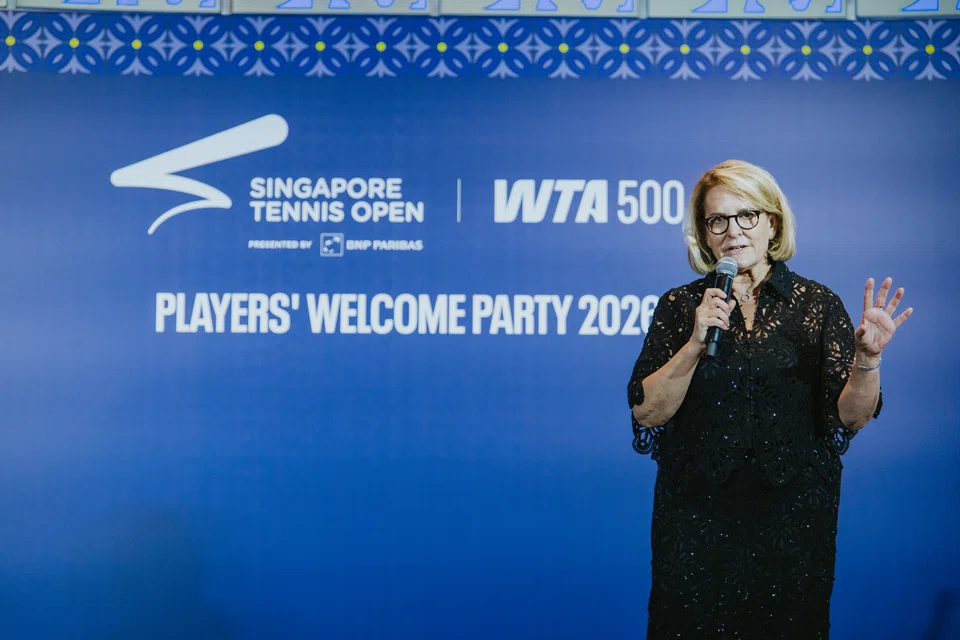
[SINGAPORE] Tennis fever is in the air this week as the Singapore Tennis Open (STO) presented by BNP Paribas is underway at The Kallang, with the semi-finals and championship finals set to take place this weekend.
The US$1.2 million tournament – the first stop on the Women’s Tennis Association’s (WTA) Asian swing – is the only 500-level event in South-east Asia and one of just 17 tournaments at this level globally.
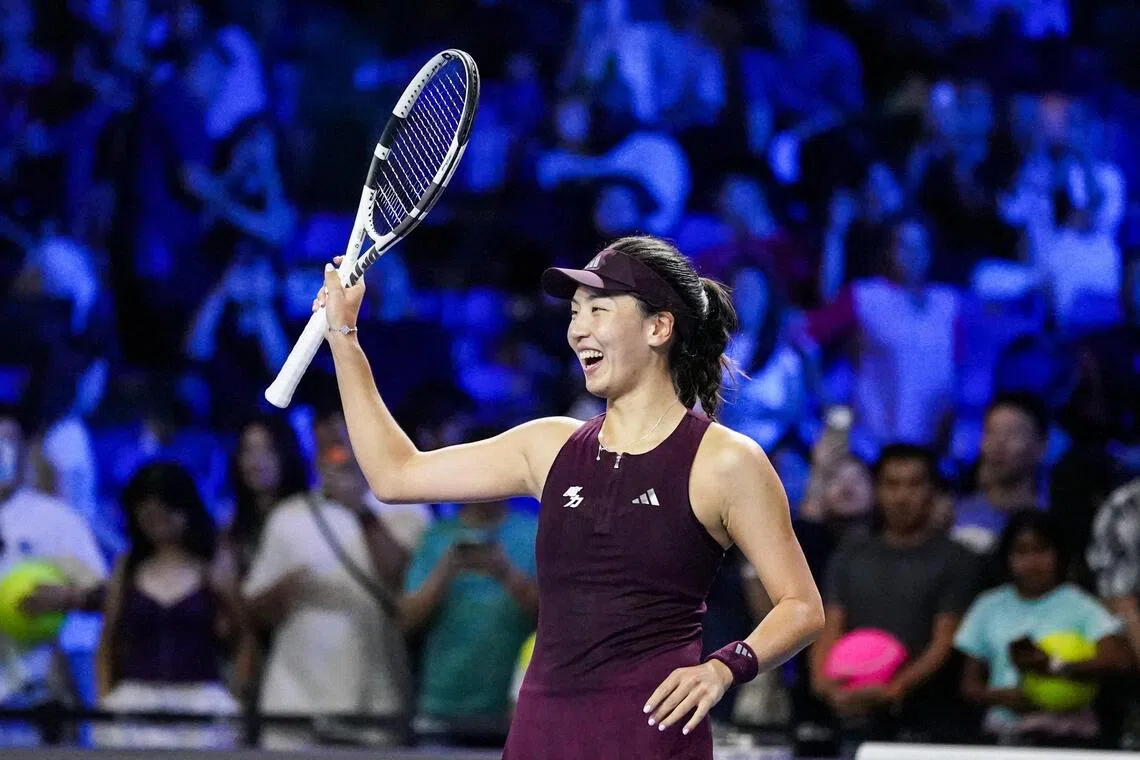
Thousands of fans have packed the OCBC Arena since the action began on Monday to watch the likes of reigning French Open champion Mirra Andreeva, Filipino star Alexandra Eala, China’s Wang Xinyu and the 2021 US Open runner-up Leylah Fernandez in the flesh.
At the heart of it all is Laura Ceccarelli, a veteran international tennis administrator who is one of the STO’s two tournament directors.
She is the chief operating officer of Hong Kong-based sports management and event organisation company APG, where she leads the tennis operations division as part of its executive management team.
The Italian is no stranger to Singapore, having played a key role in the delivery of 14 editions of the season-ending WTA Finals, with five of those held in the Lion City from 2014 to 2018.
BT Weekend caught up with Ceccarelli on the sidelines of the STO at the OCBC Arena to find out more about what keeps her going in a sport where she’s spent more than three decades of her life and counting.
What exactly does a tournament director do?
We have to do it all at a tournament, and much of the work starts many months before the first match is played. We are responsible for the planning, the preparation and coordination, and ensure the event goes ahead smoothly.
It’s not always easy and every tournament and every host city brings its own challenges, but we are very happy with how things have gone in Singapore so far, being able to work with our partner at The Kallang, and I love being in this amazing city.

How did you get started in tennis?
I wasn’t a former professional player, but I’ve always enjoyed the sport. I think it was some time in the early 1990s when I had the opportunity to become a line umpire and then a chair umpire of various events.
I then became a Gold Badge Chair umpire (the highest level of match officiating) and then Referee and Chief of Umpires, where I had to oversee recruitment, assignment and administration of officials at WTA and ATP events around the world.
I spent around 17 years at the WTA as vice-president and supervisor, helping to maintain and improve tournament standards.
Other than the STO, I’m also the tournament director for the Ningbo Open (in China) and the Ostrava Open (in the Czech Republic).
Even after all these years, there’s nothing quite like walking out onto the court and feeling the energy and passion. I’ll never forget the experience of seeing a full house of 23,000 people at Arthur Ashe court at the US Open, and many other world-class venues and events.
You must be on the road or on a plane for most of the year, I imagine.
I’d say I’m only home in Rome for about five months of the year, in total. The other seven months, I’m at one of our many tournaments, making sure everything is in place before the first match is played and then staying throughout.
In that sense, I can identify with the players – I call them my girls, I love all of them so much – as I know the struggle of constantly being away from home and family, waking up in a different city or hotel every other week or so, and adjusting to different environments. We try our best to make things as comfortable for them as possible.
What do you like about Singapore as a tennis and sports venue?
I first came to Singapore, I believe it was in 2013, and that was the year before Singapore held the WTA Finals for the first time.
I was so impressed by the hotels, the scenery, the facilities here, and even at 2 am when I was feeling jet-lagged and needed to go for a walk, I could feel safe to do so. It’s very different from, say, Rome, where I would never go out by myself late at night.
We are happy that the STO has been upgraded to a 500-level event, and there is so much potential and opportunity for tennis to grow here. When I speak to the teams at The Kallang and the Singapore Tourism Board, they see the potential too and there is this shared goal of wanting this event to become bigger.
Decoding Asia newsletter: your guide to navigating Asia in a new global order. Sign up here to get Decoding Asia newsletter. Delivered to your inbox. Free.
Copyright SPH Media. All rights reserved.
TRENDING NOW

Once staunchly pro-China, Malaysian Chinese businesses are now distancing themselves from Beijing

Looking beyond looming CEO succession, should UOB potentially pursue a transformative merger?

Could stablecoins be the future of money?

Grab CEO’s wife Chloe Tong on life with Anthony Tan and finding her purpose

