What happens when smoke gets in your wines
A disaster could unfold if wildfires leave Bordeaux’s famous reds undrinkable
I HAVEN’T had a glass of wine in more than 560 days, but I still love hanging around oenophiles as they sip and swirl and discuss their obsession.
So I didn’t hesitate to accept an invitation to the home of my friends Diana and Jimmy last week, even though all I could do was eat their beautifully prepared dishes and not partake of the dozen or so vintages they’d gathered for eight other guests, restaurant sommeliers and wine experts among them.
A bottle of white in a black form-fitting sleeve was set up for a blind tasting – a parlour game for the vignoscenti – and soon the guesses were flying.
A couple of guests noted hints of reduction – higher levels of the volatile sulphur compounds often used to mask the flavour that emerges from oak barrels, a taste that’s lost popularity over the years. That sometimes contributes to savoury notes as well.
So was it a chardonnay, which is traditionally aged in oak? If so, from where? And was the style Californian or European?
The consensus was it was from a cooler climate. Some people were bold enough to suggest specific producers (they were wrong). Another thought it was Austrian. She was closest.
It was a chardonnay from a vintner in southern Germany who emulates the great burgundies from just across the border in France.
The thing about oak is that it also often contributes a “toasty” subtlety to the wine – a “burnt” adjective that reminded me of “smoky”. So, even though we were talking whites, I threw in a question to the experts around me: What would all the smoke from the wildfires in Bordeaux do to the region’s famous reds?
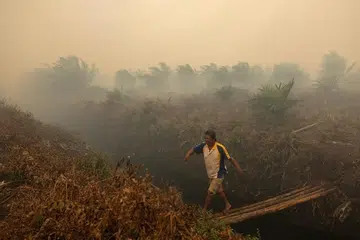
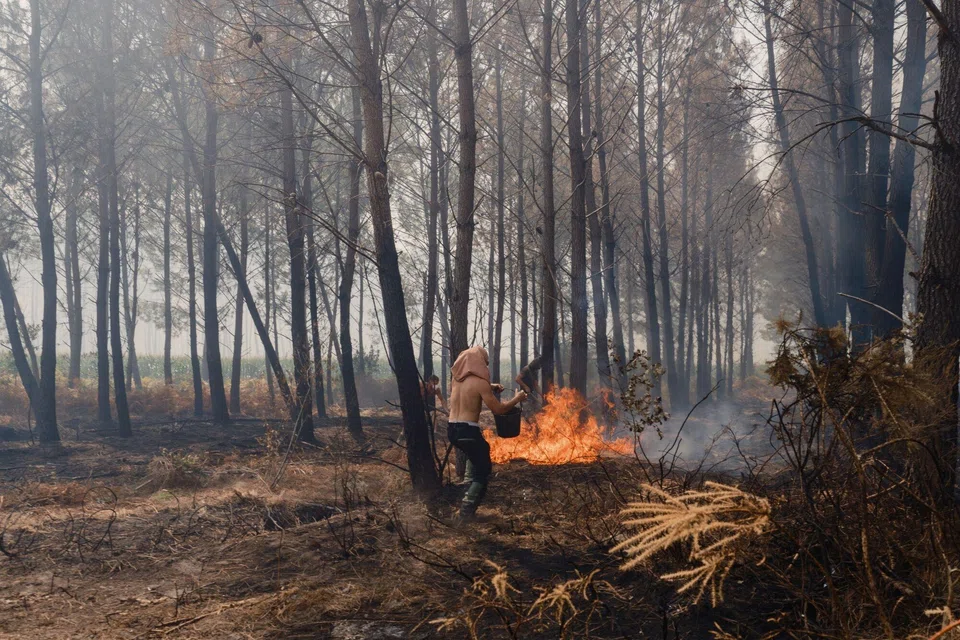
The affected terrain is four times the size of Paris; while the vineyards themselves have not been scorched, smoke has suffused the area. French producers are still in a wait-and-see mode whether the 2026 vintage will be drinkable.




History is hardly a guide. The last comparable fire to affect Bordeaux was back in 1949; and even the best wines, once past 50 years – unless very well conserved – don’t hold up.
Still, in 2004, Christie’s auctioned a few bottles from that year by the legendary Chateau Haut-Brion; it cited the wine guru Robert Parker who’d written that the vintage – which he tasted in 1995 – “revealed some of the textbook cigar, ashtray, tobacco-scented notes, as well as scents of roasted herbs and ripe fruit”.
And those hot-button words, along with leather and forest floor, are hallmarks of fine old Bordeaux. Would a smoke-tainted 2026 Bordeaux harvest really be disastrous? Couldn’t it be marketed as consistent with tradition?
The people at the party (and others I’ve spoken to) were pretty clear that the kind of classic smokiness Parker referred to was not what you’d get from wildfire-contaminated wine. A good vintage is the liquid memory of the sun, wind and soil of the year the fruit was harvested.
Smoke taint is memory too, of course, but of trauma. While none of the people I spoke to were old enough to taste or afford 1949 bordeaux (Christie’s sold its three bottles for today’s equivalent of close to US$5,000), they’ve had the recent experience of wine from the conflagrations that affected Australia in 2019 and California in 2020.
“It’s like drinking barbecue,” my friend Jimmy, the co-host, said. “It’s not even good paired with barbecue.”
From what I’ve heard, the effect is charcoal not tobacco, acrid not toasty, plus a lingering ashy aftertaste with hints of cold fireplace and desiccating bitterness. Think cocktail hour with Anton Chigurh, the assassin of No Country for Old Men: hard to survive, and you probably won’t want to after a first sip.
Should Bordeaux just abandon its grapes?
Australia virtually junked its harvests from fire and smoke-affected areas in the wake of the wildfires of 2019 and 2020.
The country’s winemakers have learned a lot of lessons. On the website of the industry-led, government-funded Australian Wine Research Institute (AWRI) are exacting guides to smoke taint.
One solution: activated charcoal – a powder mixed into the wine as a slurry and then filtered out after a few hours or days – to mitigate the taste of ash. The snag: It can affect the colour of red wine.
The AWRI has another important observation. Some wines produced in smoke-tainted areas tasted fine in the first three years after bottling; however, they then assumed the ashen-assassin profile.
France produces wine at overcapacity because of global demand. It exports about 35 per cent of what it makes; Bordeaux sends an even higher percentage abroad, 45 per cent. Unwanted vin would be a national disaster.
The additional complication for bordeaux is the effect of smoke borne by the skin of the grape – which the red wines are dependent upon for taste, colour and character.
When smoke touches the berry, it produces glycosides as a defense against toxins. These become part of the fruit and don’t wash off. Depending on the winery, the liquid can spend several weeks fermenting and macerating with the skins.
According to the AWRI, during these processes, the glycosides can release the toxins they’d absorbed defensively. (White wines, on the other hand, have less contact with the exterior of the berry.)
While there’s been a lot of smoke, it’s possible the exposure hasn’t been prolonged and concentrated enough to harm the grapes, which are scheduled to be harvested in September and October.
The wildfire began in mid-July and lasted about two weeks (the flames of 1949 burned all of a week). In comparison, Australia’s inferno spanned six months; California’s in 2020 was shorter but ran from August to October.
Bordeaux is hoping that chemical analysis of the grapes – a technique developed after the Australia and California disasters – will reveal minimal smoke taint. Bordeaux lovers can only hope – or wait for next year’s harvest.
In the meantime, most of you (not I, alas) can take comfort in the continuing experience of wine, both good and bad.
More than a decade ago – still drinking and discovering the joys of the grape – I believed I liked the glass just poured out for me and my companions at a lovely table in Copenhagen. But my French dining companion was having none of it.
After swirling and sniffing, she declared: “Souris morte!” A classy sommelier term, I thought, until someone translated it for me: dead mouse. All without smoke or fire. BLOOMBERG
Decoding Asia newsletter: your guide to navigating Asia in a new global order. Sign up here to get Decoding Asia newsletter. Delivered to your inbox. Free.
Share with us your feedback on BT's products and services