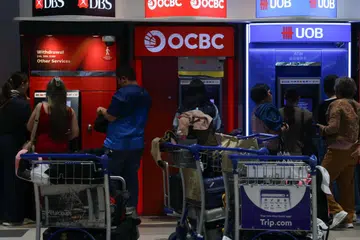
How Singapore’s port relates to your portfolio

In this issue:
- Port congestions feed inflation fears
- Thailand rolls out new market rules
Greetings dear reader,
Late last month, my colleague Tay Peck Gek wrote that port congestion was forcing some liners to skip Singapore.
Some parties greeted this information with disbelief, and the Maritime and Port Authority of Singapore said in a response to her queries that the average waiting time for container vessels was about “two to three days” and that there was “no crowding in the anchorages”.
Port operator PSA, as Peck Gek reported, had increased its manpower and container handling capacity to alleviate the situation.
The congestion wasn’t, however, a symptom of any inefficiency on Singapore’s part. Since that report, more news has emerged of congested ports around the world.
One report put global port congestion at an 18-month high, with 60 per cent of ships waiting at anchor located in Asia.
This newsletter has so far concerned itself with the affairs of companies. So why, after a week that featured a lot of news flow about last week’s headliners (OCBC and Great Eastern), am I drawing your attention to Singapore’s port?
For one thing, ocean congestion was the most-read topic on The Business Times’ website last week. For another, it could have follow-on implications for asset prices.
What’s happening?
The last time global ports were this congested was during the Covid-19 pandemic. Outbreaks were limiting available manpower and shuttering ports, and consumers were shopping more online.
This congestion led to elevated shipping costs. Drewry’s World Container Index, which tracks the cost of shipping a 40-foot container via major routes, rose as high as US$10,377 in September 2021 – a historical peak.
Shipping companies as well as companies that served them or operated in adjacent industries experienced a renaissance.
Pacific International Lines undertook a debt restructuring in early 2021, but fully repaid its creditors with accrued interest or distributions within the same year. Singapore-listed Samudera Shipping Line’s share price hit an all-time high of S$1.42 in March last year.
To an industry that had floundered for years, the pandemic brought healthy margins and expansion opportunities.
Shipping rates appeared to be normalising last year, but they are now creeping back up. On Jun 27, the Drewry’s World Container Index hit US$5,318 – up 4 per cent for the week and 256 per cent compared with the same week last year.
The index is 49 per cent below its pandemic peak, but 274 per cent above the average 2019 (pre-pandemic) rate of US$1,420.
According to Drewry, the year-to-date average rate is US$3,579, which is US$831 higher than the 10-year average rate of US$2,748 (which is already inflated by the Covid period).
Why it matters?
More than 80 per cent of the world’s goods travel by sea, according to an article by the International Monetary Fund (IMF).
Its analysis of data from 143 countries over 30 years found that shipping costs are an important inflationary factor. A doubling of freight rates is associated with an increase in inflation of 0.7 of a percentage point.
“Most importantly, the effects are quite persistent, peaking after a year and lasting up to 18 months,” the IMF said in March 2022.
By January 2023, as shipping rates had come off their highs, the IMF was forecasting an easing of inflationary pressures.
“The implication is for the big moderation in shipping costs in 2022 to contribute to a reversal of inflationary pressures,” it said.
Now that freight rates are creeping back up, however, it appears inflationary pressures may stay elevated. Fitch Ratings had flagged in February that higher shipping rates would “intensify challenges for central bankers in completing the difficult last mile of lowering inflation”.
Getting inflation under control is a prerequisite for the US Federal Reserve to begin cutting rates – a move that financial markets participants are eagerly anticipating.
Interest rates have significant correlations with the prices of many assets. In Singapore, the most obvious negative hit has been to real estate investment trusts – which make up a very large proportion of the local stock market – but there are other casualties too.
Private equity fund managers are having trouble exiting some of their investments, and it is not as easy for them to generate returns with leverage.
Higher interest rates also affect valuation models based on discounted cash flows, which means many companies are worth less than they used to be.
Deal-making activity has slowed because buyers and sellers are waiting for a rate cut. What if that rate cut takes longer than they expect?
The big number: 7.5 billion baht
That is the minimum market value required before a non-index stock can be shorted in Thailand. Previously, short selling was allowed for stocks not part of the SET 100 Index as long as the stocks had a market value of above five billion baht (S$184.3 million).
The rule is one of several taking effect today (Jul 1) on the Stock Exchange of Thailand, which is trying to improve confidence in Asia’s worst-performing market this year.
Not too long ago, Thailand had been one of South-east Asia’s strongest IPO markets. Its current challenges highlight the inherent risks in the region’s emerging markets.
Thailand’s difficulties may also represent an opportunity for the Singapore Exchange. The likes of Thailand, Indonesia and Malaysia have larger domestic markets, which generate attractive listing candidates. Yet, the Singapore market’s maturity and its sophisticated infrastructure can be major advantages – provided the right efforts are made to harness them.
5 big reads
- Japan offers valuable lessons in building healthy market ecosystems JAPAN’s reforms included an increase in free float, which improved liquidity and market depth; and enhanced protections for smaller investors, creating a safer and more attractive market environment. Can Singapore do the same?
- Singapore needs reforms to revive its Reits THE hottest part of Singapore’s otherwise humdrum stock market used to be institutional landlords. Now the city’s real estate investment trusts are begging for a revival in investor interest – and some much-needed reform.
- FEHT could join hands with tycoon Tanoto family to unlock value for the Reit A JOINT redevelopment of Far East Hospitality Trust’s Orchard Rendezvous Hotel with the Tanoto family’s Tanglin Shopping Centre could revitalise the sleepy Orchard-Tanglin corner.
- Fed rate cuts, ‘reverse globalisation’ may spur relatively undervalued Singapore, Asian stocks FOMC meeting participants are now projecting only one rate cut this year, while both Biden and Trump want tariffs on imports from China.
- Only 1 in 10 Singapore listcos shows how boards make major stakeholder decisions: study ALTHOUGH the vast majority of Singapore-listed companies recognise that businesses should allocate more resources to engage their stakeholders, only 10 per cent provided case studies or examples to demonstrate how their boards considered major stakeholder decisions over the past year.