

Semicon still stumbling

In this issue:
- Singapore-listed semiconductor-linked stocks just reported a tough quarter
- Malaysia’s 99 Speed Mart unveils the country’s biggest IPO in 7 years
Greetings dear reader,
Several manufacturing companies that serve the technology industry delivered disappointing results last week, underscoring the fragility of the semiconductor sector’s recovery.
The most dramatic earnings decline came from AEM Holdings, which makes semiconductor test equipment. The company’s earnings for the first half of the year fell 95 per cent to S$895,000, from S$19.7 million in the year-ago period.
Revenue fell 37 per cent to S$173.6 million, from S$275.2 million, due to weaker demand from a key semiconductor customer and “prolonged inventory digestion in the industrial sector”.
Also disappointing investors was semiconductor equipment maker UMS Holdings. Its earnings for the quarter ended Jun 30 fell 20 per cent to S$9.3 million, from S$11.6 million.
Revenue declined 25 per cent to S$56 million, from S$74.4 million, with the biggest drop of 29 per cent coming from the semiconductor segment. The group’s aerospace segment actually reported a 5 per cent increase in revenue.
Should investors be worried? Probably not if they are sitting on patient capital. I explain why below, and examine the implications of a new listing in the region.
What’s happening?
The global semiconductor industry, which had slumped last year, is on the mend. Earlier this month, the Semiconductor Industry Association announced that global semiconductor industry sales totalled US$149.9 billion in Q2 2024. This represented an 18.3 per cent increase year on year and a 6.5 per cent increase quarter on quarter.
Some of the world’s biggest semiconductor companies are already seeing the effects of that recovery. Taiwan Semiconductor Manufacturing Company, the world’s largest independent chipmaker, in July reported revenue growth of 45 per cent.
Applied Materials, the largest US semiconductor equipment maker, last week reported results that beat analysts’ estimates.
Revenue for Q3 ended Jul 28 came to US$6.78 billion, above an average estimate of US$6.67 billion; and adjusted earnings per share was US$2.12, beating a market estimate of US$2.02.
Why hasn’t this recovery trickled down to Singapore-listed companies yet? One reason could be that companies sit at different positions on the semiconductor supply chain, which means it may take more time for some companies to benefit than others.
UMS, for instance, noted that its revenue from its semiconductor segment had increased 1 per cent quarter on quarter.
Another reason is that the rate of recovery varies by the end customer. Singapore’s companies serve the larger semiconductor players, whose fortunes have been mixed.
Intel, known to be a major customer of AEM, is on a cost-cutting drive as it tries to recover from one of its worst set of financials in its 56-year history.
AEM said quarter-on-quarter revenue growth can be expected in Q4, but added that this would be driven by “new customer business growth”.
Why it matters?
Singapore-listed technology manufacturers – the likes of AEM and UMS – are the only domestic plays on the red-hot artificial intelligence (AI) investment theme (unless one includes telco Singtel for its data centres).
Unfortunately, the performance of the sector has been patchy. AEM and UMS – once the largest stocks in this space by market capitalisation – have been underperforming. AEM, which at one point was worth over S$1.6 billion, is now valued at less than S$400 million.
This earnings season, it has been the smaller players that have delivered. Frencken Group, a semiconductor equipment manufacturer with a market cap of S$589.4 million, reported a 50.3 per cent increase in earnings for H1 2024.
Grand Venture Technology, a test equipment manufacturer with a market cap of S$186.6 million, reported a 26.6 per cent increase in earnings for H1 2024.
Ricky Lee, the company’s executive deputy chairman, told me after the release of the results that the company has been “progressively advancing” its engagements with key semiconductor customers given expectations of a recovery beginning in Q4.
AI and the adoption of technologies are expected to drive demand as the industry gradually recovers from the ongoing downcycle, Lee said.
This uptick will take some time, though. “While we expect early signs of recovery towards the end of 2024, the true acceleration is only expected in 2025,” he added.
Last week, Enterprise Singapore also announced that Singapore’s non-oil domestic exports rose 15.7 per cent in July – far in excess of economists’ expectations for a 1.2 per cent rise.
DBS economist Chua Han Teng noted that this was the first and largest increase since January 2024, and Barclays senior regional economist Brian Tan said the figures are reflective of a semiconductor upcycle that is broadening out of South Korea and Taiwan into South-east Asia.
Electronics exports gained 16.5 per cent in July, reversing from the previous month’s 9.5 per cent drop.
Those numbers bode well, provided investors remember that electronics exports data has always been lumpy. Being willing to play the long game will be key.
The big number: RM2.4 billion
That is how much Malaysian minimart operator 99 Speed Mart Retail Holdings hopes to raise in an initial public offering on Bursa Malaysia – making it the country’s largest IPO in seven years.
The last time the country witnessed an IPO of this size was in 2017, with South Korea’s Lotte Chemical Titan’s bid to raise almost RM3.8 billion.
Trading is scheduled to start on the auspicious date of Sep 9 – or 9/9, to match the company’s name.
Upon listing, 99 Speed Mart would be valued at RM13.86 billion (S$4.12 billion) – based on its offer price of RM1.65 and its enlarged share base of 8.4 billion shares – and 34.4 times its 2023 earnings.
In comparison, Sheng Siong Group, a Singapore-based supermarket operator, has a market cap of S$2.27 billion and is valued at 16.4 times its earnings.
The premium being accorded to 99 Speed Mart is partly a reflection of the Malaysian stock market’s positive momentum, and partly a reflection of the company’s growth potential.
Although the minimart operator has 2,651 outlets, those outlets are still mostly in the urbanised Klang Valley area. Plans have been drawn up to reach 3,000 outlets by end-2025.
Sheng Siong has over 70 stores in Singapore and is now turning its attention to China, where it recently opened its sixth outlet.
The minimart format – a smaller version of a supermarket – works better in large countries where supermarket shopping isn’t as convenient, and where the price of real estate is low enough that a small store without economies of scale can still be competitive.
Singapore has a few minimarts – Hao Mart, for instance – but is dominated by supermarket players.
The story of 99 Speed Mart demonstrates the opportunities available in countries with a large domestic base, and yet another aspect of the competition that Singapore companies face for global investment dollars.
5 big reads
- Conflicting viewpoints, interests will be MAS review group’s biggest challenges ITS true value will be in its ability to make unpopular decisions and stick with them, even if they do not yield immediate results.
- How to invest in chaotic markets CONTRARY to popular wisdom, retail investors should not just sit tight and wait. Here’s why everyone should pay attention to volatility.
- Investing success comes down to one word: focus SAY no to hundreds of good ideas, so you can whittle down what you wish to focus on. Then, pay attention to whether the management has a plan and whether the team has enough financial firepower to pull it off.
- MAS review group or not, boards and directors need to be more dynamic FORWARD-LOOKING statements are obviously not permitted, but companies could provide more specific detail on what they are doing, rather than broad-brush paragraphs, to better aid investors’ understanding of their business.
- Growing acceptance of private assets shows up among insurers’ products PRIVATE credit is growing as a share of insurers’ portfolios, and is even making its way into products for high-net-worth (HNW) clients. This increasing comfort represents an opportunity for private credit managers, given the patient capital that insurers can draw on.
TRENDING NOW
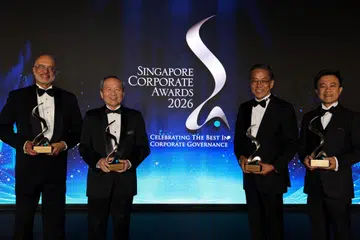
32 companies, 6 individuals bag accolades at Singapore Corporate Awards 2026

He built the Vingroup empire. Now South-east Asia’s richest man is handing some key roles to his sons
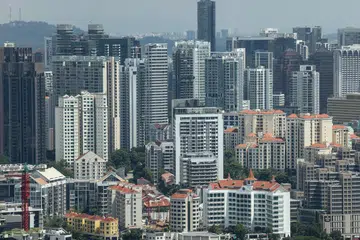
URA to review guidelines on floor space to give developers more design flexibility: Chee Hong Tat

Chagee, Mixue and Luckin won the market. Sustaining their edge is the harder part

