Issue 70: Looking past the haze; clean energy industry seeks more government help

In this issue: Loss of natural forests continues in Indonesia even though the fires behind the haze may have subsided, while industry and government offer different views on how to green the region’s energy sector.
Singapore
Saving what’s left after the fire dies down
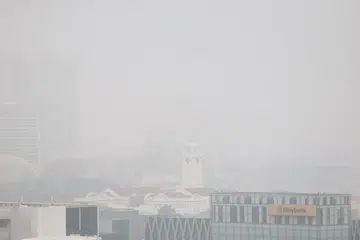
The haze came back to Singapore on Oct 7, marking the first post-Covid return of the South-east Asian transboundary air pollution phenomenon.
Forest fires in Indonesia are the primary cause of the haze, but their air-clogging particulates reach as far as Malaysia and Singapore, creating a regional problem.
Despite widespread concerns that high temperatures brought on by the El Nino weather effects will raise the risk of haze conditions in the coming months, the reality has been more muted so far. The Oct 7 haze lasted for one day, and air quality in Singapore has not been terrible since. Of course, Malaysia has gotten some of the haze as well, but all in all things haven’t been as bad as during the decade-ago peak.
The likely reason is that the agriculture-induced burning that fuelled the historically bad haze conditions in 2015 and 2016 is no longer as rampant as it once was. Climate change could yet spark an uptick in naturally occurring fires, but at least the human-created blazes are now less of a problem. Nevertheless, while plantations may no longer be burning forests at the rate they used to, they continue to clear forested areas to grow their plantations, setting the stage for the next set of transboundary problems.
Significant progress has been made since 2015 on the issue of curbing fire-based land clearing for agriculture in Indonesia. The improvements have come as a result of concerted efforts from multiple stakeholders to address the problem.
For a start, governments in Indonesia, Malaysia and Singapore have made the issue a priority. Despite political sensitivities, South-east Asian agriculture and forestry ministers this month agreed to work together to reduce and eventually eliminate crop burning. Singapore’s Transboundary Haze Pollution Act of 2014 raised legal jeopardy for offenders.
Investors and financiers have also placed pressure on corporations to be more responsible citizens. Mandatory sustainability reporting, as well as the growing sophistication of reporting standards, has improved scrutiny over the plantation companies’ actions and progress.
Consumers have also played a role. The Forest Stewardship Council, a globally recognised accreditation body, withdrew its stamp of approval for Sinar Mas’ Asia Pulp and Paper (APP) in 2007 and for Royal Golden Eagle’s Asia Pacific Resources International (APRIL). In 2015, Singapore grocery groups NTUC FairPrice, Sheng Siong and Prime withdrew paper products sourced from APP.
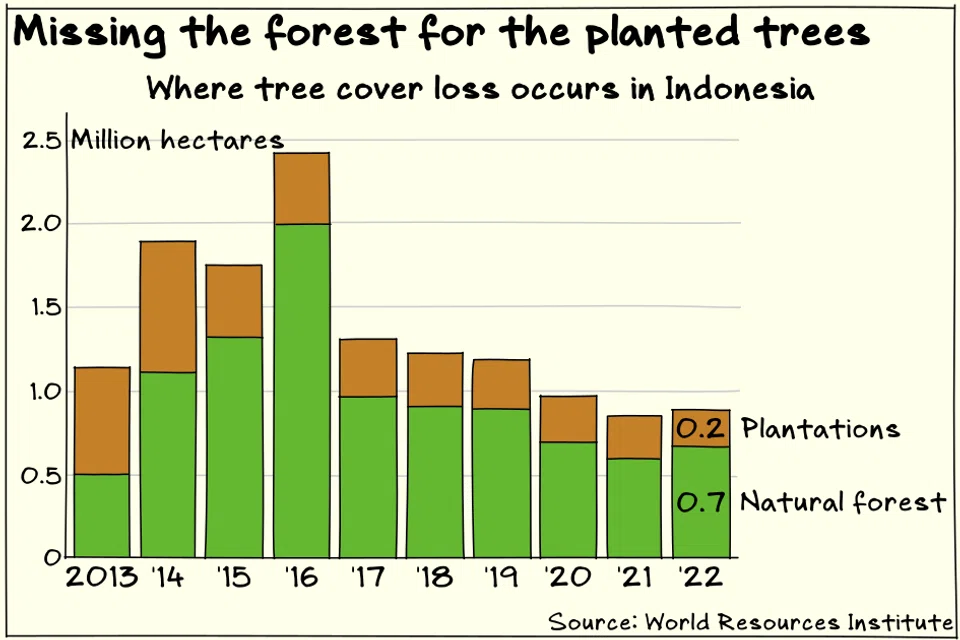
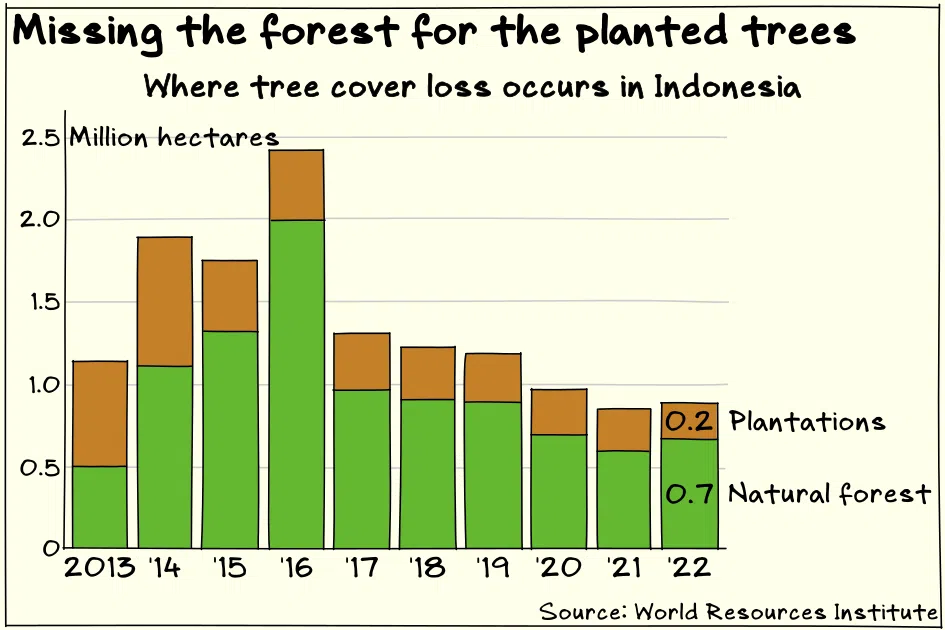
Not to suggest that the man-made fire problem has been eradicated, but it’s clear that things have improved considerably. Indonesia lost about 9.5 million ha of tree cover in the five years from 2012 to 2016, of which about 15 per cent, or 1.4 million ha, were due to fire, based on data compiled by the World Resources Institute’s (WRI) Global Forest Watch. In the five years from 2018 to 2022, total tree cover loss had slowed to 5 million ha, with just 5.6 per cent, or less than 300,000 ha, of that due to fire.
Commodity-driven deforestation drives more than 90 per cent of tree cover loss in Indonesia, so the decline in tree cover loss mostly comes from a reduction in commodity-driven expansion, WRI explains. But WRI’s numbers further show that about three-quarters of tree cover loss in Indonesia comes from natural forests, which means that primary forests are still being cut down.
Indonesia has taken commendable strides in lowering tree clearing, but official policy remains short of a complete ban on deforestation. Its progress on addressing forest fires might not be enough to appease critics who feel that the country must do more to protect its rainforests.
In 2021, Indonesia infamously backtracked from a deforestation pledge just days after making it. Indonesian Environment Minister Siti Nurbaya Bakar said at the time that ending deforestation by 2030, as the pledge entailed, was “inappropriate and unfair”. Indonesia instead took the stance that it was aiming merely for no net loss of forested land, in which replanting on previously cleared land could offset new deforestation.
Today, independent watchdogs take Indonesia’s deforestation statistics with a pinch of salt. When Jakarta announced in June that annual deforestation in the country had dropped by about 8 per cent, it emerged that the statistic did not include forest cleared for industrial purposes because the government deemed that replanting in those areas meant no net loss of forest. Greenpeace Indonesia called the numbers at the time “flawed”.
The deforestation battle in Indonesia presents both risks and opportunities for Singapore. On the downside, the continued loss of rainforest assets contributes to global warming, which raises risks of loss and damage for Singapore and its businesses. However, the need to protect those rainforests could open doors for Singapore-based companies to offer sustainable financial solutions.
Indonesia’s man-made fires may have simmered down, but the bigger problem of deforestation remains in play.
Other Singapore reads
- Singapore is fighting rising seas to save S$70 billion in real estate
- Singapore will accept forest carbon offsets only from countries with deforestation safeguards
South-east Asia
It starts from the top
Clean-energy industry players have identified government support and coordination as key factors in enabling South-east Asia’s energy transition, even more so than the availability of financing, says a survey by the Sustainable Energy Association of Singapore.
On the other hand, officials at the Association of Southeast Asian Nations (Asean) are urging greater access to financing to spur green transformation in the region.
It seems like everyone thinks it’s someone else’s problem, although in this case the private-sector players may be a tad closer to the truth. A lack of investment is usually the symptom, not the disease. It might be easy to miss that forest for the trees when looking at investment gaps.
The survey showed almost two-thirds of respondents naming weak government strategies and subsidy allocations and difficulties in implementing cross-border initiatives as the top barriers to driving energy transition in the region. Those factors were identified more than financial factors, such as a lack of green finance.
The latest edition of the Southeast Asia’s Green Economy report by Bain & Company, Temasek, GenZero and Amazon Web Services showed green deal transaction value in the region fell to US$5.2 billion in 2022 from US$5.6 billion a year earlier. This came despite growth in commitments by governments and corporates towards climate-related causes.
In other words, the money is there, but it’s not being used. Investing money is a little bit like a parent trying to decide whether to let a child take the bus on the child’s own for the first time. You’d like to send that kid out into the world, but what you’d like even more is knowing that the kid’s going to come back.
Governments can do a lot to provide that assurance. Treaties and contracts regarding cross-border energy transmission, for instance, were highlighted as a way to improve certainty for businesses. Greater certainty lowers the cost of capital, which improves the availability of private-sector financing.
Other South-east Asia reads
- Vietnam’s VinFast electric taxis to arrive in Laos, Cambodia after gaining dominance on home turf
- Malaysia to regulate large power users, sees US$20 billion in energy savings by 2050