Alibaba’s US$10 billion share sale does not stun just Michael Burry
The deal is sowing discomfort in Hong Kong’s finance circle
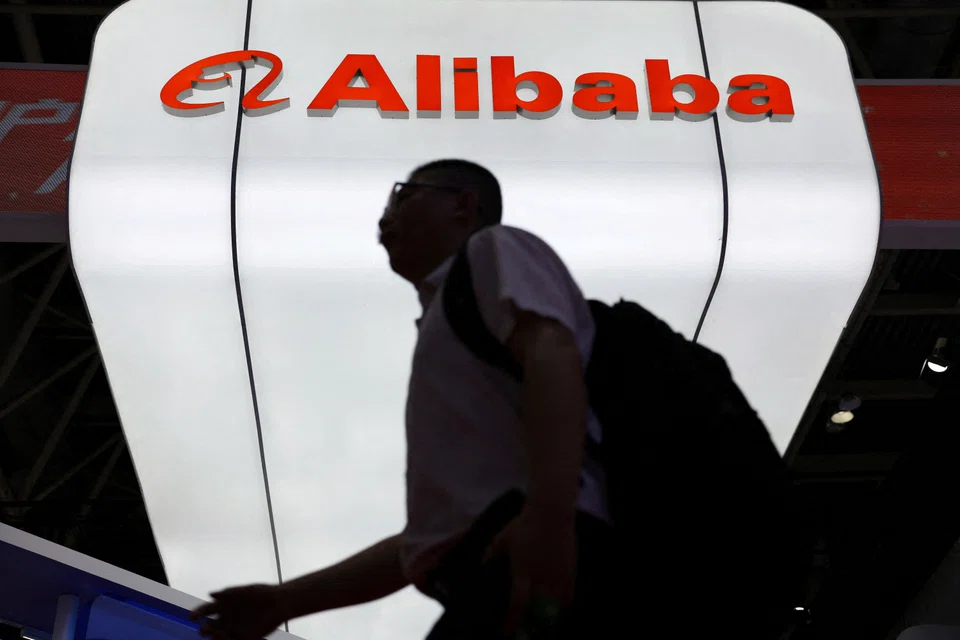
[HONG KONG] Alibaba’s HK$80 billion (US$10.2 billion) share sale is Hong Kong’s biggest follow-on offering on record. But it is being met with scepticism.
Michael Burry of The Big Short fame, for one, criticised the deal, saying that he moved his entire Alibaba position into rival JD.com not too long ago, and that the e-commerce giant’s shares would have to fall by half for him to become interested again.
“I cannot bless share issuances,” the American investor wrote on X.
But more than diluting existing shareholders, the deal is sowing discomfort in Hong Kong’s finance circle. A stock market that cannot help companies raise capital in an orderly manner is not a good one.
Alibaba’s American depository receipts (ADR) tumbled 8.6 per cent on Friday (Aug 21), making it the worst single-day decline in more than a year, even as US-listed Chinese names rose.
The odds of that happening is roughly one in 1,500 trading days, based on daily returns in the last five years.
Over the weekend, using the ADR price as a reference, Alibaba’s underwriters priced the new shares at HK$112.70 each. That is a whopping 8.4 per cent discount to Hong Kong’s close on Friday.
Stock slumps before major corporate announcements is not a pattern common in the US market.
Alphabet’s shares fell only 2.5 per cent on the trading day before the Google parent announced US$80 billion equity offerings on Jun 1. Intel’s stock actually rose on the trading day before the company unveiled additional share sales on Aug 10.
It is a sign that the US stock market is not leaky, and that whatever companies are planning in private stays private.
The issue of “wall-crossing”
In Hong Kong, the issue of “wall-crossing” – which involves institutional investors agreeing not to trade ahead of transactions, in exchange for a bank sharing sensitive information – has been in the spotlight.
Sengantii Capital Management and its founder, Simon Sadler, once dubbed Asia’s “block trade king”, are drawing particular scrutiny.
They are on trial, accused of using confidential insider information about a planned placement in 2017 to sell shares in fashion chain Esprit. Both have pleaded not guilty.
When a company plans massive corporate actions, such as a multibillion-dollar secondary offering, its investment banks, acting as underwriters, often approach a select group of institutional investors to gauge their appetite before making a public announcement.
These portfolio managers, in turn, are legally prohibited from trading such sensitive information.
This market discipline is all the more important now that Hong Kong is reclaiming its throne as the top destination for equity raisings in Asia.
Chinese artificial intelligence startups are eager to do their initial public offerings in the city, but listed tech companies also want to use it as the venue to fund their AI infrastructure built-outs.
One such company is Alibaba: With growth in its cloud and computer-services division accelerating, management has been feeling optimistic, expecting AI computing investments to break even within three years.
Proceeds from the share sale will be used to enhance its AI capabilities, the company said.
But I wonder if Hong Kong is the right place to serve such an ambition. The AI race is increasingly becoming a capital markets story, in that whichever company can fundraise the most – and at the cheapest cost – wins.
Where Alphabet and Intel were issuing new equity while their shares were at multi-year highs, Alibaba had to come to the market when its stock was down about 30 per cent from a January high.
The US$10 billion deal’s deep discount hurts the e-commerce company further.
Hong Kong is already on edge from regulatory scrutiny of the quality of IPO deals, as well as insider-trading lawsuits. With the city’s biggest follow-on offering looking like this, investors are understandably nervous. BLOOMBERG