

Are Americans really warming to China?
The opinion shift is less a new affection for Beijing than a growing fatigue with the costs of confrontation
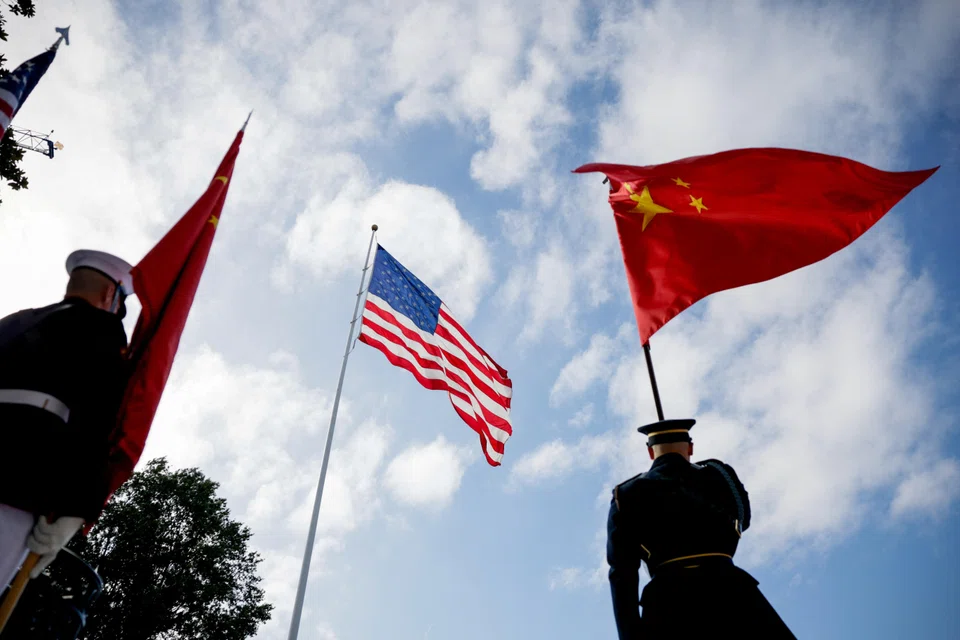
WHEN Chinese President Xi Jinping arrived in Washington in late September for a state visit, he met an American public noticeably less hostile than the one that watched a Chinese balloon drift across the country in 2023.
That year, just 14 per cent of Americans told the Pew Research Center they viewed China favourably. By March 2026 the figure was 27 per cent, the third consecutive annual rise in positive sentiment.
The softening shows up no matter how the question is asked. The share of Americans who call China an “enemy” fell from 42 per cent in 2024 to 28 per cent in spring 2026.
On the Chicago Council on Global Affairs’ zero-to-100 feeling thermometer (where zero represents a very negative feeling and 100 a very positive feeling), China’s average rating rose from 26 in 2024 to 39 in summer 2026.
More striking is what Americans now want done. The Chicago Council found that 57 per cent favoured friendly cooperation and engagement with China over efforts to limit its power – the highest share since 2020.
What’s driving the sentiment shift
Three forces are doing most of the work, and none of them is a sudden admiration for the Chinese system.
- The costs of confrontation came home
Tariffs turned an abstract rivalry into a line on the grocery bill. In a joint survey by NPR, Chicago Council and Ipsos in March 2026, 76 per cent of Americans said the tariffs on China were bad for their own cost of living and 66 per cent said they were bad for the US economy. Seven in 10 would cut tariffs in exchange for Chinese purchases of American goods.
- A younger public sees China differently
While 34 per cent of adults under 50 viewed China favourably in Pew’s March study, only 19 per cent of those 50 and older agreed. The Chicago Council has also found that most younger Americans do not see China as a critical threat and prefer engagement.
For a generation with no memory of the Cold War, China is a maker of phones, cars and apps before it is an adversary.
- Partisanship cuts both ways
Democrats account for most of the recent gain, and some of that is likely a reaction against US President Donald Trump: 60 per cent of Americans lack confidence in his handling of China.
Yet Trump has also moved the Republican signal. His May trip to Beijing, the trade truce and the most recent summit have made dealing with China look less like weakness.
Favourable perceptions of China have grown in both parties since 2024.
The limits of the thaw
It would be a mistake to read these numbers as a reconciliation.
Opinion has moved from very negative to merely negative: In Pew’s September survey which asked Americans to rate China from zero (cold and negative) to 100 (warm and positive), 54 per cent of Americans rated China coldly against 19 per cent who rated it warmly.
Americans have also not changed their minds about what China wants. Some 78 per cent believe Beijing seeks to become the dominant world power, and 60 per cent describe it as a competitor rather than a partner.
What has changed is the perceived nature of the threat. The NPR/Chicago Council/Ipsos survey sees Americans perceiving the challenge from China as more economic (56 per cent) than military (29 per cent).
The study shows an uneven shift too. Among Maga (Make America Great Again) Republicans, 63 per cent still favour containing China, while 57 per cent of other Republicans favour cooperation.
Opinion this soft can reverse quickly. A crisis in the Taiwan Strait, a collapsed trade deal or another balloon could undo three years of warming in a season.
What it means for policy
The public has opened a window for diplomacy, not issued a mandate for detente.
Americans are telling their leaders that they want competition with China managed at a lower price: fewer tariffs, steadier trade and talks instead of brinkmanship. They are not saying that they trust Beijing.
That distinction matters most on security. Only 38 per cent of Americans now support sending US troops to defend Taiwan against an invasion, down from about half earlier in the decade, according to the Chicago Council.
Policymakers who assume the public will back a confrontation should take note. So should those in Beijing tempted to read American fatigue as American indifference.
The wiser course is to use the moment. Warmer opinion gives Washington political room to negotiate on trade, fentanyl, artificial intelligence and military communication without being accused of appeasement.
Whether the thaw lasts will depend less on polls than on whether those talks deliver tangible benefits to Americans.
TRENDING NOW

8 public officers referred to police over property buys near unannounced MRT stations: Chan Chun Sing

Grab CEO’s wife Chloe Tong on life with Anthony Tan and finding her purpose

Retrenched PMETs who return on lower pay see median 25% wage cut

Hao Mart owner resisting OG’s mortgage foreclosure on his Tanglin GCB

