Are China’s rare earths really a potent weapon?
Evidence indicates that the country’s export restrictions would cost the West far less than often feared
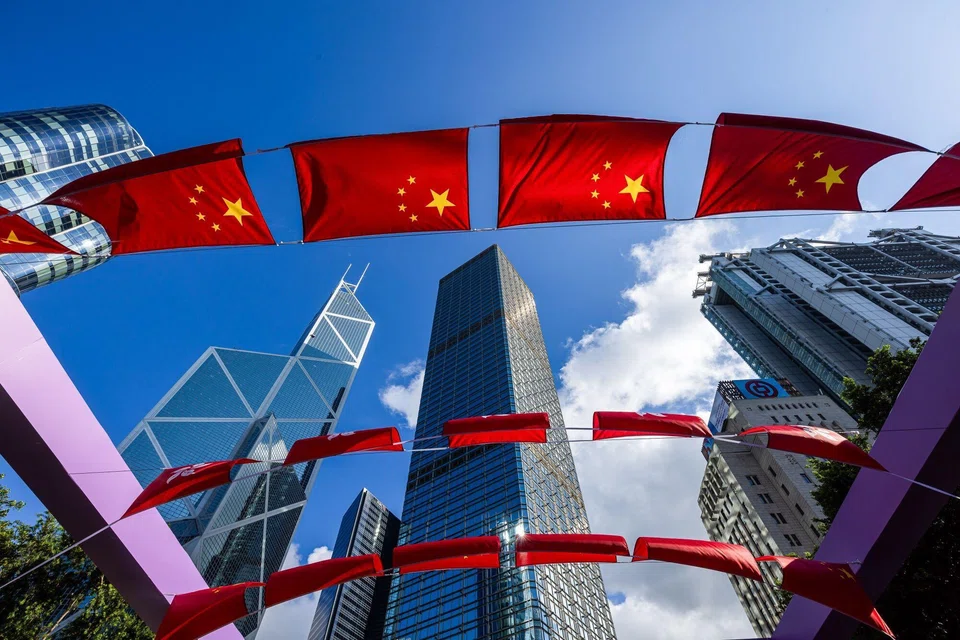
[MILAN] Early 2025, China’s government introduced an export-licensing regime requiring exporters to obtain approval before shipping heavy rare-earth elements and permanent magnets, over which China has a near-monopoly, to foreign firms.
China relaxed these export restrictions later in the year, after US President Donald Trump agreed to reduce tariffs and export restrictions.
For many observers, the message seemed clear: China’s rare-earths dominance amounts to a powerful source of geopolitical leverage, and the US and Europe must do everything in their power to erode it.
But the numbers tell a more nuanced story. While China is a dominant supplier of rare earths to the EU and the US, this is less true for rare-earth minerals than for permanent magnets, which are enhanced by small amounts of rare earths.
And even for magnets, the EU and the US each import only about US$500 million to US$1 billion annually – a negligible fraction of either economy’s total trade or gross domestic product.
It is often argued that the volume of these imports is not the point. Because rare earths and permanent magnets are vital inputs to high-tech products, from electric vehicles to wind turbines, they have an outsize economic impact.
A recent International Monetary Fund (IMF) working paper calculates that the loss of 80 per cent of rare-earth and magnet supplies would reduce US GDP by 1.5 per cent (US$490 billion), German GDP by 2.1 per cent and Japanese GDP by 2.3 per cent.
The European Central Bank (ECB) estimates that the loss multiplier would be smaller: losing 50 per cent of rare-earth supplies would reduce US GDP by around 0.2 per cent (US$65 billion).
But this still assumes that the damage caused by losing access to rare earths would be at least a hundred times larger than the value of the lost imports themselves.

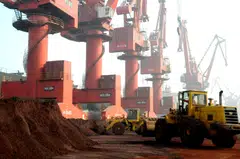
There are much lower cost estimates. A US Geological Survey report puts the combined loss of all rare-earth supplies, including those incorporated in permanent magnets, at only US$15 billion – a minuscule fraction of US GDP.
Past experience suggests that such conclusions are more realistic than the much higher estimates of the IMF and the ECB.
In July 2010, China suddenly cut export quotas for rare earths by 72 per cent for the second half of the year, owing to various environmental and industrial-policy considerations.
There is little reason to think that geopolitics was a factor in this decision, but a couple of months later, after a Chinese trawler collided with Japanese coast-guard boats in disputed waters near the Senkaku Islands, China’s rare-earth export restrictions did cause Japan pain.
Many observers thus cite this episode as an example of Chinese economic coercion.
The motive might be disputed, but the impact was undeniable. Prices increased sharply, by up to a factor of 10 in some cases, and some car producers faced disruptions.
Then demand for rare earths fell, and prices began to decline from their peaks. By the time the restrictions were formally lifted more than four years later, prices had already fallen back to pre-restriction levels.
Despite the disruption, production held up, thanks to what one study calls “directed technological change”: A surge in the price of an essential input spurs producers to innovate, whether to increase the efficiency of the input or to find alternatives.
As a result, the study estimates that real GDP losses outside China probably amounted to just 0.04 to 0.05 per cent during the four-and-a-half years the restrictions were in place, with negligible macroeconomic impact on Western economies.
The IMF’s World Economic Outlooks during this period did not even mention rare-earth scarcity as an obstacle to growth.
More mitigating factors today
Today, the impact of Chinese rare-earth export restrictions might be even smaller, because there are significantly more alternative supplies.
Even if those supplies cannot fully replace Chinese exports, they can ensure that the highest-value uses are covered. Recent studies show that just a 10 per cent loss in market share, from 95 to 85 per cent, can substantially weaken a supplier’s leverage.
The available evidence indicates that Chinese rare-earth export restrictions would cost the West far less than often feared. At the same time, it is impossible to estimate this cost precisely in advance.
This is forcing prudence on both sides: Western leaders are pursuing a more restrained trade policy towards China, to mitigate the risks of retaliation, and Chinese policymakers are avoiding sharp curbs on rare-earth exports, for fear that such a policy’s bite would prove less effective than its bark.
Geopolitical hawks on both sides might find this situation frustrating. But the rest of us should welcome it. Trade restrictions are always a negative-sum game. PROJECT SYNDICATE
The writer is director of the Institute for European Policymaking at Bocconi University
Decoding Asia newsletter: your guide to navigating Asia in a new global order. Sign up here to get Decoding Asia newsletter. Delivered to your inbox. Free.
Share with us your feedback on BT's products and services