Asean’s best defence against US tariff turmoil lies close to home
In a ‘minus two’ world, intra-regional trade can keep economies strong
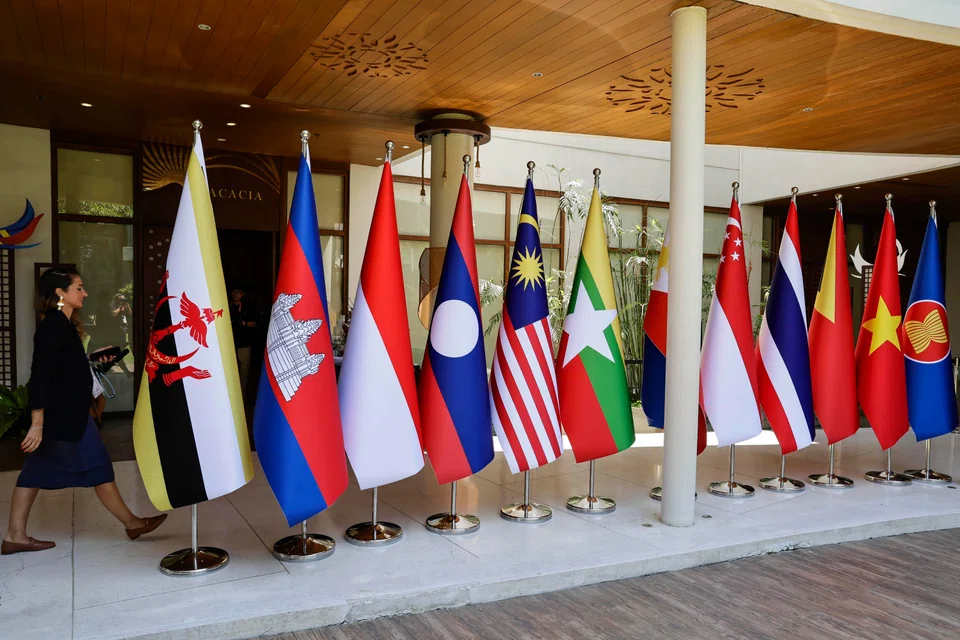
US TARIFF turmoil is far from over. The 10 per cent import surcharge on countries worldwide, imposed under Section 122, expired on Jul 24 – but trade uncertainty continues.
The US Section 301 proceedings concerning imports made with forced labour and alleged excess industrial capacity now point to the next phase.
Asean is directly exposed. Seven member states – Cambodia, Indonesia, Malaysia, the Philippines, Singapore, Thailand and Vietnam – face the action on forced labour imports. All but the Philippines also face the excess capacity investigation.
The regional stakes are high. Many Asean economies rely on trade, including with the US. Access to the American market matters, but governments must also consider how any agreement may affect domestic interests and trade with other partners.
Because Asean’s production networks cross borders, uneven national outcomes could disrupt trade and investment across the region.
Talks with Washington are therefore only one part of the response. Asean must also make its own market work better, so that businesses have more options and regional production networks remain viable when US access becomes less predictable.
No single bilateral arrangement among Asean members will transform intra-Asean trade. But such initiatives can address specific needs and create models that other members can join.
National negotiations, regional consequences
The case of Thailand can illustrate why national negotiations are necessary, but not sufficient.
As an upper-middle-income economy with a large manufacturing sector and sizeable agricultural exports, trade is central to its growth. Continued access to the US market matters.
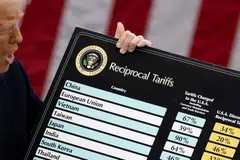
Thailand has tightened safeguards against imports made with forced labour and provided the US with data on its industrial capacity. Even so, on Jul 24 the US imposed a 12.5 per cent Section 301 tariff on exports from Thailand and 37 other economies, citing shortcomings in their forced-labour import controls.
Exemptions of more than 2,100 Thai product lines, accounting for over half the value of its exports to the US, may soften the impact.
But the greater uncertainty is the separate Section 301 investigation into structural excess capacity, which covers Thailand and 15 other economies.
Thailand hopes to conclude an Agreement on Reciprocal Trade with the US before any further tariff is announced. Regardless, it may not eliminate Thailand’s exposure to tariffs.
Many Thai manufacturers operate within regional production networks. A factory in Thailand may use components made in Malaysia or Vietnam before exporting the finished product to the US.
Different tariff treatment or rules of origin could make these networks harder to operate. This may weaken Asean’s appeal as a regional production base.
Therefore, as each government negotiates its own terms with Washington, Asean also needs a regional growth strategy that keeps production networks intact and makes cross-border trade more resilient.
Intra-Asean trade in a “minus two” world
For decades, South-east Asia benefited from an open global economy. The US provided a large export market and was an important source of investment. China’s rapid growth created new demand and drew Asean into expanding production networks.
Both nations will continue to be essential partners. Yet, Asean can no longer assume that the US will remain an open and predictable market or that China will generate demand at the pace of earlier decades.
This is the “minus two” world for which Asean must prepare: not one without either power, but a world in which neither offers the same reliable anchor for growth.
The response is not to turn inward or exclude either power. Asean should remain open to both. But it must make its own market work better, giving businesses more options when conditions elsewhere deteriorate.
However, to date, intra-Asean trade accounts for only about 20 per cent of the grouping’s total trade. This partly reflects how the region developed. Many supply chains serve markets elsewhere, while several members compete in similar industries.
But barriers within Asean also hold trade back. Most intra-Asean tariffs are already at zero or close to it, yet businesses still face customs delays and different national requirements, such as standards and quotas.
Large companies can usually absorb these costs. But smaller firms may decide that entering another Asean market is not worth the cost.
Practical steps towards wider integration
The regional bloc already has many of the right tools and frameworks to address these barriers.
Negotiations on the Asean Digital Economy Framework Agreement (Defa) have concluded. The Asean Power Grid has also begun to move from a longstanding ambition towards practical projects. The next task is to make these plans work practically.
Not every step needs to involve all 11 Asean members from the outset. Bilateral and smaller group arrangements can serve as pathfinders, provided they remain open to others and support wider regional integration.
Thailand and Singapore may offer a useful illustration. Although their economies differ in size and structure, both similarly depend heavily on trade and access to external markets.
Their strengths are also complementary and create room for cooperation. Thailand offers a sizeable production base and agricultural capacity, while Singapore is a source of investment and a regional business hub.
Energy cooperation is one example. Under the Lao PDR-Thailand-Malaysia-Singapore Power Integration Project, electricity from Laos is transmitted through the Thai and Malaysian grids to Singapore. Thailand’s role as a transit country will be central to any expansion of this model.
For future power trading, clearer and commercially workable arrangements for access to Thailand’s transmission network, including the charges for using it, could help projects move beyond pilots. This would give practical momentum to the Asean Power Grid.
Digital payments cooperation provides another example. The PayNow-PromptPay linkage between Singapore and Thailand has made cross-border transfers simpler and less costly. Although it predates Defa, it shows what interoperable systems can deliver.
Defa should extend this approach beyond payments. Payments are only one part of doing business digitally. The broader test is whether small and medium-sized enterprises can complete a cross-border transaction without having to navigate a different system in every Asean market.
The same logic applies to trade in food. Singapore imports more than 90 per cent of its food, while Thailand is a major producer. Under their bilateral rice agreement, Thailand could supply Singapore with up to 100,000 tonnes over five years.
The agreement is a framework rather than a guaranteed purchase or price-support mechanism, and transactions remain subject to prevailing international prices. Yet, even without a fixed price, there may be scope for greater predictability during disruptions.
Thailand has proposed technical discussions with Singapore on food supply and price stability during periods of disruptions. Such arrangements could give Singapore greater assurance of supply while offering Thai producers better visibility over regional demand.
This arrangement could be extended to one where Singapore sells Thai rice and food products to other countries under specified contracts. This would enable Singapore and Thailand to collectively position themselves as a food security centre for the world.
Building Asean’s market step by step
Countries ready to move with bilateral arrangements should do so, provided they remain open to other members and are consistent with wider Asean rules. In this way, bilateral and smaller group cooperation can strengthen the regional market rather than fragment it.
But single bilateral arrangements among Asean members will not transform intra-Asean trade. Nor will they shield the bloc from US tariffs or replace its external markets. Nevertheless, they can give businesses more options and make the region less vulnerable to external disruptions.
Asean cannot prevent the rules from changing elsewhere. But it can make its own market work better. In a “minus two” world, that may be its most practical defence.
Kirida Bhaopichitr is Thailand’s vice-minister for commerce. Simon Tay is the chairman of the Singapore Institute of International Affairs.
These questions will be central to the 18th Asean and Asia Forum on Aug 3, organised by the Singapore Institute of International Affairs.
Decoding Asia newsletter: your guide to navigating Asia in a new global order. Sign up here to get Decoding Asia newsletter. Delivered to your inbox. Free.
Share with us your feedback on BT's products and services