

Beijing bound: What the Trump-Xi summit in May reveals about a world in flux
Underlying all issues is the broader contest for global influence
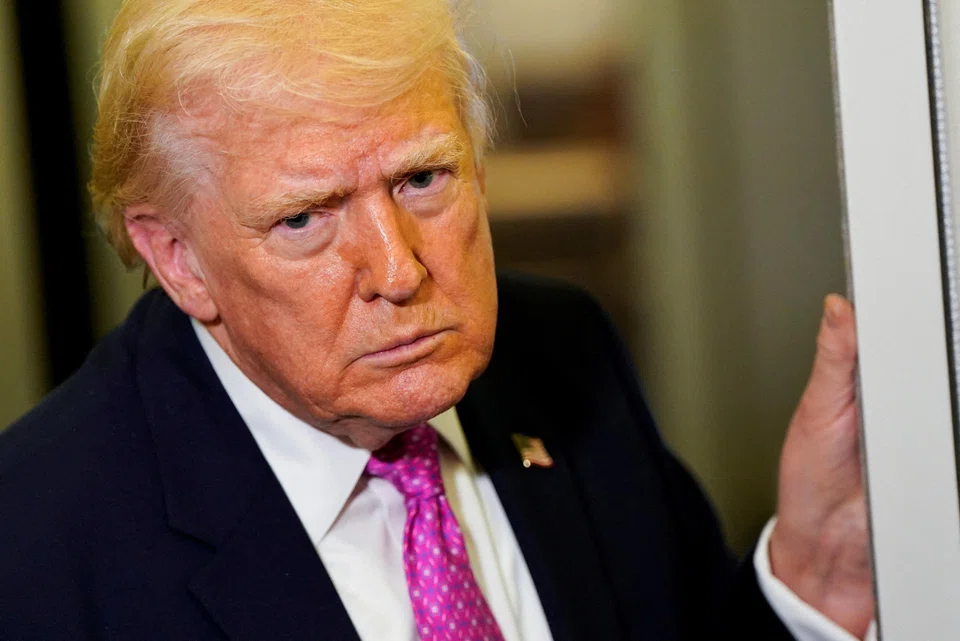
WHEN US President Donald Trump touches down in Beijing on May 14, it will mark the first visit by a sitting US president to China since Trump himself made the trip in 2017.
That symmetry is fitting, and telling.
Nearly a decade on, the world looks dramatically different, yet the same two men will once again sit across the table from each other, carrying the weight of the most consequential bilateral relationship on the planet.
The visit, confirmed by White House Press Secretary Karoline Leavitt on Mar 25, was originally scheduled for late March before being postponed due to the ongoing US-Israel war against Iran.
That the trip is now slated for mid-May, with Leavitt hinting the conflict could wrap up within “four to six weeks”, suggests Washington is threading two crises simultaneously, hoping to close one chapter before opening another.
Whether that optimism is warranted remains to be seen. For now, Beijing is the destination, and the agenda is formidable.
The shadow of Iran
The Iran war looms over the summit in ways both direct and indirect.
Trump has sought China’s help in pressuring Teheran and reopening the Strait of Hormuz, a vital chokepoint through which a significant share of global energy supplies flow. Beijing has so far declined, offering only measured calls for a ceasefire rather than any concrete intervention.
China’s reluctance is hardly surprising: analysts note that the prolonged conflict quietly benefits Beijing by stretching US military resources and reducing Washington’s bandwidth in Asia.
With over 80 per cent of Iranian oil shipments flowing to China in 2025, Beijing also has deep economic incentives to avoid antagonising Teheran. Expect Trump to press Xi on this point, and expect Xi to deflect with equal skill.
Trade: a truce under strain
On trade, the two sides arrive at the table in an unusual position. The sweeping tariff architecture Trump spent years constructing was partially dismantled by a February Supreme Court ruling that struck down levies imposed under the International Emergency Economic Powers Act.
The administration has since fallen back on a flat 10 per cent tariff under a separate legal authority. That ruling has scrambled Washington’s leverage, and the Beijing summit offers an opportunity, or at least the optics, of resetting the commercial relationship.
Goodwill deals on agricultural exports and aircraft parts are reportedly on the table, modest wins that both sides can tout domestically. But beneath the surface, the structural tensions that have defined US-China trade for years remain unresolved, and no two-day summit is likely to change that calculus fundamentally.
“What the summit can do, at best, is establish guardrails: a mutual understanding that neither side intends to force a confrontation in the near term.”
Taiwan: the unavoidable fault line
Perhaps no issue better illustrates the depth of the divide than Taiwan. Trump’s second term has seen a significant escalation in US arms sales to the island, moves Beijing regards as direct provocations given its claim of sovereignty over Taiwan.
The two sides are expected to discuss the issue in Beijing, though analysts are not forecasting any breakthroughs. The fundamental disagreement, Washington’s commitment to Taiwan’s de facto security versus Beijing’s insistence on eventual reunification, is not the kind of thing resolved over state dinners.
What the summit can do, at best, is establish guardrails: a mutual understanding that neither side intends to force a confrontation in the near term.
The superpower subtext
Underlying all of these specific issues is the broader contest for global influence.
The visit comes at a moment when US credibility is under scrutiny, strained by an unpopular war in the Middle East, a Supreme Court check on executive trade power, and an international community watching carefully to see how Washington manages two simultaneous crises.
China, meanwhile, has positioned itself as a voice for stability in a turbulent world, even as it quietly benefits from US distraction.
Trump, for his part, has described the summit in characteristically grand terms, calling it a “monumental event” on Truth Social. Xi, disciplined and strategic as ever, will arrive with clear objectives and limited appetite for surprises.
Whether the meeting produces substance or spectacle, or some carefully choreographed blend of both, it will serve as a revealing snapshot of where the world’s two great powers stand as they navigate a moment of unusual global disorder.
The real question is not what gets announced in Beijing, but what quietly shifts in the weeks and months that follow.
TRENDING NOW

Philippine power giant First Gen rebuffs foreign offers, plans up to US$2.6 billion in expansion

Cliff Tan has 7 million followers and a 4-month waitlist. Why won’t he expand his business?

Could stablecoins be the future of money?

From finance aspirant to Asean CEO: TUV SUD’s Jonas Strahberger on finding people who believe in you

