

Beware higher volatility as US election nears
As US growth decelerates and Fed rate cuts continue, global capital will keep flowing to markets in Asia

THIS column said in June that rate cuts by the US Federal Reserve could mark an inflection point of sorts for markets in Asia, as they would take pressure off regional currencies and pave the way for a broad loosening of monetary policy that supports economic activity and boosts asset prices.
As it happened, right after the Fed announced its 50-basis-point rate cut on Sep 18, Hong Kong’s central bank announced a 50-basis-point cut of its own. Just hours before the Fed moved, Indonesia’s central bank also announced a 25-basis-point cut.
The central banks of Thailand and the Philippines both announced rate cuts earlier this month. This was Thailand’s first cut since 2020, and the Philippines’ second cut since August.
These moves were a sideshow compared to the big stimulus package that China unveiled last month, of course. The announcement on Sep 24 of interest rate cuts, a reduction in the reserve requirement ratio for banks, as well as measures to boost the property sector sparked a huge bounce in the CSI 300 Index and the Hang Seng China Enterprises Index.
There seems to be a lot of scepticism about China and the rest of the region among market watchers, though. One concern I keep hearing is that the scale of the stimulus China has announced might be insufficient to revive its property sector and broader economy.
While I am no expert on China, I wonder if all the doubt is just a reflection of bearish analysts and investors having been caught off guard by the big stimulus announcement. If China keeps scaling and refining its stimulus efforts, it seems likely to me that investors will eventually come to view its battered stocks more positively.
Another worry is that the Fed may not cut rates as quickly as expected, given the strong US jobs numbers and uneven inflation data in recent weeks. Since the Fed’s rate cut last month, US Treasury bond yields have actually rebounded while the greenback has broadly strengthened.
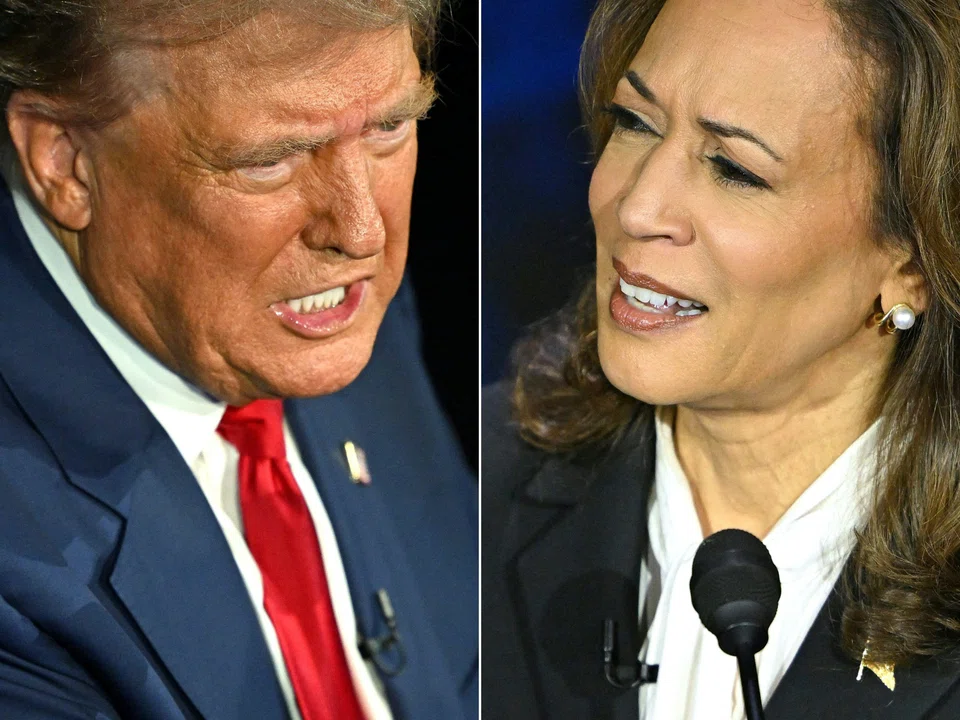
The markets have also been buffeted by the shifting odds of whether the next occupant of the White House will be Kamala Harris or Donald Trump, and what their respective policies could mean for the US economy and global trade.
Is the outlook for Asian markets waning? Should investors retreat?
Volatility in Asia
My own view is that Asian markets are still at an inflection point, even if the pace of Fed rate cuts is slower than expected.
It isn’t just lower US interest rates that will drive capital to Asia but differentials in economic growth trajectories, as well as generally positive global market sentiment.
Even after the Fed’s jumbo rate cut last month, its policy stance is widely seen to be restrictive. On the other hand, China’s big stimulus announcement is clearly expansionary.
As US growth decelerates and interest rates eventually ease, it seems likely that capital will flow to markets in this region.
The main potential downside for investors in Asia is the possibility of a surge in global risk aversion that draws capital back to US Treasury bonds and other safe-haven assets.
What could trigger such risk aversion? One possibility is a hard landing for the US economy. Another is some kind of geopolitical event that disrupts trade.
This brings me to the US elections, and what the policies of Trump and Harris could mean for markets in Asia.
While both candidates are not proponents of free trade and are likely to be tough on China, Trump may take more aggressive action. He has already floated the idea of a general import tariff of as much as 20 per cent, and a tariff on China of 60 per cent.
This would have a negative impact on growth in Asia, and would probably stoke inflation in the US. This, in turn, would slow the pace of Fed rate cuts and may keep the US dollar firm.
Some analysts have said the tax and fiscal spending plans of both Trump and Harris, while very different in terms of details, will ultimately result in wider US budget deficits and increased public sector debt. This would probably drive long-term Treasury bond yields higher over time.
While the longer-term outlook for Asian markets remains positive, in my view, investors should probably brace themselves for heightened volatility as the race for the US presidency enters its final stretch.
Winners, losers in US
It isn’t just Asian markets that are hanging in the balance as Americans go to the polls. The outcome of the election could also have significant implications for some of the leading companies in the US market.
Trump, for instance, is seen to be more in favour of deregulation than Harris. If he wins, it would probably be good news for big oil companies and large financial services groups.
On the other hand, a Harris win might be bad news for both those sectors but good news for companies in the renewable energy space.
Neither candidate seems all that friendly to the big technology companies or the healthcare and pharmaceutical sectors.
Taking a broader perspective, Trump’s inclination to cut corporate taxes suggests US stocks will initially perform better if he wins instead of Harris. Yet, Trump’s strongly telegraphed aversion to immigration could pose a longer term challenge for the US to grow its economy.
Against this backdrop, one strategy investors could adopt is to focus on US companies that are not in the policy crosshairs of either candidate. Another is perhaps to concentrate on well-established, high-quality US companies capable of passing on the potentially higher cost of doing business to their customers.
Whatever their strategy to navigate the coming change in administration, investors should be mindful of elevated valuations in some segments of the US market after several years of strong returns.
A strategist at Goldman Sachs created a stir last week when he said the S&P 500 may post an annualised return of only 3 per cent over the next 10 years.
The S&P 500, which has been driven by a narrow group of very large tech companies recently, has delivered an annualised return of 13 per cent over the past decade.
On Nov 9, right after the US elections and the second-last Fed meeting of 2024, I will be delving into the merits and strategies of investing in US stocks with the help of three experts: Jermyn Wong of State Street Global Advisors, Sue Lee of S&P Dow Jones Indices, and Geoff Howie of SGX.
The event, dubbed Exploring the Dow, will kick off at 9 am at the SGX Auditorium.
TRENDING NOW

Two Singapore-listed palm oil firms named in Greenpeace report on Indonesian plantation fires

Singapore Airlines flight returns to San Francisco after ‘unruly’ passenger incident

Singapore looking into which companies responsible for haze-causing fires: PM Wong

Deluge IPO 3.86 times subscribed ahead of SGX debut

