California’s general election is revealing fault lines in the Democratic Party

Republican candidates’ successful showings in the state pose existential questions for the Democratic Party
Summarise
    • The housing crisis, wildfires, homelessness and fiscal pressures have not eased under Democratic governance.
    • The housing crisis, wildfires, homelessness and fiscal pressures have not eased under Democratic governance. PHOTO: BLOOMBERG
    Published Sun, Jun 14, 2026 · 06:00 PM

    CALIFORNIA’S Jun 2 primary elections have set the stage for two of the most consequential political contests in the state’s recent history: a wide-open race for governor and a high-stakes mayoral battle in Los Angeles.

    Both races, now heading towards November run-offs, reveal a California electorate that is restless, ideologically fragmented and wrestling with unresolved crises that no administration has yet managed to solve.

    A fractured Democratic field

    With incumbent Democratic Governor Gavin Newsom ineligible to seek a third term, a massive field of 61 candidates entered the race.

    What followed was a primary campaign defined less by soaring vision than by jockeying for survival in a crowded lane. 

    Two Democrats, former Cabinet secretary Xavier Becerra and billionaire climate activist Tom Steyer, and one Republican, Trump-endorsed commentator Steve Hilton, separated themselves from the pack.

    Other candidates included figures such as former representative Katie Porter, state superintendent Tony Thurmond, former Los Angeles mayor Antonio Villaraigosa, and San Jose Mayor Matt Mahan. 

    Becerra leaned heavily on his more than 35 years in public office, including stints as California’s attorney-general and US secretary of health and human services, to argue that he was the most qualified candidate in the field.

    That experience-forward message resonated enough to land him in first place. According to the Associated Press, Becerra holds about 28 per cent of the vote, narrowly ahead of Hilton at 25 per cent, with Steyer sitting third at 23 per cent – which means Becerra will go against Hilton in November. 

    The fact that the race was this close speaks to the unusual dynamics at play. Republicans have not won a statewide race in California since 2006, but the fragmented Democratic field created a genuine risk that two Republicans could advance to the general election.

    The California Democratic Party actively urged lower-polling candidates to drop out to prevent this outcome, a rare public acknowledgment of structural vulnerability in a state Democrats have dominated for two decades. 

    In the end, that “lockout” scenario appears to have been avoided, but the underlying message is hard to ignore: California Democrats are not unified, and their voters are not easily corralled.

    Steyer’s campaign is particularly instructive. The billionaire environmental activist directly blamed major corporations, naming Chevron, Pacific Gas & Electric and Meta, for mobilising against him after he signalled he would tax them if elected. Steyer declared: “They are unanimous in their hate for me and I welcome their hatred.”

    Whether or not one accepts that framing, it tapped into a genuine current of economic frustration among Democratic voters. 

    Hilton, meanwhile, ran a campaign that mirrored national Republican energy. The former Fox News commentator framed California’s challenges as symptoms of a “failed and broken system”, positioning himself as an outsider candidate in a state where Republicans rarely get traction.

    His strong showing suggests that anti-establishment sentiment has a constituency even in deep-blue California, particularly when Democrats are divided. 

    Voter turnout tells its own sobering story: just over 23 per cent of California voters cast ballots in this primary.

    In a race that will determine the leadership of the nation’s most populous state, that level of civic engagement – or disengagement – raises serious questions about how well any of these candidates have managed to inspire a broad coalition. 

    Los Angeles is not convinced enough

    In Los Angeles, incumbent Mayor Karen Bass faces a November run-off after failing to clear the 50 per cent threshold needed to win outright.

    That’s a result that is, in itself, a political statement from a city still processing years of accumulated frustration.

    Bass leads with roughly 34 per cent of the vote, ahead of city council member Nithya Raman at 29 per cent and reality TV personality Spencer Pratt at around 27 per cent, as of the latest numbers. That means Bass will face Raman in the November run-off.

    In the lead-up to the polls, Bass faced two serious challengers coming from opposite directions: Pratt, a Republican whose home burned in the 2025 Palisades Fire, attacked her from the right, while Raman, a former Bass ally and member of the Democratic Socialists of America, challenged her from the left.

    The fact that both sustained competitive campaigns reflects how broadly Bass’ mayoralty has disappointed different segments of the Los Angeles electorate. 

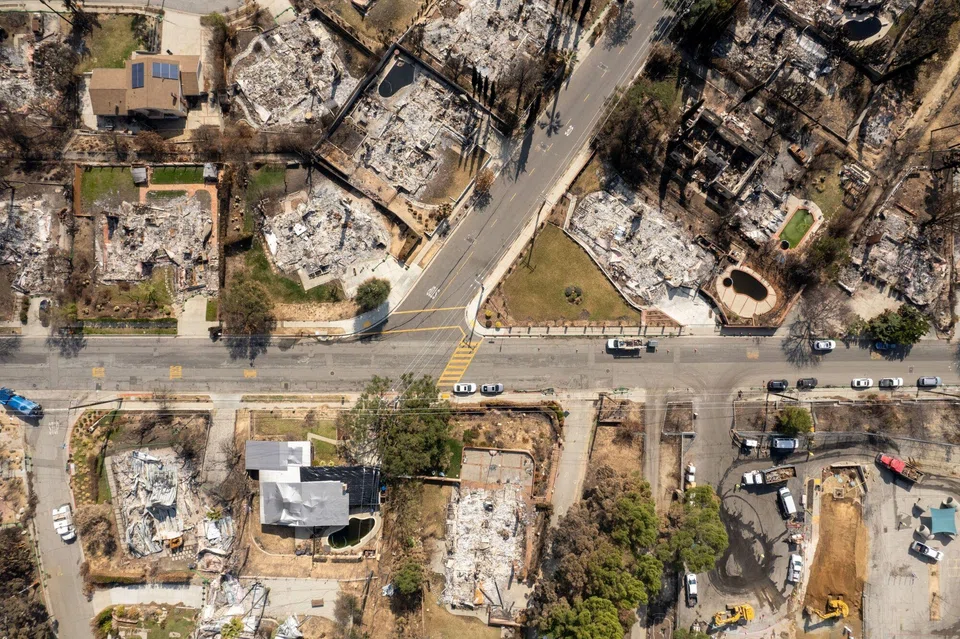
    The candidates and voters have focused on recovery from the devastating 2025 wildfires, homelessness, Immigration and Customs Enforcement operations and other pressing city issues – a reminder that Los Angeles is not just managing normal municipal headaches, but a genuine multi-crisis environment.

    The wildfire damage alone reshaped the political landscape, giving candidates like Pratt, whose personal loss made his grievance visceral and visible, an emotional entry point that polling and policy papers cannot easily replicate. 

    Bass herself maintains that her three years in office have moved Los Angeles in the right direction, pointing to changes in how the city handles homelessness, housing and public safety.

    That argument has enough resonance to keep her in first place, but not enough to close out the race. A mayor who cannot consolidate her own party’s base in a primary is one carrying real political vulnerability into a general election. 

    The shape of the November run-off will matter enormously. A Bass versus Raman matchup would be a debate internal to the Democratic left, a contest over what kind of progressivism Los Angeles wants. 

    What the races tell us about California

    Taken together, these contests reveal a California that is institutionally Democratic but ideologically unsettled.

    Voters are not abandoning the party wholesale, but they are questioning whether the party’s standard-bearers – experienced, credentialled, establishment figures such as Becerra and Bass – are adequate to the scale of the state’s problems.

    The housing crisis, wildfires, homelessness and fiscal pressures have not eased under Democratic governance.

    The question voters will answer in November is not whether to change parties, but whether to change the kind of Democrats who lead them – or whether, in the governor’s race especially, an outsider Republican like Hilton can make a credible case that disruption beats continuity.

    California has given its answer to that question before. November will tell us whether 2026 is different.