

Can capital trust Myanmar again?
Investors need confidence that political disorder is giving way to enforceable rules
FRONTIER markets hold out the prospect of faster growth, with opportunities in currently underdeveloped sectors.
Yet, weaker infrastructure, less mature institutions and greater uncertainty are not the only concerns. Political risks can be much harder to price and manage.
Myanmar is one stark example.
It was once embraced as Asia’s last frontier market and enjoyed a near-decade of opening and growth.
The military coup in 2021 and the subsequent violence shattered such hopes. Myanmar is now mainly a question of political instability and humanitarian concern.
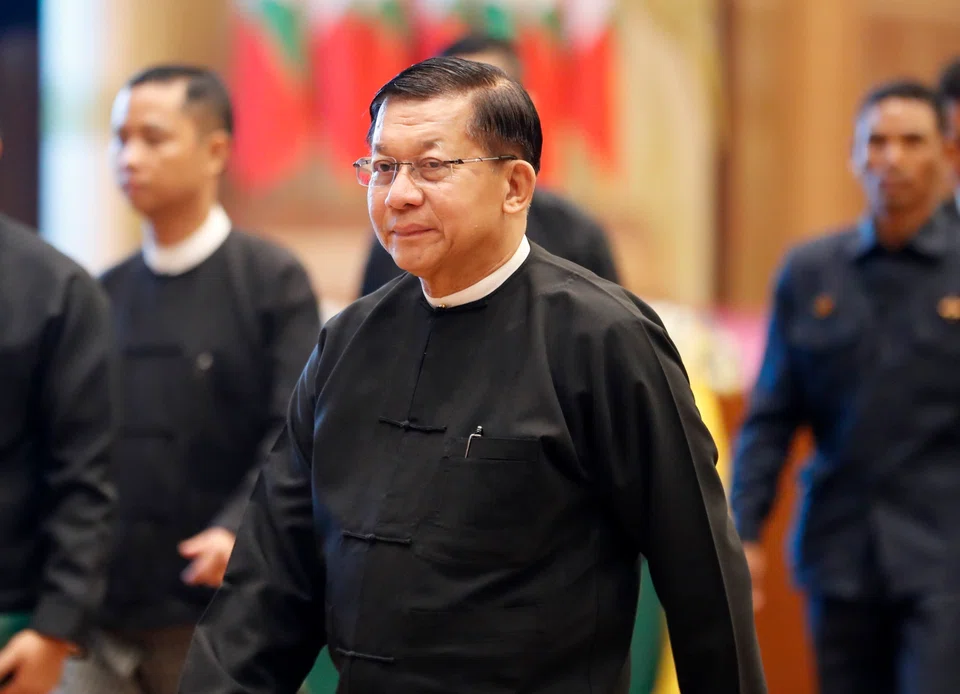
In this context, the recent visit to Bangkok by former military leader and now President Min Aung Hlaing carried important signals.
By hosting him officially, the Thai government indicated its willingness to move towards greater engagement with its neighbour.
He also used the opportunity to address business leaders and encourage investment. The two are interconnected: Sanctions from the West and strained ties, even with its neighbours, leave the country isolated both economically and politically.
In the run-up to his trip to Thailand, he met leaders in China, India and Russia, as well as Laos.

Should investors follow?
A frontier too far
Investing in frontier economies such as Myanmar can never mean waiting for perfect conditions.
Infrastructure gaps, higher finance costs and currency volatility are to be expected. Bureaucracy and corruption must be navigated.
The expected above-par returns reflect these challenges.
Governance and policies can also improve, even if there are short-term ups and downs. Vietnam’s trajectory reflects this potential for long-term reform.
But some risks cannot be readily priced.
Even before the coup, Myanmar had its problems, not least the Rakhine State or Rohingya crisis that generated international criticism.
Yet, there was nevertheless a positive direction of travel, and many assurances of a “road map to democracy”.
That direction has not only stalled, but also reversed.
The military coup did not bring stability. Instead, immediate and widespread protests followed, and the conflict continues today.
The country has also suffered massive population outflows and become vulnerable to drug trafficking and scam centres.
All this notwithstanding, elections in parts of the country were held at the end of 2025, with the former general Min Aung Hlaing officially retiring from military command to become president.
Yet, economic policy remains unpredictable, and parts of the country are not within the control of the new, military-backed government. Resistance organisations and ethnic armed groups control or contest territory without being able to secure a decisive national victory.
The National League for Democracy – which won the elections held immediately before the coup – is banned, and its iconic leader, Aung San Suu Kyi, remains in detention.
The Min Aung Hlaing government controls major cities and the central apparatus of the state. However, this is not stability, but a stalemate.
Some can and will deal with Myanmar.
Chinese companies are present, and Beijing has especially strong interests in northern Myanmar for border security, trade routes, infrastructure and access to strategic resources.
Bangkok has strong reasons to engage as well.
The two countries share a border of more than 2,000 km. Conflict has driven refugees across that border, disrupted trade and contributed to narcotics trafficking, scam networks and other forms of transnational crime.
Thailand cannot insulate itself from instability, and it must deal practically with whoever exercises authority on the other side of the border.
Thai companies were highly visible in the years before the coup and also know how to keep a low profile.
But the calculations of others, especially listed companies and multinationals, will differ.
After the coup, companies had to consider not simply whether investment remained profitable, but also whether to associate with military-backed authorities.
Even selling an asset could raise questions about who acquired it. It has taken time and much effort for foreign companies to unwind their positions.
To even begin to consider returning, investors need confidence that licences will be honoured, contracts enforced and rules applied with reasonable consistency.
Myanmar did win a measure of trust in its decade of opening. But once destroyed, trust is difficult to rebuild.
Even for those accustomed to risky emerging markets, this may be one frontier too far.
What progress could look like
This does not mean businesses should avoid every politically difficult country, or that Myanmar is a permanent investment no-go. The route back, however, will require evidence of political and economic improvement, not simply invitations and promises.
This is where Asean matters.
Myanmar is a member, but its leaders currently do not attend summits and high-level meetings, although non-political, career-diplomat representatives are allowed.
These restrictions stem from a “Five-Point Consensus” agreed at the Asean Leaders’ Meeting in Jakarta in April 2021. Min Aung Hlaing personally attended that meeting, yet there has been no meaningful implementation since, and he now criticises Asean’s approach.
If Asean were to simply abandon the consensus and accept the present political situation in Myanmar as an accomplished fact, it would considerably damage the group’s credibility.
Instead, the consensus could serve as a basis for judging progress in the country.
This is not to demand an immediate and ambitious political settlement among all parties. More realistic indicators include sustained reductions in the violence against civilians, better humanitarian access, the release of political detainees and some reopening of political space.
Asean should also seek greater cooperation on cross-border problems such as drug trafficking and scams.
These are not only diplomatic objectives; they also matter to businesses trying to judge whether the operating environment is becoming more predictable.
Myanmar’s authorities argue that they cannot unilaterally end the conflict because other armed groups are continuing their fighting. There is some force to this.
But the government can still be judged on what lies within its control, including attacks on civilians, arbitrary detention, forced recruitment and humanitarian access.
Asean should also make clear that verified progress can lead to proportionate increases in representation, engagement and, over time, economic normalisation. Such steps would not certify Myanmar as safe, but they could signal the start of positive change.
In frontier markets, opportunities often exist precisely because conditions remain difficult. But manageable risk is fundamentally different from disorder.
Investors need some basis for believing that tomorrow’s rules will bear a reasonable relationship to those of today, and that political authorities are capable of restraint, so there can be genuine progress.
Myanmar once appeared to be moving in that direction. The coup showed how abruptly progress could be reversed.
Min Aung Hlaing can invite investors back, and some – particularly from neighbouring countries – may see opportunities worth taking. But capital should have a longer memory.
The writer is chairman of the Singapore Institute of International Affairs. He is the author of the 2020 book Shadows Across the Golden Land: Myanmar’s Opening, Foreign Influence and Investment.
Decoding Asia newsletter: your guide to navigating Asia in a new global order. Sign up here to get Decoding Asia newsletter. Delivered to your inbox. Free.
Share with us your feedback on BT's products and services






