THINKING ALOUD

CEOs can take a leaf out of the playbook of World Cup coaches

Shareholders seem to have more patience than sports fans

Lee Su Shyan
Published Wed, Jul 8, 2026 · 07:00 AM
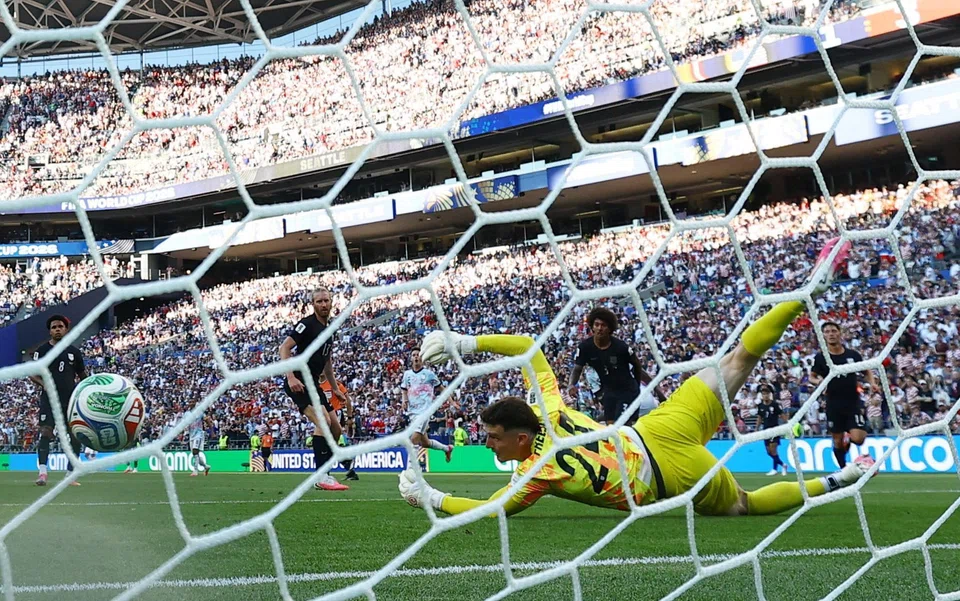
    • Coaches and chief executive officers face similar challenges – for instance, in managing team composition, says a report.
    • Coaches and chief executive officers face similar challenges – for instance, in managing team composition, says a report. PHOTO: REUTERS

    THE 2026 Fifa World Cup may not be traditional finance fare, but the sporting event of the summer has implications for the corporate world – a fact eagerly seized on by us business journalists.

    There is the usual angle of the numbers behind the event: the billions of dollars that football association Fifa rakes in from the television rights, corporate sponsorships and ticket sales

    London-based market research firm Ampere Analysis estimates that revenue from sponsorship and media rights from 220 territories worldwide will likely be in the region of US$6 billion. 

    Then, there is betting revenue. Macquarie is forecasting total World Cup wagers to exceed US$50 billion globally, way above the US$35 billion made during the 2022 event, Reuters reported. No small beer indeed.

    There are also the economic effects from the spending on retail and accommodation, even though some of the projected benefits may not fully materialise. A report by Canadian media on Jul 5 highlighted that the event is “no Taylor Swift” concert.

    A sports coach is like a CEO

    More pertinent are the parallels in managing talent in both the beautiful game as well as in a business.    

    Asean Intelligence

    Get insights into businesses across South-east Asia

    Get the free report

    A 2025 McKinsey report stated that coaches and chief executive officers face similar challenges – for instance, in managing team composition.

    As US National Basketball Association coach Steve Kerr said in a Harvard Business School case study: “You want to have the right mix of veterans and players still trying to establish themselves.”

    One difference: sports coaches live more dangerously than CEOs. The same McKinsey report found that the coaches of the major basketball, football and baseball leagues in the US had a shorter tenure and higher turnover rate than CEOs of the S&P 500 companies. 

    The average tenure for these CEOs comes in at 6.3 years, compared with three to 3.5 years for the coaches.

    A scan of the current landscape during the World Cup seems to bear this out. Already, the coaches of the Czech Republic, Ecuador, Netherlands, Germany, South Korea, Scotland, Tunisia and Uruguay teams have stepped down following the disappointing performances of their teams.

    In contrast, a CEO might hang on for a couple of quarters after a poor earnings result, suggesting that shareholders have more patience than sports fans.

    That is despite the similar tasks faced by both coaches and CEOs. They have to manage their talent bench, meld various players into a cohesive whole, chart out an efficient operating plan to hit their goals, and establish trust in the team.

    The last might be the most difficult, as the World Cup demonstrates. Players who hail from different leagues across countries are suddenly expected to perform as a unit, and might find difficulty with that.

    Team spirit is, after all, not something that can manifest within a couple of games – something all leaders should take note of.

    At this point in the tournament, a strong contender is France, which has impressed with its panache.

    If the country does lift the trophy on Jul 19, it will be because of a masterful coach, a team united despite its star players, and a single-minded purpose – indeed the very same ingredients that make for a successful company.

    Decoding Asia newsletter: your guide to navigating Asia in a new global order. Sign up here to get Decoding Asia newsletter. Delivered to your inbox. Free.

    Copyright SPH Media. All rights reserved.