
THE BROAD VIEW

Economic boost from 2026 Fifa World Cup may not live up to the hype

Big sporting events promise a boost to the host’s economy, but it is not a guarantee
Summarise
    • Fifa projects that the World Cup could inject more than US$40 billion to global GDP, despite the significant challenges lying ahead.
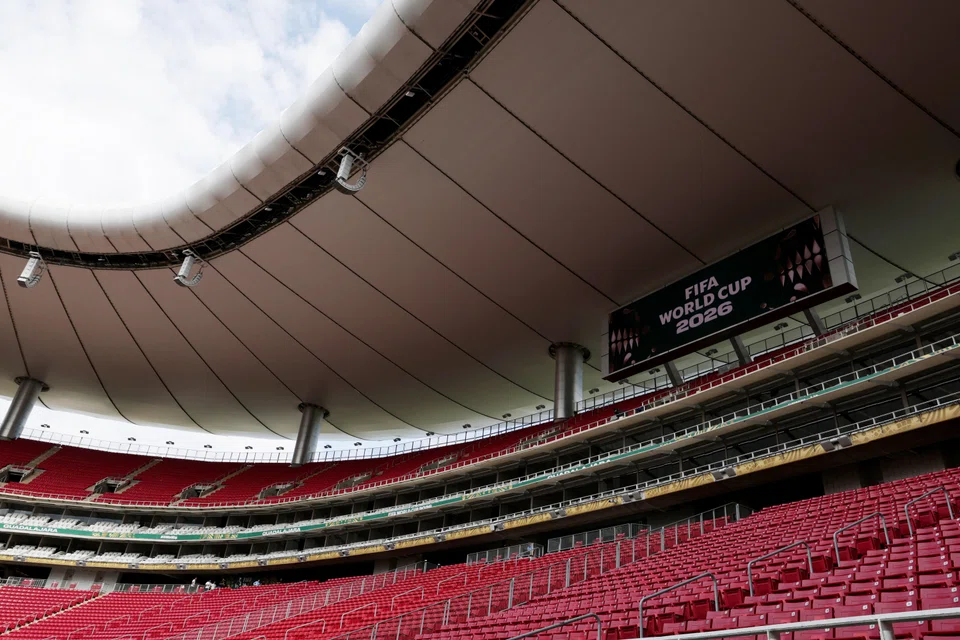
    • Fifa projects that the World Cup could inject more than US$40 billion to global GDP, despite the significant challenges lying ahead. PHOTO: REUTERS
    Published Fri, Jun 12, 2026 · 12:00 PM

    THE 2026 Fifa World Cup kicked off on Thursday (Jun 11) to much excitement, but football fans are not the only ones keeping an eye on the event.

    Governments will be monitoring the economic impact of the games. However, while the tournament will provide a significant stimulus to North America, its effects may not be nearly as substantial globally as some forecasts indicate.

    To be sure, some big sporting events do prove to not only be sporting successes, but also economic ones.


    A good example is the 1984 Summer Olympics hosted in Los Angeles.

    Despite political challenges, such as the boycott by the Soviet Union, that tournament was the first Olympics to be privately financed, instead of using public funds.

    It generated a significant profit for the time of US$223 million, which would be US$710 million today.

    In so doing, the competition became a model for the financial discipline required to run major sporting events.

    The 2026 World Cup has the potential to reap such benefits too.

    Numbers tell the story: It is being hosted by three countries – the US, Canada and Mexico – with 48 teams playing 104 matches in 16 cities.

    This is all the more notable because of tensions between this triumvirate, over issues such as tariffs and the future of the US-Mexico-Canada Agreement, a trade deal that came into force in July 2020.

    Strikingly, this year’s World Cup is also genuinely unprecedented. One of its hosts, the US, has been engaged in armed conflict with Iran, whose team is participating in the tournament.   

    Even US President Donald Trump himself has promised “an event the likes of which maybe the world has never seen”.

    Fifa, the football federation which is organising the tournament, projects that the World Cup could inject more than US$40 billion to global gross domestic product.

    Dynamic pricing and controversies

    Yet, beneath the inevitable hype lies a series of significant challenges. Collectively, these will probably prevent the tournament from delivering its full economic potential.

    For one, many international fans have been discouraged from making the journey to North America.

    In large part, this is because of the controversies over high ticketing costs – this is the first World Cup to use dynamic pricing – and the challenges of getting through the tightened immigration under Trump’s second presidency.

    Such issues have reduced the tourism boom that could have accompanied the big event.

    More tickets have been sold to fans within North America than to those elsewhere, diminishing the potential multiplier effect from the wider spending of overseas visitors.

    Several North American cities have flagged concerns that such tournaments do not generally provide the mammoth economic boost to national economies from stimuli such as capital investment and tourism.

    In the years leading up to the big event, the population in Toronto and Vancouver has questioned whether co-hosting the World Cup would be worth the estimated US$1 billion cost in these two major urban areas alone.   

    Moreover, the legacy value of hosting big sporting tournaments can be limited.

    Many facilities tend to be built from scratch at a high price and have significant maintenance costs, often leading them to turn into burdensome “white elephant” projects, or being dismantled after the games.

    The 2026 World Cup is far from alone in facing challenges.

    The previous edition in 2022 had its own set of difficulties. While Qatar was rightly proud that it was the first Arab Muslim nation to host the tournament, the event was controversial because of issues such as the country’s treatment of migrant workers and restrictions on freedom of speech. 

    Many Western powers sought to downplay the event.

    London declared that it would not host public screenings of matches, as did Paris. Martine Aubry, the then-mayor of Lille in France, described the Qatar tournament as “nonsense in terms of human rights, the environment and sport”.

    Recent Olympic Games held in Asia have also faced extraordinary problems. Japan’s Summer Olympics were postponed for a full year from the original date in 2020 because of the Covid-19 pandemic, with overseas fans barred from attending.

    Meanwhile, China’s 2022 Winter Olympics experienced a diplomatic boycott by multiple countries, including the US, UK and Australia, which cited concerns over events in Xinjiang. 

    Global prestige keeps interest alive

    Despite these pitfalls, no shortage remains of countries interested in bidding for other massive sporting events. For instance, Italy, Germany and New Zealand have expressed interest in hosting the 2038 Fifa World Cup.

    Moreover, many nations are still vying to host the 2036 Summer Olympics, such as India, South Africa and Chile.

    In addition, Switzerland and Canada are among the countries looking to host the 2038 Winter Olympics.

    Those moves highlight the perception that hosting such events is still a source of national prestige outweighing any friction that comes with it.

    However, that sentiment may yet turn, and the month ahead in North America can provide a glimpse of that future.

    The writer is an associate at LSE Ideas at the London School of Economics


