

Chagee, Mixue and Luckin won the market. Sustaining their edge is the harder part
The latest earnings from China’s beverage giants show that it’s not about store count now, but the quality of scale
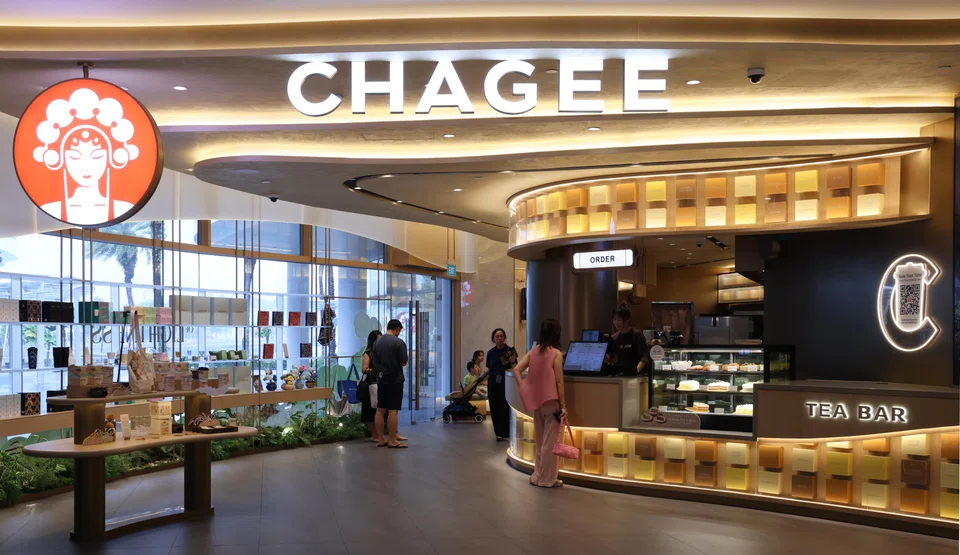
CHINA’S beverage chains have become superb at opening stores, but are they becoming better businesses?
This matters beyond China. For Singapore beverage and even retail operators, it raises a familiar question: when does expansion start cannibalising?
Luckin Coffee’s latest results capture this contradiction. In the second quarter of 2026, revenue rose 28.5 per cent year on year, while the firm added 2,714 stores to make up a total of 36,310.
Yet, same-store sales at self-operated outlets fell 5.3 per cent. Although Luckin attributed part of the decline to the high base created by food-delivery platform subsidies the year before, the higher store density makes cannibalisation by another Luckin store increasingly likely.
The total revenue increase remains impressive, but new openings are doing the lifting. Luckin may still be expanding the market, but some of that growth may also be dividing existing demand among an ever-larger number of outlets.
This matters because China’s beverage war is entering a new phase. The initial one rewarded speed, low prices, digital marketing and relentless expansion.
The next will be decided by store productivity, margins and whether franchisees can still make money after their honeymoon period.
Direct ownership gives control and pain
Luckin operates a hybrid model, with roughly two-thirds of its outlets being self-operated and the remainder, partnership stores. This gives it tighter control over customer data, pricing and product launches, while still allowing expansion beyond the capital limits of a fully company-owned network.
The trade-off is that Luckin still carries substantial rent, labour and operating costs. Store rental and other operating expenses in Q2 2026 rose 35.6 per cent on an annual basis, faster than revenue in the latest quarter; operating margin slipped from 14.1 per cent to 13.4 per cent.
This does not mean the model is broken. Luckin’s app, vast customer base and ability to create new flavours remain formidable advantages.
However, negative same-store growth suggests cannibalisation will become harder to avoid as the network increases in density.
Franchise-heavy models shift the economics
Guming, also known as Good Me, offers perhaps the strongest current example of a franchise-heavy model still producing healthy economics.
Like Mixue, it relies heavily on franchisees and has built much of its advantage around supply-chain and cold-chain infrastructure that allows freshly prepared drinks to be replicated across thousands of outlets.
Its first-half revenue rose 31.9 per cent from the year before, gross profit increased 39.6 per cent, and gross margin improved from 31.5 per cent to 33.4 per cent. Its network now has 14,351 stores, 28.4 per cent more than in the year before.
That is the rare combination every retailer wants – more revenue, higher margins and more stores.
Guming has slowed openings and tightened site selection, prioritising store quality over simply expanding the map.
Mixue is an even more extreme franchise model. Of nearly 64,000 stores at the end of June, only 36 were self-operated.
Its real engine is not simply cheap drinks, but the supply chain behind its franchise network. Most of its revenue comes from selling ingredients and equipment rather than collecting royalties. Franchise-related fees accounted for only 2.7 per cent of revenue in H1 this year.
Every new franchisee becomes a recurring customer for ingredients, packaging, equipment and logistics. Mixue is therefore effectively a vast supply-chain business dressed as a beverage retailer.
Yet even this model is showing signs of maturity. Mixue’s H1 revenue grew only 2.3 per cent year on year. Gross margin slipped from 31.6 per cent to 30.4 per cent, and profit fell 14.7 per cent.
Its store network still expanded to 63,987, but franchised-store openings in the first six months of the year slowed from 7,721 in 2025 to 5,455 in 2026.
Scale remains Mixue’s moat. However, once the network becomes enormous, the incremental value of another 1,000 stores inevitably becomes smaller.
Striking a balance between the two
Chagee is shifting away from a franchise-heavy structure and towards greater direct ownership.
At a time when store count rose 8.5 per cent on the year to reach 7,639 in Q2, company-owned stores increased from 239 to 883 in a year, accounting for 27.5 per cent of revenue, compared with 9.3 per cent the year before.
However, its Greater China sales fell, same-store sales declined 16.1 per cent and average monthly sales per teahouse weakened from the previous quarter.
The shift is revealing. Chagee still benefits from franchise economics, but as a premium brand expanding internationally, greater direct ownership gives it tighter control over brand experience and strategic locations, even though it bears more operating risk.
For franchise-heavy brands, the franchisee is also a customer. Expansion remains healthy only if operators earn acceptable returns and receive adequate support on site selection, training, logistics and operations.
Neither model is inherently superior. Direct ownership offers greater control over pricing, service and brand experience, but requires greater capital and exposure to rent and labour costs.
Franchising transfers much of that risk to operators and enables faster expansion. But it works only if the format is standardised enough and, more importantly, if franchisees continue making money.
Premium concepts lean more naturally towards direct ownership, while highly standardised, value-led brands are better suited to franchising.
The higher the brand moves up the positioning ladder, the more valuable control becomes.
Singapore brands should pay attention
These developments in China offer lessons for Singapore. The local beverage landscape is already crowded with Koi, LiHO, iTea and Each-A-Cup, alongside Luckin, Chagee, Mixue and other new entrants.
Singapore’s small geography, high rents and labour costs make careless expansion particularly punishing. A premium brand may need direct control to protect positioning, but a value brand needs franchise economics and supply-chain efficiency to keep prices low.
Simply importing the China model wholesale may not work.
For Singapore companies, the lesson is therefore not to copy China’s expansion playbook, but to understand which part of it fits their economics.
Direct operators must protect store productivity; franchisors must protect franchisee returns. In a small, expensive market, another outlet only creates value if it grows the pie rather than slices it more thinly.
In the first phase of the beverage competition, speed and scale were the strategy. In the second, the quality of that scale is what matters.
The writer, a seasoned economist, adviser and entrepreneur, is an affiliate lecturer at Nanyang Business School and Singapore Management University






