

SGX should ride on falling rates to make Singapore a top choice for equities listings
Navene Elangovan
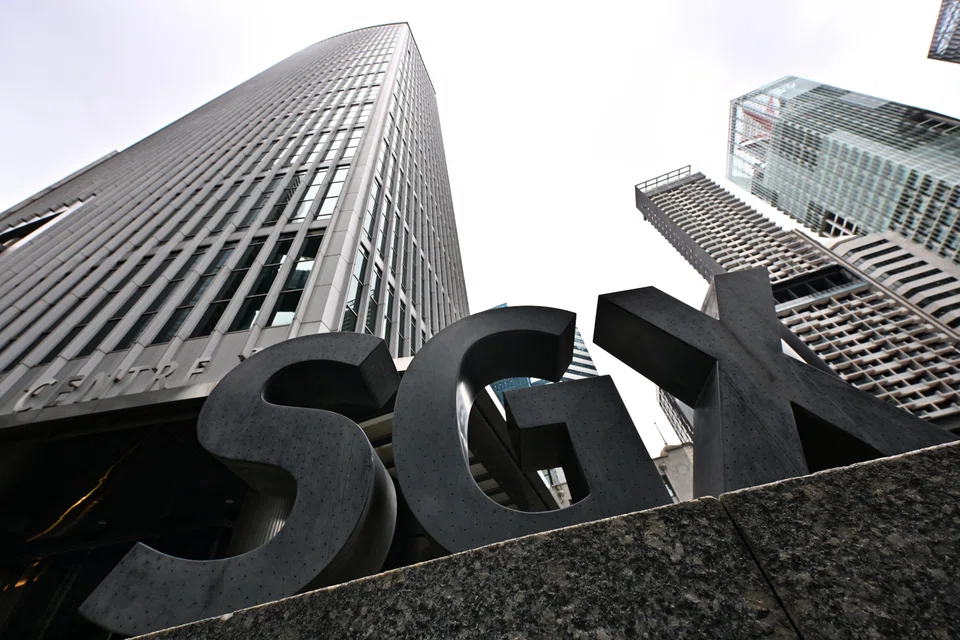
The Singapore Exchange (SGX) introduced a slew of initiatives to diversify the local market last year.
SGX was the first Asian bourse to introduce structured certificates. It launched Singapore depository receipts under the Thailand-Singapore depository receipt linkage. New listing requirements were also established for actively managed exchange-traded funds.
These initiatives will make SGX a better company, and a better stock to own. The bourse’s chief executive Loh Boon Chye had told The Business Times that a well-diversified business model would allow the company to deliver stronger business performance as market conditions improve.
This year, however, as the United States Federal Reserve has hinted at more than one interest-rate cut, the wind is back in the global equity market’s sails.
It could be an opportune time for SGX to work on ways to win more listings and raise the bar for listed ones. Higher standards of corporate governance could help, provided these come with means of enforcement.
Lacklustre listings
The SGX saw six new listings — all on the Catalist board — raising a total of S$46.9 million in 2023. This was far below the S$580.3 million raised by 11 initial public offerings (IPO) in 2022.
To be fair, the IPO market was weak for many listing venues last year.
The trend of local companies choosing to list overseas rather than locally continued in 2023, though, leading some quarters to question the attractiveness of the Singapore market.
Most recently, corporate governance advocate Professor Mak Yuen Teen said in an interview with BT that there has been no real improvement in investors’ ability to protect themselves when management and boards fail to carry out their duties.
Ongoing efforts to improve corporate governance
To its credit, SGX Regulation (SGX RegCo) has sought to raise the quality of listed companies in the past year.
In 2022, for instance, it introduced requirements for companies to disclose their board diversity policy. This was to encourage board renewal and “enhance good decision-making by the boards through the inclusion of additional perspectives”, said SGX’s Loh.
The new regulations have borne some fruit, with 89 per cent of companies disclosing a board diversity policy, according to a November 2023 study by SGX RegCo and the Council for Board Diversity.
It will be worthwhile to ensure there are more such initiatives over the next few years to improve the quality of existing companies on the board. Likewise, newly listed companies must be held to high standards from the get-go.
For example, while the proportion of companies disclosing their board diversity “is a good start”, as acknowledged by Loh, fewer than half have disclosed their targets, plans and progress to achieve board diversity.
Listed companies should move to clearly articulate their plans and targets for board diversification in 2024, and SGX should pressure them to do so.
SGX RegCo could introduce stronger measures to nudge companies along. This could be in the form of incentives for companies to specify their diversity targets, or penalties on those who fail to meet targets.
More effort should also be spent improving accountability to shareholders. While companies are already required to disclose pertinent information to shareholders in a timely manner, structured mechanisms could be put in place for shareholders to seek recourse from errant company directors.
Finally, some initiative may be necessary to support newly listed companies or those that are planning to list.
Funding is already available, such as in the form of the Grant for Equity Market Singapore scheme, to cover the cost of listing for new companies.
After they have listed, however, many companies, and particularly the smaller ones, have found themselves trading in the red.
This could be because an IPO has been wrongly priced. It could also be because the company’s management and directors don’t know how to attract new investors.
Undoubtedly, SGX is not to be held responsible. Nevertheless, poor post-IPO performance is unlikely to engender confidence in potential listing candidates.
Just as SGX has ramped up its investor education initiatives in recent years, perhaps there is room for it to do more in the field of investor relations initiatives too.
Ultimately, efforts to rejuvenate the stock market will come to naught if the fundamentals of corporate governance are not addressed.
TRENDING NOW

Once staunchly pro-China, Malaysian Chinese businesses are now distancing themselves from Beijing

New launch or resale unit? Here’s a guide for homebuyers

The lesser-known prospects in the Asian chipmaking supply chain

Cliff Tan has 7 million followers and a 4-month waitlist. Why won’t he expand his business?

