
THINKING ALOUD

Data points to big Republican losses in 2026 midterms

A weak presidential approval rating and consumer sentiment are weighing on the GOP’s chances
Summarise
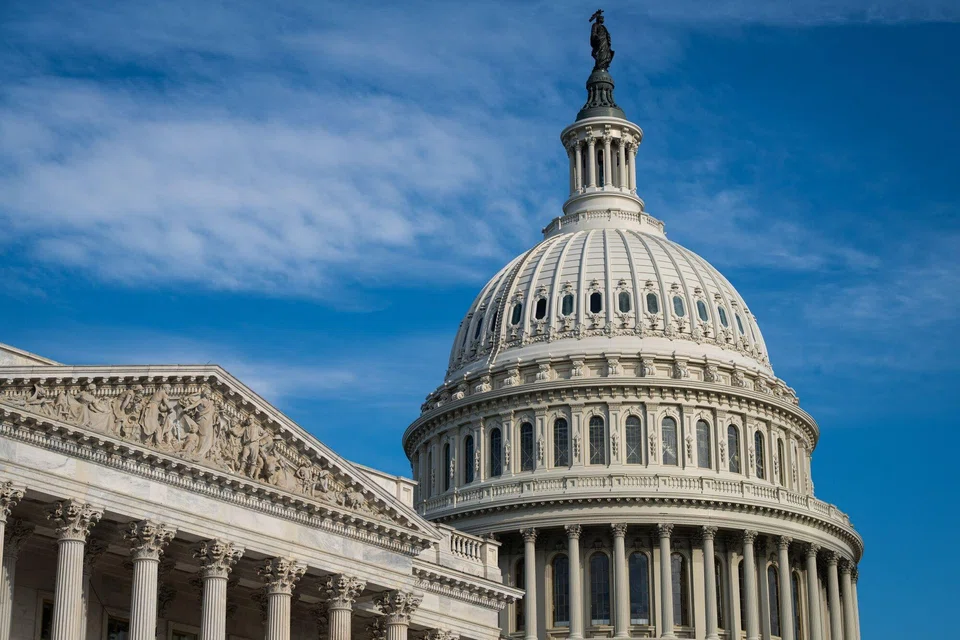
    • The US Capitol in Washington, DC. A widely cited academic model for the coming US midterm elections predicts a loss of 28 seats for the Republicans.
    • The US Capitol in Washington, DC. A widely cited academic model for the coming US midterm elections predicts a loss of 28 seats for the Republicans. PHOTO: BLOOMBERG
    Published Tue, Sep 1, 2026 · 07:00 AM

    EVERY midterm election cycle in the US produces predictions of doom for the president’s party. The historical trend is stark: Since 1950, the president’s party has lost an average of 25 seats in these elections, and gained ground only twice, in 1998 and 2002.

    That “iron law”, as political scientists call it, is the baseline against which 2026 is being measured. But the 2026 forecast rests on more than reflexive pattern-matching – this year’s indicators suggest the losses could land at or above that average.

    What the models say

    Forecasters using traditional referendum models, which weigh presidential approval and economic conditions, currently project meaningful Republican losses. 

    One widely cited academic model forecasts a loss of 28 seats and a return of House control to Democrats.

    Others, like the non-partisan website USPollingData, tie the projection directly to presidential approval numbers: When the figure is in the high-30s, historical models predict Republican losses in the 20-to-35-seat range.

    The generic congressional ballot, a standard proxy for how a midterm will break, has also consistently favoured Democrats in 2026 polling.

    A Democratic advantage of six percentage points on that measure – the current statistic – has historically translated into an addition of roughly 25 House seats, based on comparisons to 2018 and 2006.

    Economic anxiety compounds the political headwinds. Consumer confidence readings this year have been notably weak, and levels below 80 have in the past correlated with significant losses for the incumbent party.

    This year’s numbers sit well under that threshold and are in territory more reminiscent of the 2010 election, which swept Republicans into the House and broke Democratic control of Congress.

    The rhetoric matches the numbers. Democratic strategist James Carville has been among the most vocal, predicting his party will pick up at minimum 25 House seats, and possibly as many as 45, with a strong chance of also flipping the Senate. 

    That kind of talk – forecasting that the midterm will be a “wipeout” – from a party operative reflects genuine confidence in the underlying data, not just spin.

    Another chance to recapture the House?

    Republicans are not without a response, and it is not purely denial.

    Redistricting has quietly shifted the map in the GOP’s favour in several states: changes to congressional maps in Florida, Louisiana and Tennessee measurably improved Republican chances of holding the House, even as Democrats remain the clear front-runners, given the broader national environment.

    Republican National Committee officials have also pointed to the party’s ability to “defy history” before, arguing the 2002 cycle showed pessimistic modelling can be wrong.

    Indeed, the 2002 midterms – halfway through the first of George W. Bush’s two termsproduced Republican gains, and are frequently cited as a cautionary counterexample.

    However, analysts note the underlying conditions then differed in ways that make a repeat less likely this time.

    The expectation of major Republican losses is not idle speculation; it is grounded in data such as approval ratings, economic sentiment and generic-ballot polling that have moved in a consistent direction for months. 

    Whether that translates into a genuine wipeout or a more modest correction will hinge on turnout, late-breaking events and how much redistricting has actually blunted the map. 

    But the weight of current evidence points towards a difficult November for the GOP.



