

Trump’s sliding approval ratings weigh on Republicans’ prospects in US midterms
The GOP could lose control of the House and Senate as voters sour on his presidency
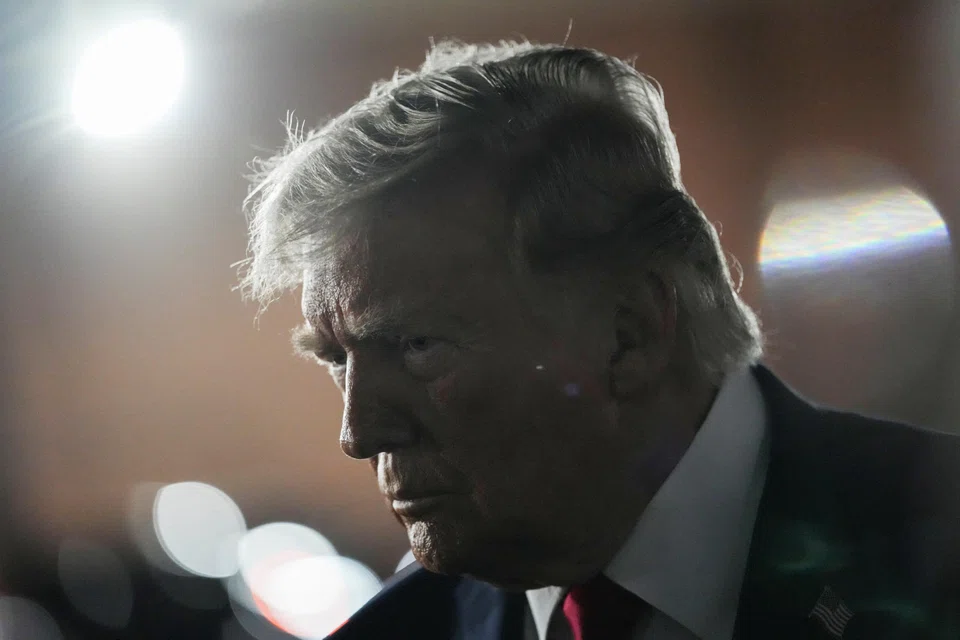
HISTORY is rarely kind to sitting presidents at midterm time, and US President Donald Trump’s second term is shaping up to test that rule with unusual force.
A confluence of political headwinds, eroding approval ratings, policy controversies and alienated voter coalitions is casting a long shadow over Republican prospects in November 2026.
Trump’s tumbling approval ratings have raised the chances that Democrats could recapture the House, and perhaps the Senate too. For Republicans holding thin margins in Congress, that is not an abstract concern. It is an existential one.
The numbers tell a sobering story for the Grand Old Party. In 2024, Republican House candidates received 49.8 per cent of the vote compared with 47.2 per cent for Democrats – a 2.6 per cent edge.
Today, polls show Democrats holding a 5.3 per cent advantage in the generic House ballot for 2026, a swing of nearly eight points. That figure matters enormously given that 21 House Republicans won their seats in 2024 by margins of less than eight points.
Several specific issues are driving this shift. Immigration, once Trump’s strongest card, is increasingly a liability. Trump twice rode a hardline immigration message to the White House, but polls now show Americans souring on his approach, with nearly six in 10 disapproving of his handling of the issue, according to Quinnipiac and Washington Post/ABC News/Ipsos surveys.
Mainstream unease
The administration’s Immigration and Customs Enforcement operations, including a deadly incident in Minneapolis, have amplified public discomfort in ways that even a re-election mandate cannot easily absorb.
Beyond immigration, Trump’s broader conduct is weighing on his coalition. More than half of Americans believe the president is using his office for personal gain, and roughly 70 per cent reject his recurring mentions of serving a third term, according to a poll conducted by The Economist/YouGov in late 2025.
These are not fringe concerns: They represent mainstream unease with the direction of the presidency.
The demographic erosion is perhaps most alarming for Republicans. Only 15 per cent of independents, 19 per cent of young adults and 29 per cent of Hispanics say they will vote for Republican candidates in 2026.
These are groups whose movement towards Trump in 2024 was decisive in delivering his victory. Losing them now could prove irreversible before election day.
The president’s job approval has a strong historical correlation with midterm outcomes – the higher his approval, the fewer losses his party experiences. With approval deep underwater, the structural maths is brutal.
The Republican Party faces a genuine dilemma: moderating course risks alienating the base, while staying the current path likely accelerates losses among swing voters.
If the president and party leaders do not waver in their trajectory, it will be hard for Republicans to recover the ground they have lost, in time for next November.
The midterms in 2026 may well become a referendum not just on policy, but on the price of polarisation.
TRENDING NOW

DBS, OCBC, UOB rout lops billions off STI as inflation, rate concerns spook investors

Grab CEO’s wife Chloe Tong on life with Anthony Tan and finding her purpose

OCBC sheds S$8 billion in value as shares close nearly 6% down; analysts cautious on banks

Deal between tycoon friends sparks scrutiny of Philippine power sector

