

Don’t mourn Gillman Forest? First ask if we need to lose it
If the same housing objective can be achieved through a different use of land, the Republic should examine it
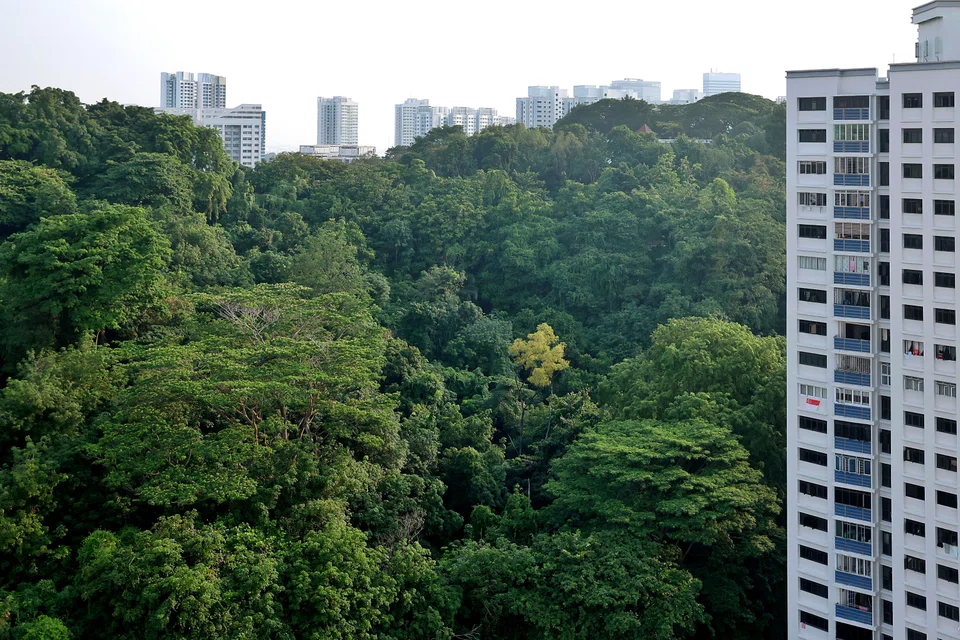
SINGAPORE needs more homes. On this, residents concerned about the proposed redevelopment of Gillman Barracks are not necessarily at odds with the government.
The more difficult question is where those homes should go, and what else Singapore gives up to build them.
In the Aug 31 commentary, “Developing Gillman Barracks and Sunset Way: Don’t mourn losing some green spaces”, Leslie Yee argued that Singapore must continue transforming to meet changing “live, work and play” needs.
He also asked whether homeowners campaigning to preserve nearby greenery might be motivated by the impact its loss could have on their property values.
As a Telok Blangah resident involved in discussions over Gillman, I think this misses the more interesting economic and planning question.
If the same housing objective can be achieved through a different use of land, why would Singapore not examine it?
The alternative to development is not necessarily no development
Residents around Gillman are not asking the Housing & Development Board to stop building homes in their neighbourhood.
Over the past few weeks, residents from Telok Blangah, Depot Road, Preston Road and Pasir Panjang East have developed a proposal: A Better Plan for Gillman.
This indicative proposal provides for 10 to 12 blocks of public housing near Labrador MRT station, potentially accommodating up to 2,400 units.
If more homes are required, it asks whether additional housing could be accommodated within the surrounding Alexandra Park area or other already urbanised sites, rather than by clearing Gillman Forest.
As residents, we do not possess the detailed planning information available to the government. Instead, we offer the plan to explore possibilities and alternative configurations that may merit further consideration.
What is needed to understand the choices ahead
While Minister of State for National Development Alvin Tan has stated that many proposed alternative sites are already earmarked for housing, needed for other national purposes or currently unavailable for redevelopment, this does not make alternatives irrelevant.
Instead, detailing those constraints is precisely what is needed to weigh the choices properly.
Yet, critical questions remain unanswered. If Gillman Forest is preserved, what exactly do we give up?
How many homes must this specific site provide? If fewer homes are built here, would alternative sites need to be brought forward, urban density increased elsewhere or housing delivery delayed?
Answers to these questions are essential for the public to understand the actual choices Singapore faces.
Without them, we risk presenting forest loss as an unavoidable consequence of housing demand, without establishing how much housing this particular forest is truly required to supply, or whether that requirement could be met differently.
Scarce land raises the bar
Singapore’s land scarcity is often invoked to explain difficult development decisions.
But scarcity cuts both ways. When land is scarce, the opportunity cost of using it badly is also high.
A hectare allocated to one purpose cannot simultaneously provide for another. The economic question therefore cannot simply be whether new housing creates value. Of course it does.
The pertinent question is whether a particular allocation of scarce land produces a better overall outcome than the available alternatives.
This is familiar reasoning in almost every other field of economic decision-making. Benefits matter, but so do opportunity costs.
The same logic should apply to urban planning.
But if an alternative configuration could accommodate the homes Singapore needs while retaining substantially more existing forest, that possibility has economic value and deserves examination.
Not every green hectare is equivalent
This also points to a problem with describing the issue simply as the loss of some “green space”.
The government’s decision to retain more greenery at Gillman following public feedback is welcome.
But an existing forest is not necessarily interchangeable with a landscaped park or newly planted greenery.
Different spaces perform different functions: habitat, ecological connectivity, cooling, recreation and carbon storage among them. At Gillman, location matters, too, because the site forms part of the landscape between the Southern Ridges and Labrador.
The resident proposal therefore looks beyond preservation.
It envisages housing alongside an intergenerational community and wellness hub, adaptive reuse of Gillman’s heritage buildings, F&B and creative businesses, forest recreation and a connection from the Southern Ridges towards the coast.
Some of those ideas will undoubtedly need modification. Some may not work.
Rather than force a choice between economic use and leaving a forest untouched, the proposal asks which combination of uses produces the greatest long-term public value from a scarce site.
Scrutiny is not planning paralysis
Yee also raised a legitimate concern on whether increasingly vocal public opposition could make planners reluctant to undertake necessary redevelopment.
It could, if every development debate ends simply with “no”. But Gillman and Maju Forest suggest another possibility.
Telok Blangah MP Rachel Ong encouraged residents not merely to object, but to propose alternatives. Residents accepted that challenge, despite not being planners, architects or property developers.
Some 25 residents spent evenings and weekends considering housing, heritage, ecology, community facilities and commercial uses. The resulting proposal was presented to government agencies on Tuesday (Sep 1).
The Better Plan may not be the answer. But asking residents to propose alternatives and then subjecting those alternatives to expert evaluation is surely more productive than treating consultation as a referendum between “develop” and “do not develop”.
Indeed, one of the most striking messages from the Sep 1 discussion was that the residents were not rejecting the need for housing.
A younger participant made the point clearly: If the housing imperative is being justified partly by the needs of her generation, young Singaporeans should also have a say in deciding what environmental consequences they are prepared to accept to meet those needs.
Good public participation should make planning more rigorous, not impossible. It should also happen while consequential choices can still be changed.
Test the Better Plan
Singapore will continue to change. Housing demand is real, infrastructure needs evolve and land uses cannot be frozen indefinitely.
But none of this tells us that a particular forest must therefore be developed in a particular way.
The appropriate test is simpler. What public need are we trying to meet? How much land is actually required? What alternatives exist? What are their respective costs and benefits? And which option produces the greatest public value over the long term?
If retaining the whole of Gillman Forest is genuinely not feasible while meeting Singapore’s housing needs, the government should be able to explain why.
But if another configuration can provide the homes Singapore needs while retaining more nature, activating heritage buildings, and creating useful community and commercial spaces, we should be equally prepared to change the plan.
Singapore’s success has never come from an unwillingness to transform. Neither has it come from assuming that the first plan is necessarily the best one.
In a land-scarce country, the premium should be on making every hectare work harder, including the hectares we choose not to clear.
The writer is head of the National University of Singapore (NUS) Sustainability Academy and research fellow at the NUS Centre for Nature-based Climate Solutions. Views expressed here are her own. She used AI for structuring and editing before submitting the draft.
TRENDING NOW
Motoring tycoon Peter Kwee is back in court: Here are his previous legal battles

Demand, tech capabilities position Apac and AI as Skyscanner’s next growth frontiers: CEO Bryan Batista

Beyond the greenback, Vietnam’s big borrowers turn to Asian-currency bonds

Nvidia’s outlook cut to stable by Moody’s on governance concerns

