

End of an era – Fed’s Powell set to oversee final policy meeting by keeping rates steady
His successor Kevin Warsh is viewed as more responsive to the Trump administration
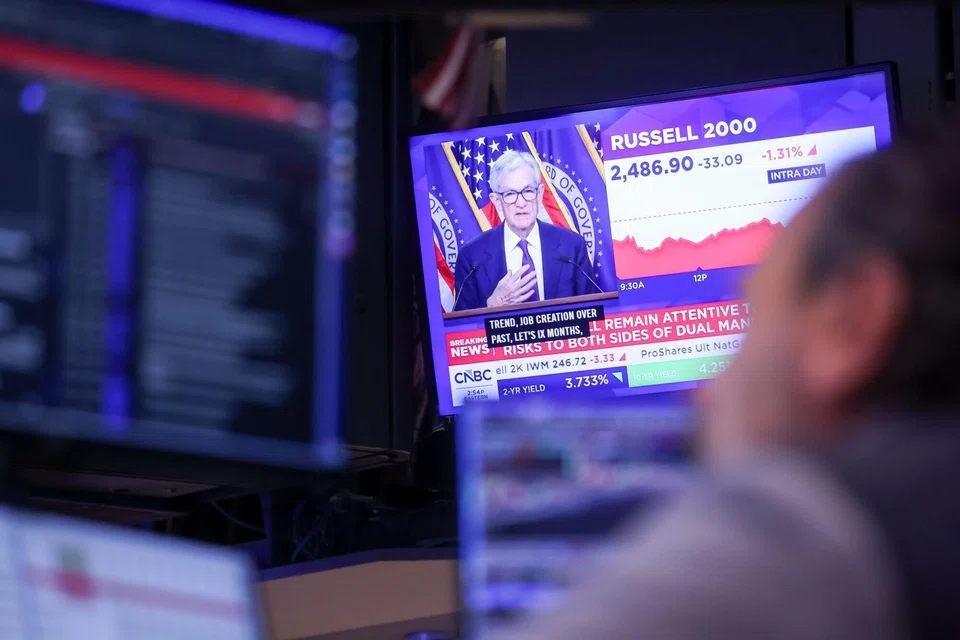
THE US Federal Reserve’s monetary policy meeting this week is significant in more ways than one. While the Fed is widely expected to hold interest rates steady, it will also mark the final meeting under the chairmanship of the central bank’s embattled chair Jerome Powell, whose term ends on May 15.
All signs point to Powell keeping rates untouched at the end of the two-day Federal Open Market Committee meeting on Wednesday (Apr 29).
At his customary press conference, however, Powell could raise the prospect of increasing rates at some point this year – which would have been somewhat unthinkable before the Iran war began at the end of February.
The prospect of rates going up would – in all likelihood – spread fear throughout the global economy, and possibly even kill a bull market that has survived an energy shock and a mini financial crisis.
Economists at Bank of America Global Research have dubbed this week’s meeting as Powell’s “swansong”, and they said the markets will focus on whether he remains open to rate hikes as well as his take on the impact of the ongoing Middle East war.
Barring any unforeseen change of heart, the Fed is almost certain to keep the benchmark interest rate unchanged in a range of 3.5 to 3.75 per cent.
But, as the Bank of America economists suggest, Powell could still reprise his role as the global markets’ “stern prefect” – a role he played throughout much of 2022.
Back then, as now, most major indices were at or near record highs due to optimism that the Fed would look through inflation and hold rates steady.
In numerous press conferences, Powell responded angrily to those expectations, his demeanour losing the genial warmth as he came to embody a sharp-taloned central-bank hawk.
After beginning a rate-cut cycle in 2024 and while holding rates steady this year, Powell has switched to a more avuncular, neutral tone. For example, following the last meeting in mid-March, he said it was too early to tell whether the Iran war would cause inflationary ripple effects.
Those comments eased a sell-off in stocks and Treasury bonds. But that was just a couple of weeks into the war, and the status of the Strait of Hormuz was unclear then.
Now, the key shipping channel for 20 per cent of the world’s oil and natural gas has been effectively sealed for almost two months. Powell may well choose to show his talons again.
“Our base case is for the Fed to remain on hold into 2027,” said economists at BNP Paribas in a note to clients. “That said, we see a growing tail risk that policymakers could consider hiking as soon as June if the Strait of Hormuz stays closed and US labour data remains resilient.”
Powell will also probably face questions about the expiry of his term as Fed chair, and whether he will exercise the option to stay on as governor.
In March, Powell drew a clear line in the sand. He said he would not leave the central bank’s committee as long as an investigation into his role in a controversial Fed renovation project was still going on.
US President Donald Trump was widely seen as pushing this probe in a brazenly political effort to influence Fed policy.
North Carolina’s Republican Senator Thom Tillis backed Powell by pledging not to confirm Trump’s chosen successor, Kevin Warsh, until the probe ended. Last week, following several days of contentious confirmation hearings for Warsh, the Justice Department dropped the probe.
True to his word, Tillis relented and endorsed Warsh. But Powell may still leave the question of his staying on the board open, despite Trump’s threats to fire him if he attempted to do so.
The Supreme Court has still not weighed in on a separate attempt by the Trump administration to oust Fed governor Lisa Cook. Powell has cast himself as the defender of Fed independence,and the Cook case is just as important as his own in settling this question.
So far, the US has not felt the same Hormuz-related spike in fuel prices as Asia or Europe. However, that could soon change as nations all over the world hoard supplies – if previous energy shocks are a guide.
Warsh, despite insisting that he was not Trump’s “sock puppet” and that he did not promise anything to the president on interest rates, is still viewed as more responsive to the White House than Powell.
If the BNP Paribas economists are correct, Warsh could demonstrate his own independence by opening his term with an interest rate hike in June.
One thing is for sure, though: Powell’s swansong will ring out on market floors around the world.
Decoding Asia newsletter: your guide to navigating Asia in a new global order. Sign up here to get Decoding Asia newsletter. Delivered to your inbox. Free.
Share with us your feedback on BT's products and services
TRENDING NOW

LTA proposes combining car COE categories, adding rebate-surcharge system

StarHub to acquire MyRepublic’s mobile business amid ongoing telco consolidation

DBS, OCBC, UOB rout lops billions off STI as inflation, rate concerns spook investors

Grab CEO’s wife Chloe Tong on life with Anthony Tan and finding her purpose

